
For years, the weakest link in encrypted messaging applications was not the app, it was the person in your contacts list using the “wrong” phone. That excuse is starting to collapse, and it matters more than most people realize.
Quick Summary
- Apple has added end-to-end encryption for some RCS conversations between iPhone and Android users in iOS 26.5.
- The feature is launching in beta, and availability depends on both your device and carrier.
- This narrows one of the biggest security gaps between iMessage chats and cross-platform texting.
- The change does not mean every green-bubble conversation is suddenly private, users still need carrier and device support.
- It also raises the pressure on other encrypted messaging applications to explain what they offer beyond basic message secrecy.
- The bigger story is not just technical, it is strategic: mainstream texting is inching closer to the privacy standards long normal in specialized apps.
What Happened With Encrypted Messaging Applications on iPhone
The headline news is simple: Apple has started bringing end-to-end encrypted RCS chats to iPhone users, which means some conversations between iPhones and Android phones can now get protection that previously existed mainly inside iMessage or dedicated encrypted messaging applications.
That rollout arrives as part of iOS 26.5, and it is not universal yet. According to reporting from The Verge, Wired, and Ars Technica, the feature is labeled beta and works only on a subset of supported carriers and devices for now.
In plain English, this means the old security split is beginning to fade. iPhone-to-iPhone chats had strong protection for years. iPhone-to-Android texting, even after the move from SMS to RCS, did not have the same default privacy. Now, some of those green-bubble conversations are finally catching up.
Key Details on Encrypted Messaging Applications and RCS
This update matters because RCS has become the replacement for old-school SMS and MMS, which were never designed with modern privacy in mind. SMS is functional, universal, and deeply outdated. RCS improves read receipts, typing indicators, media quality, and group messaging, but the security story has been fragmented.
Why this RCS shift matters for encrypted messaging applications
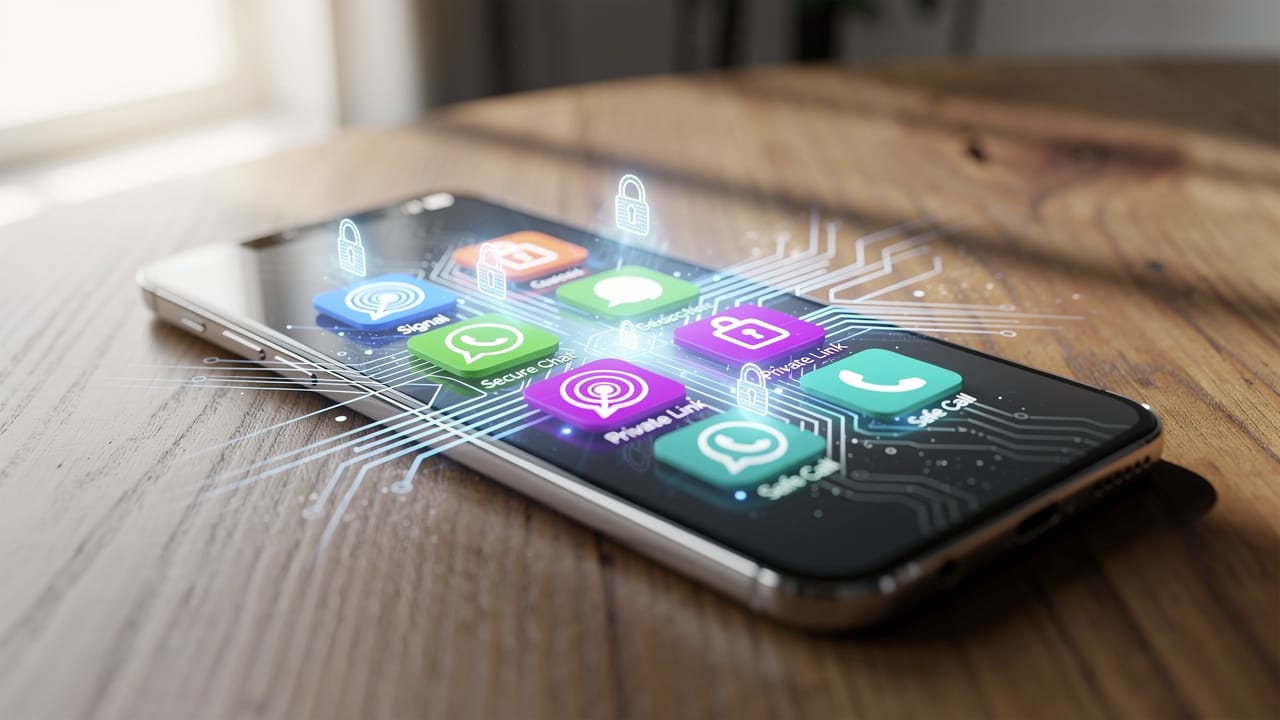
Apple’s update adds end-to-end encryption to certain RCS chats, meaning the content is scrambled on the sender’s device and readable only on the recipient’s device. In theory, neither the carrier nor a random interceptor should be able to read the message in transit.
That sounds obvious if you use the Signal encrypted messaging app or WhatsApp every day. It is not obvious in the default texting app. That distinction is the whole story.
A few important details stand out:
- The feature is in beta
- It depends on carrier support
- It depends on device compatibility
- Encrypted chats may show a padlock icon, according to Ars Technica
- Apple released version 26.5 across multiple platforms, including iOS, iPadOS, macOS, watchOS, tvOS, visionOS, and HomePod software
That last point is easy to overlook. Apple did not ship this as a one-off patch. It arrived inside a broader platform update, which suggests the company sees cross-device messaging security as infrastructure, not a side experiment.
The Android angle and Google’s long game
This is also an indirect win for Google, which spent years pushing RCS as the successor to SMS. Apple resisted, then adopted RCS, and is now improving its security. That is not a philosophical conversion. It is market pressure meeting user expectation.
For years, the best advice for privacy-conscious users was to avoid default texting altogether and switch to an end to end encrypted messaging app. That advice is still mostly correct. But every time the stock Messages app gets safer, the gap shrinks.
And yes, this has implications for apps beyond Apple and Google. Whether you use a niche encrypted messaging app, a mainstream social platform, or even something like encrypted messaging Facebook users rely on through Messenger’s optional secure modes, the baseline expectation keeps rising.
What This Means for You if You Use Encrypted Messaging Apps
If you are an ordinary user, the practical impact is straightforward: some of your cross-platform texts are becoming harder to intercept. That is good news, especially for people who will never convince friends and family to install a separate encrypted messaging app.
The good news for regular phone users
For years, privacy advice ran into an annoying reality. Security was only as strong as the least cooperative person in the group chat. One friend had iMessage. Another had Android. Your parents still used plain texting. Suddenly your “secure” communication habits fell apart.
This update makes the default option less bad.
If your device and carrier support it, you may get:
- Better protection for one-to-one chats
- More confidence sending sensitive but ordinary information
- Less need to move every conversation into separate encrypted messaging applications
- A more modern cross-platform texting experience
That matters because most people do not optimize for security. They optimize for convenience. The technology that wins is usually the technology that asks the least from users.
The limits nobody should ignore
Here is the less comfortable truth: this is not a blanket privacy victory.
Because the feature is still in beta and limited by carrier rollout, many users will assume they are protected when they are not. That is the real risk. Security features are only useful when people understand when they apply.
A few practical takeaways:
- Look for any visual indicator, such as the reported padlock icon
- Update your phone to iOS 26.5 if you are on iPhone
- Do not assume all green bubbles are now encrypted
- Remember backups, notifications, and compromised devices can still expose messages
- Continue using dedicated encrypted messaging apps for highly sensitive conversations
In other words, this improves everyday privacy, but it does not eliminate the need for tools like Signal. If anything, it clarifies the difference between “better default texting” and “serious operational security.”
What Others Missed About Encrypted Messaging Applications
A lot of coverage treats this like a simple feature upgrade. It is bigger than that. This is about who controls the future of private communication: phone makers, carriers, or app platforms.
The quiet admission Apple is making
By bringing encryption to RCS, Apple is effectively admitting that the old green-bubble security gap had become untenable. Not just annoying, untenable.
For years, Apple benefited from the social pressure of blue versus green bubbles. But from a security standpoint, that split was embarrassing. If privacy is a brand value, leaving cross-platform messaging weaker was increasingly hard to defend.
So this move is both a security upgrade and a reputational repair job.
Why specialized encrypted messaging applications still matter
The rise of better default texting does not kill the category. It forces it to evolve.
Dedicated encrypted messaging applications still have real advantages:
- stronger identity verification
- more transparent security design
- better disappearing-message controls
- fewer carrier dependencies
- broader consistency across platforms
That is why the Signal encrypted messaging app remains important even as Apple improves Messages. It is also why competitors in the encrypted messaging apps market need to focus on trust, not gimmicks.
The new baseline is this: if your app claims privacy, users will ask what it does that the default phone app cannot.
Real Examples of How Encrypted Messaging Applications Compare Now
Imagine three common situations.
First, an iPhone user texts an Android friend about medical paperwork, travel details, or a bank issue. Before, that chat might have had modern RCS features but not equal privacy protection. Now, depending on support, it may be encrypted in transit.
Second, a family group stays in the default Messages app because nobody wants another download. That group may not get every security benefit immediately, but the path is clearly moving toward stronger protection inside mainstream texting.
Third, a journalist, executive, activist, or lawyer still reaches for a dedicated end to end encrypted messaging app instead of default texting. That does not change. High-risk users need consistency and explicit control, not partial rollout by carrier.
This is the important dividing line. Better default messaging helps the masses. Specialized tools still serve people with higher stakes.
Pros and Cons of Mainstream Encrypted Messaging Applications
Pros
- Cross-platform texting is becoming meaningfully safer
- Users get stronger privacy without changing habits
- RCS is finally acting more like a modern standard
- Pressure increases on the whole industry to improve baseline security
Cons
- Rollout is uneven and potentially confusing
- Carrier dependence remains a weak point
- Users may overestimate their privacy
- Default apps still may not match the control and transparency of the best encrypted messaging applications
Conclusion on Encrypted Messaging Applications and the New RCS Reality
The biggest change here is not that Apple added one more feature. It is that default texting is finally starting to catch up with what users should have expected years ago. That is good for consumers, inconvenient for complacent platforms, and overdue for the industry.
If you have an iPhone, updating to iOS 26.5 is worth it for this alone. Just do not confuse “more secure” with “fully solved.”
What Happens Next (2026-2030)
Over the next few years, the winners will be users who want strong privacy without changing their behavior, and the companies that can make security invisible. Apple and Google will keep pushing encrypted default messaging deeper into the mobile stack, while carriers will lose relevance as pure message middlemen. The losers will be weaker chat platforms that marketed basic encryption as a premium differentiator. By 2030, the real competition in encrypted messaging applications will not be over whether messages are encrypted, it will be over identity verification, metadata protection, cross-platform reliability, and who users actually trust when something goes wrong.
Sources
About the Author