

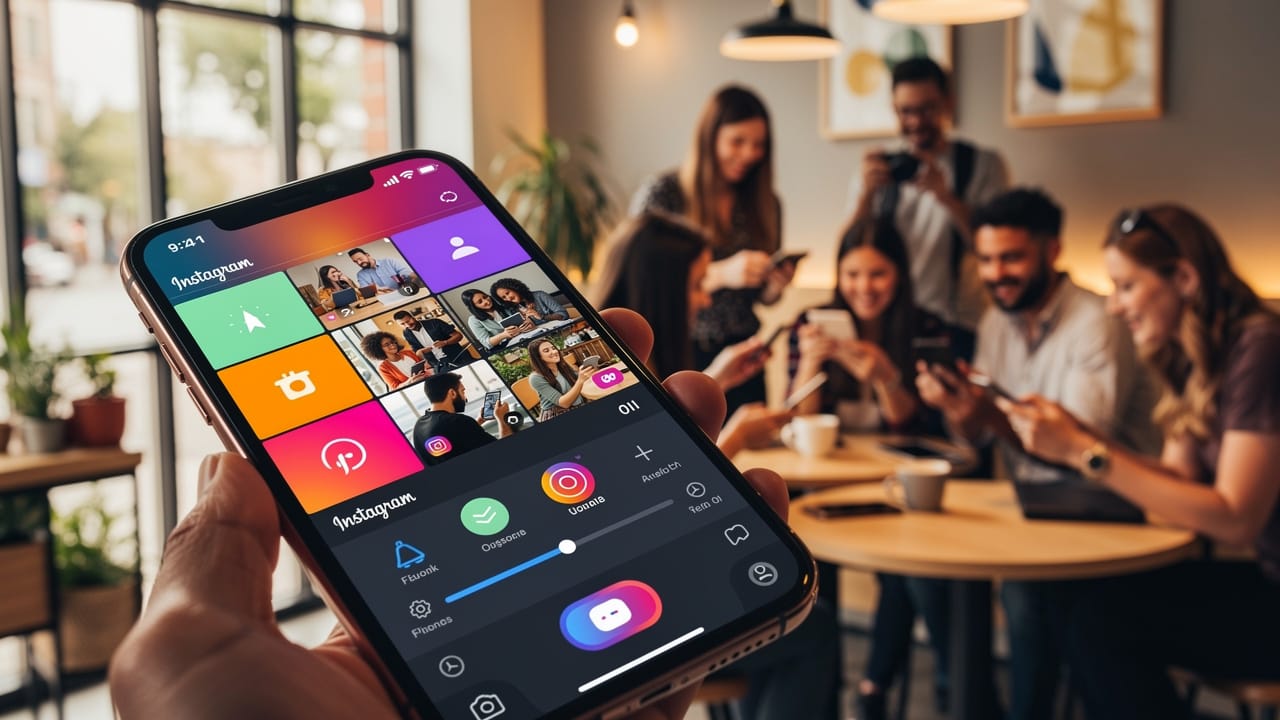
Instagram is no longer just copying the internet’s best ideas, it is trying to own the last format where people still act a little less polished. That matters, because the newest shift in social media is not about prettier posts, it is about who controls your most casual, impulsive sharing.
Quick Summary
- Instagram has launched Instants, a disappearing photo format aimed at more private, less edited sharing.
- The feature combines ideas that users already know from Snapchat, BeReal, and even Locket-style intimate social apps.
- Instants photos can only be taken in-app, cannot be uploaded from your camera roll, and offer almost no editing.
- Users can share them with close friends or mutual followers, and the photos are viewable once and remain available for 24 hours.
- Meta is also testing Instants as a standalone app in select markets, including Spain and Italy.
- Among the new features in Instagram, this one may be the clearest sign yet that Meta thinks the future of social is smaller, rawer, and more private.
What Happened With These New Features in Instagram
Instagram has rolled out a new photo-sharing feature called Instants, and it is built around a simple idea: send fast, unedited photos that disappear. You access it from the inbox area, snap a picture with the in-app camera, add text if you want, and send it to close friends or mutual followers.
That sounds familiar because it is. The new features in Instagram borrow heavily from Snapchat and BeReal, two platforms that built their identities around casual, lower-pressure sharing. Unlike classic Instagram posting, Instants is designed to block polish. No camera roll uploads. No real editing. No endless tweaking before you post.
This is also not just a small in-app experiment. Meta is reportedly testing Instants as a standalone app in select countries, which suggests the company sees this as more than a side feature.
Key Details on New Features for Instagram
The core mechanics are what make this launch interesting.
First, Instants are ephemeral. A photo can be viewed only once, and it sticks around for up to 24 hours. That creates urgency, but not the all-day persistence of Stories.
Second, authenticity is being enforced by design. Users must take the photo inside the app. They cannot pull a perfectly lit image from their library. They also cannot apply the kind of polish that made Instagram famous in the first place. You can add text, but that is about it.
Third, distribution is narrower. This is not built for mass broadcasting. It is aimed at close friends and mutual followers, a meaningful distinction at a time when many users treat the public feed like a brand page and private sharing like real social life.
Why these Instagram new features look so familiar
The resemblance to BeReal is obvious in the anti-editing philosophy. The resemblance to Snapchat is obvious in the disappearing-photo mechanic. Wired went further and noted that users can also unsend images before they are opened, reinforcing the private-message feel rather than the feed-post model.
That is the larger pattern behind many new features on Instagram. Meta watches where user behavior shifts, then absorbs the behavior into its biggest network. Stories did that years ago. Reels did it with short-form video. Instants is the same playbook aimed at private visual messaging.
The quiet business signal behind the launch
This is where the story gets more serious. Public posting has become performative for many users. The growth area is private sharing, smaller groups, and content that disappears before it can become a personal brand liability.
For Meta, that matters because time spent in intimate sharing environments can still feed the broader machine. Even if Instants itself is not directly about ads yet, it supports retention, messaging behavior, and eventually the larger ecosystem of Instagram monetization features. The more reasons users have to stay inside Instagram for every kind of interaction, the less room there is for rivals.
What These New Features in Instagram Mean for You
If you are a regular user, Instants could make Instagram feel more fun again. For years, posting to the main grid has felt like publishing. Even Stories can feel semi-public. Instants targets the space people use when they want to send something now, not curate it for later.
That is useful if you are tired of overthinking everything you share. It is less useful if you like control.
For everyday users
The biggest benefit is lower pressure. Since images disappear, are minimally editable, and cannot be uploaded from your camera roll, the feature nudges people toward spontaneity. That may sound minor, but it changes behavior. A lot of users do not avoid posting because they have nothing to say, they avoid posting because every post feels permanent and judged.
The downside is obvious too. A “real” format does not automatically create real behavior. People can still pose, stage, flirt, and perform authenticity. In fact, those dynamics may intensify in a one-view, close-friends environment.
For creators and brands watching new Instagram features
For creators, Instants is awkward. It is intimate by design, which means it does not naturally scale. That makes it weak as a direct growth tool, at least for now. It is hard to imagine brands building campaigns around a format that disappears, limits edits, and lives mostly in private sharing.
Still, the feature matters because it changes where attention goes. If users spend more time in DMs and close-friend sharing, creators may need to rethink how they build loyalty. The next era of new features for Instagram may reward people who create communities, not just audiences.
This also connects indirectly to Instagram monetization features. Public content drives discovery, but private engagement often drives trust. Trust is what sells subscriptions, products, paid channels, and affiliate recommendations. So while Instants is not a checkout button or ad unit, it could become part of the conversion funnel.
What Others Missed About Instagram’s Instants Strategy
A lot of coverage will reduce this launch to “Meta copied Snapchat again.” That is true, but it is also too shallow.
The bigger point is that Meta is trying to solve a problem of social exhaustion. The feed is crowded. Reels are algorithmic. Stories are noisy. Public posting feels risky. So the company is pushing into a format that says, in effect: stop performing, just send the picture.
The anti-AI twist in new features in Instagram
There is a strange irony here. Meta is racing to inject AI into much of its product lineup, yet Instants strips away enhancement. No heavy editing. No beautification logic as the centerpiece. No polished archive. In a moment when tech companies keep promising smarter content creation, Instagram is also betting that users may want less production, not more.
That tension is one of the most interesting parts of these new features in Instagram. On one side, Meta wants synthetic creativity at scale. On the other, it knows social value increasingly comes from signals that feel human, scarce, and temporary.
Why standalone testing matters
Testing Instants as its own app in Spain and Italy is not a side note. It suggests Meta is probing whether private, disappearing image-sharing could stand alone as a habit, separate from the main Instagram experience.
If that works, it could become a hedge against platform fatigue. If it fails, Meta still gets to fold the best parts back into Instagram. That is a very low-risk move for a company of this size.
Real Examples of How New Features on Instagram Could Change Behavior
Picture a college student who does not want to dump ten random photos into Stories but still wants to share a joke, a concert moment, or a messy late-night selfie with five people. Instants fits that exactly.
Think about long-distance friends who already use DMs as their real social feed. Instead of sending static images from the camera roll, they now get a more immediate, in-the-moment tool.
For couples or close-friend groups, Instants may become a replacement for quick Snap exchanges, especially for users who never wanted to manage another social app. That is how new Instagram features become strategically powerful, not because they are revolutionary, but because they remove one more reason to leave the platform.
It may also intensify the split personality of Instagram itself. Publicly, users still present the polished version of life. Privately, they send the real one. That divide has existed for years, but Instants formalizes it.
Pros and Cons of Instagram New Features Like Instants
Pros
- Makes sharing feel less performative
- Encourages in-the-moment posting
- Gives users a more private alternative to Stories
- Helps Instagram compete in a format where younger users already have habits
Cons
- Feels derivative, not groundbreaking
- “Authentic” design can still produce fake authenticity
- Limited editing may frustrate users who want control
- Could further fragment Instagram into too many overlapping features
Conclusion on the New Features in Instagram
Instants is not a small gimmick. It is Meta admitting that the future of social media may belong less to polished feeds and more to private, disposable moments. Among the latest new features in Instagram, this is one of the clearest attempts to win back the casual behavior that migrated elsewhere.
If it works, users will not think of it as a clone. They will think of it as one less reason to open Snapchat first.
What Happens Next (2026-2030)
Over the next few years, the winners will be platforms that own both public reach and private intimacy, and Instagram is trying to be both. Snapchat may feel the pressure first, because Instants attacks one of its most familiar behaviors without asking users to leave the Instagram ecosystem. BeReal, meanwhile, looks even more vulnerable, because its core promise is easier for a giant platform to imitate than defend. Expect Meta to tie this format more closely to messaging, close-friends tools, and eventually softer forms of commerce, because the real endgame is not disappearing photos, it is keeping every kind of social interaction inside one app.
Sources
About the Author