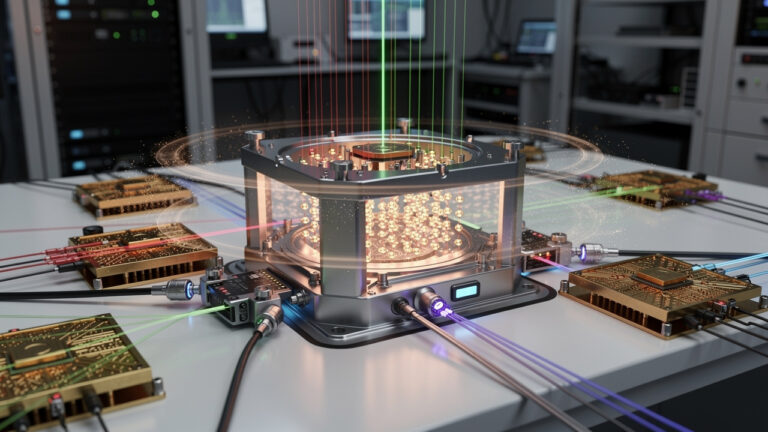

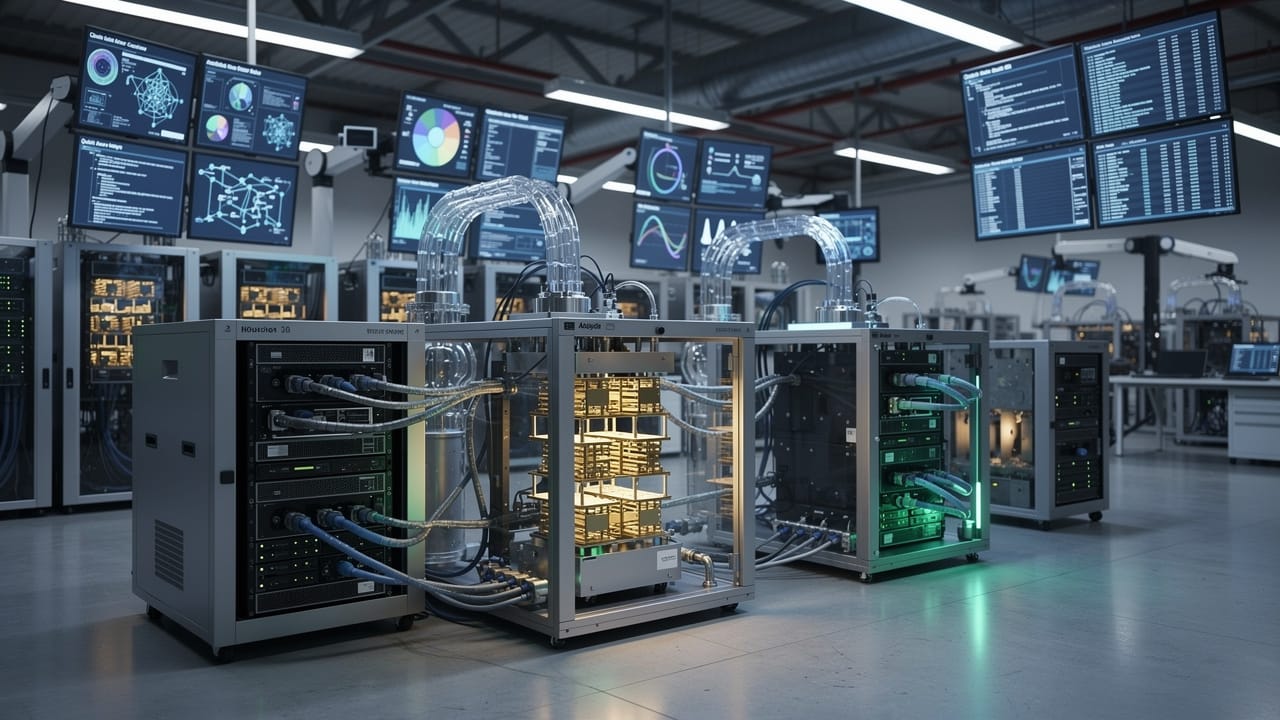
The most important thing happening in quantum tech right now is not a miracle chip. It is that the industry is quietly getting better at the boring stuff, and that is exactly why quantum computing advancements 2024 matter more than the hype-heavy headlines suggest.
Quick Summary
- Quantum computing advancements 2024 are being driven by reliability, control systems, and materials engineering, not just by adding more qubits.
- Microsoft says its new chip dramatically improved qubit stability, with average survival rising to 20 seconds from the milliseconds range on the prior generation.
- The company claims the new device is 1,000 times more reliable than its predecessor, a meaningful metric in a field where fragile qubits are the whole problem.
- Atom Computing and EeroQ are also showing progress, underscoring that recent advancements in quantum computing are happening across very different hardware approaches.
- The real race is no longer just “who has the weirdest physics.” It is who can turn that physics into a machine people can actually use.
- If you care about drug discovery, materials science, cryptography, or cloud infrastructure, the latest advancements in quantum computing are beginning to look less theoretical and more like an engineering roadmap.
What Happened in Quantum Computing Advancements 2024
A fresh round of industry updates put three names back in focus: Microsoft, Atom Computing, and EeroQ. None announced the kind of instant, history-book breakthrough that turns quantum computing into a mass-market product overnight. What they did reveal is arguably more important, steady gains in the systems that have held the field back for years.
Microsoft drew the most attention. According to BBC Technology, the company says its latest chip keeps qubits stable for an average of 20 seconds, versus mere milliseconds on the earlier version. That jump is why Microsoft is calling the chip 1,000 times more reliable than before.
That matters because the modern story of quantum computing has been a little awkward. Companies have been able to show off qubits for years. What they have struggled to show is qubits that live long enough, behave predictably enough, and can be corrected cheaply enough to do commercially useful work. That is why the newest quantum computing advancements are less flashy than they are foundational.
Key Details on Microsoft, Atom Computing, and EeroQ
Quantum computing advancements 2024 are easier to understand if you stop thinking about raw qubit counts and start thinking about failure rates.
Microsoft’s bet is unusually ambitious. It has spent years chasing topological qubits, a design intended to be more naturally resistant to noise than conventional approaches. The effort is tied to exotic physics and difficult materials work, which is why some observers have treated the company’s strategy with skepticism. But if Microsoft is right, it could reduce one of the biggest costs in quantum computing, error correction.
Why Microsoft’s numbers matter
The headline figure is not just that a qubit lasted 20 seconds. It is that extending coherence from milliseconds to tens of seconds changes the economics of everything built on top of it. A qubit that survives longer can potentially support more operations, more reliable readout, and less overhead devoted to keeping errors under control.
That context also helps explain the significance of the Majorana 1 processor, which sits at the center of Microsoft’s long-running topological approach. The company is effectively arguing that better qubits beat merely bigger systems.
Atom Computing, by contrast, has become known for neutral-atom quantum systems, a very different path from Microsoft’s superconducting and topological ambitions. EeroQ is pursuing another unconventional approach, one built around electrons on helium. These are not minor technical differences. They reflect a broader truth about advancements in quantum computing: nobody has definitively won the hardware argument yet.
The field is broad, and that is the point
This diversity is a sign of maturity, not confusion. In classical computing, the basic architecture settled long ago. In quantum, the architecture war is still very much alive. Recent advancements in quantum computing therefore need to be read as progress reports from multiple possible futures.
That is also why incremental updates matter. As Ars Technica reports, these are the kinds of engineering steps that rarely look dramatic on social media but are absolutely necessary if quantum hardware is ever going to leave the lab and enter routine industrial use.
If you want a broader frame for that shift, our earlier look at Quantum Computing Advancements 2024: Why the Biggest Breakthroughs Aren’t Coming From Bigger Chips Alone makes the same basic point from another angle: scale without stability is not a business model.
What Quantum Computing Advancements 2024 Mean for You
For most people, quantum news still feels abstract, and honestly, companies have helped create that problem by overselling timelines. But the practical impact is getting easier to map.
If you work in pharmaceutical research, chemistry, materials science, or logistics, these improvements matter because useful quantum systems are most likely to enter your world through cloud tools first. You will not buy a quantum laptop. You may, however, end up renting quantum processing time for specialized simulations your current systems handle poorly.
Who benefits first
The first winners are likely to be large enterprises and research institutions that can afford hybrid workflows, where conventional computing does most of the work and quantum processors tackle narrow, difficult subproblems. Cloud platforms, software layers, and simulation companies may benefit before hardware builders fully cash in.
That is why Microsoft’s push matters beyond the lab. If its hardware becomes stable enough, it can feed directly into an enterprise cloud ecosystem that already has customers, developer tools, and distribution. The same strategic logic applies to other players too, even if their hardware is different.
Who should stay skeptical
Consumers should not expect the latest advancements in quantum computing to change daily life next year. Even the bullish claim from Microsoft, that commercially useful problems could be solved within three years, should be treated as an aspiration, not a guarantee.
Security teams, meanwhile, should care now. Not because a practical cryptography-breaking quantum machine is suddenly here, but because long-term data protection decisions are being made today. The gap between “research breakthrough” and “real-world threat” can close faster than many IT departments would like.
What Others Missed About Recent Advancements in Quantum Computing
The media loves a moonshot. Quantum progress usually looks nothing like one.
What gets missed in coverage of quantum computing advancements is that this field is now behaving more like a serious engineering discipline and less like speculative science fiction. That is a good sign. It means companies are moving from demos to metrics that matter, coherence time, reliability, manufacturability, and control.
The hidden story is capital discipline
There is another angle here. Investors and big tech companies are becoming less patient with vague promises. The era of “trust us, revolutionary physics is coming” is fading. In its place is a harsher question: can you produce measurable, repeatable gains?
Microsoft’s messaging reflects that pressure. So does the attention on competing architectures from Atom Computing and EeroQ. In 2026, and looking toward quantum computing advancements 2025 and beyond, the market wants evidence that each hardware path can survive contact with industrial reality.
The hardware winner may not be the business winner
Here is the overlooked possibility: the company with the best qubit may not be the company that captures the most value. Quantum economics could look a lot like AI economics, where infrastructure, software tooling, developer ecosystems, and cloud access matter as much as raw technical performance.
That makes the Majorana 1 processor more than a hardware story. It is a strategic wedge into a future platform stack.
Real Examples of How Advancements in Quantum Computing Could Show Up
The easiest way to understand these developments is to imagine where classical systems still hit a wall.
A drug company trying to model molecular interactions could use a quantum system to test certain chemical behaviors more efficiently than brute-force classical simulation allows. A battery maker might use quantum tools to explore better materials for energy density and durability. Financial firms may eventually use them for niche optimization problems where tiny gains are worth millions.
Even then, don’t picture quantum replacing conventional servers. Picture it as a specialist. Your everyday apps, spreadsheets, and cloud storage will still run on classical infrastructure. Quantum becomes valuable when the problem is unusually complex, not when the task is ordinary.
That distinction is one reason quantum computing advancements 2024 feel more credible than earlier hype cycles. The conversation is shifting from “quantum will change everything” to “quantum may solve a few expensive problems extremely well.” That is a smaller promise, and a much more believable one.
Pros and Cons of the Latest Advancements in Quantum Computing
Pros
- Longer-lived qubits improve the odds of useful, repeatable computation.
- Multiple hardware approaches reduce the risk that the whole field is betting on the wrong design.
- Enterprise cloud integration could speed adoption once systems become reliable enough.
- Incremental gains suggest the industry is finally solving real engineering problems.
Cons
- Reliability improvements do not automatically equal broad commercial usefulness.
- Competing architectures may delay standardization and confuse buyers.
- Timelines are still uncertain, especially when companies make aggressive public claims.
- The cost and complexity of operating quantum systems remain enormous.
Conclusion on Quantum Computing Advancements 2024
The real signal in quantum computing advancements 2024 is not that one company has already won. It is that the field is maturing into something measurable, competitive, and harder to dismiss. That may sound less exciting than a sudden breakthrough, but it is how transformative technologies actually become real.
The companies making the most noise still have a lot to prove. Still, if stability gains like those tied to the Majorana 1 processor hold up, the next phase of quantum computing will look less like a science fair and more like a market.
What Happens Next (2026-2030)
Between now and 2030, the biggest winners will probably be companies that combine credible hardware progress with cloud distribution and strong developer tooling. Microsoft has an obvious advantage there, but Atom Computing and EeroQ could still matter if their architectures prove easier to scale or cheaper to stabilize.
The losers will be firms that keep marketing qubit counts while ducking reliability metrics. Customers are getting smarter, and investors are getting stricter. Quantum computing advancements 2025 and the years after will be judged less by spectacle and more by whether anyone can solve narrow commercial problems at a price that makes sense.
Sources
About the Author