
The impact of AI on creative industries is no longer mostly about image generators and copyright fights. It is increasingly about who gets access to powerful systems, who sets the rules, and which sectors get normalized first when AI moves from consumer novelty to infrastructure.
Quick Summary
- Google expanded Pentagon access to its AI tools for classified environments after Anthropic refused broader terms.
- That dispute was not just a defense story, it exposed how AI companies are being pushed to choose between guardrails and growth.
- At the same time, brain-scanning wearables are moving closer to mainstream consumer gadgets through licensing deals and third-party hardware.
- Together, these developments show the impact of AI on creative industries is tied to surveillance, productivity tracking, and institutional power, not just content generation.
- The bigger question is no longer whether AI will spread across sectors, but what is the potential impact of generative AI on industries when the same models and sensors serve both creative work and government systems.
- For workers in media, design, entertainment, and adjacent fields, the real risk is that AI becomes the invisible layer deciding how people work, what gets measured, and which outputs are rewarded.
What Happened With Google, Anthropic, and the New AI Power Shift
According to TechCrunch, Google gave the U.S. Department of Defense broader access to its AI for classified networks, with reporting indicating the arrangement allows essentially all lawful uses. That matters because Anthropic had reportedly refused to offer the same kind of open-ended terms.
Anthropic’s objection was not minor. It wanted limits around domestic mass surveillance and autonomous weapons, and that refusal triggered a sharp response from the Pentagon, which labeled the company a “supply-chain risk.” A judge later granted Anthropic an injunction while the legal fight continues.
At nearly the same time, Wired reported that Neurable, a brain-computer interface company, is shifting to a licensing model that could place its noninvasive EEG technology into a “flood” of new consumer devices this year and next. On paper, these are separate stories. In reality, they point to the same trend, the impact of AI on different industries is becoming less about flashy demos and more about embedding intelligence into systems that watch, rank, and guide human behavior.
Key Details on the Impact of AI on Creative Industries and Beyond
The defense story matters because it reveals how AI is being commercialized under pressure. The Pentagon wanted broad usability. Anthropic pushed for restrictions. Google, OpenAI, and xAI reportedly moved in where Anthropic would not. That sequence tells you something important about market incentives: the companies with the strongest ethical red lines may lose deals, while the companies willing to support expansive use cases can gain strategic ground.
A small policy fight with big downstream consequences
This is where the impact of AI on creative industries becomes clearer. Creative tools rarely stay in creative lanes. The same model families used to draft ad copy, generate visuals, summarize scripts, or assist editing can also be adapted for intelligence analysis, monitoring, logistics, and classification workflows. Once governments and large institutions normalize unrestricted AI access, that posture tends to spill outward into enterprise software and workplace expectations.
The Wired story adds a second layer. Neurable’s hardware uses EEG sensors to read brain signals and send that data into an app that tracks focus and cognitive state. The company already partnered on consumer headphones and also has a Department of Defense contract related to blast overpressure monitoring and possible mild traumatic brain injury detection in soldiers. Now it wants third parties to build more products on top of its stack.
That is not a quirky gadget story. It is a warning that AI systems are moving closer to the body.
From generative tools to measurable humans
If you are asking, what is potential impact of generative AI on industries, this is part of the answer: AI is no longer just generating outputs. It is increasingly measuring workers, creators, consumers, and attention itself. In media and entertainment, that could mean software that does not merely help you write or edit, but also scores your focus, predicts burnout, monitors your pace, and feeds those metrics back to employers or platforms.
This is why the impact of artificial intelligence AI on media and creative industries should not be discussed as a simple battle between artists and algorithms. The larger issue is control. Who owns the tools, the prompts, the workflow data, and soon, the biometric layer attached to the work?
What This Means for You as AI Spreads Across Work and Culture
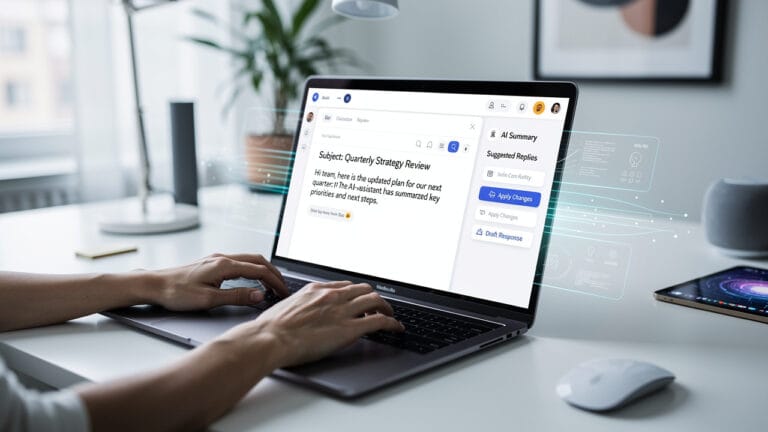
For most people, the impact of AI on creative industries will arrive quietly. It may show up as a smarter editing suite, an auto-generated video rough cut, a headset that claims to improve concentration, or a dashboard that tells your manager when your team is “most productive.” None of that sounds dramatic until you realize the same systems can become performance infrastructure.
If you work in media, design, or content
Writers, editors, illustrators, producers, marketers, and game developers are already seeing the potential impact of generative AI on industries in practical terms. Companies want faster drafts, cheaper experimentation, and fewer bottlenecks. That can be useful. It can also hollow out junior roles, compress timelines, and make human work legible mainly through metrics.
We have covered a similar pattern in The Real Impact of AI on Business Is Bigger Than Automation, and It’s Not Slowing Down, where the deeper shift is not just labor replacement, but management power. AI gives organizations new ways to standardize judgment, and creative work has always depended on the parts that resist standardization.
If you buy consumer tech
The Wired report should catch the eye of anyone using wearables. A “brain break” feature sounds harmless, even helpful. Yet once consumer devices begin capturing focus data, the obvious next step is bundling those signals into productivity platforms, wellness subscriptions, education tools, and workplace dashboards.
That is one reason the impact of AI on creative industries overlaps with health tech, office software, and hardware design. A creative professional using AI in 2028 may not just use a model to generate ideas. They may work inside a system that measures eye movement, keyboard flow, audio cues, and brain-state proxies to decide when they are “performing well.”
Who benefits, who loses
Big platforms benefit first. Governments benefit when vendors compete to offer more permissive access. Employers benefit from new forms of measurement. Consumers may get genuinely useful accessibility and productivity tools.
Workers carry more of the downside. So do smaller firms that cannot negotiate favorable AI terms or build their own safeguards. As we argued in AI Applications in Various Industries Are Splitting Into Two Futures, Helpful Assistants and Cheap Chaos, the split is becoming obvious: one path makes people more capable, the other makes them more trackable.
What Others Missed About the Impact of AI on Creative Industries
Most coverage of the Google-Pentagon story focused on defense politics. Most coverage of the Neurable story focused on futuristic gadgets. The missing connection is that both stories are really about normalization.
The quiet normalization of permissive AI
When one company refuses broad military use and another accepts it, the market receives a message. Guardrails are negotiable. Access is monetizable. Ethical resistance can be framed as unreliability. That logic does not stay inside defense procurement. It spreads into entertainment, publishing, advertising, and software buying.
The impact of AI on creative industries will therefore be shaped less by what models can do than by which governance model wins. If the winning model is “offer the customer maximum flexibility and sort out consequences later,” then creative sectors will inherit tools designed around scale and compliance, not artistic integrity or labor protection.
Brain data is the next workplace frontier
Here is the more uncomfortable point: generative AI gets headlines because it produces visible content. Neurotechnology may become more powerful commercially because it produces invisible data. Focus scores, fatigue signals, cognitive patterns, these are exactly the kind of metrics managers and platforms love.
So when people ask, what is the potential impact of generative AI on industries, they often miss the adjacent systems that make generative AI more profitable. The generation layer writes, draws, edits, and recommends. The sensing layer measures the human around it.
Real Examples of the Impact of AI on Different Industries
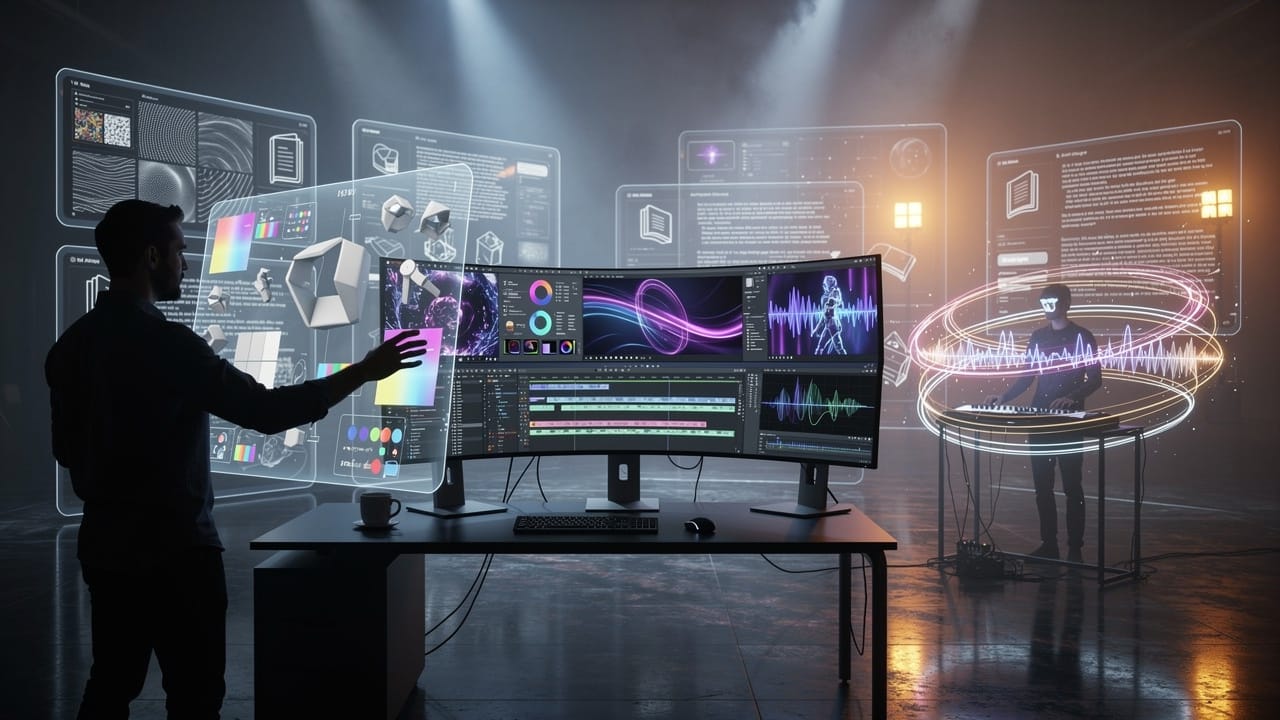
In media, AI already drafts headlines, trims clips, suggests thumbnails, and repackages archives. Add biometric or cognitive tracking, and a newsroom could someday optimize not only output but the internal state of the people producing it.
In gaming, studios can use generative systems for dialogue variants, quest design, or live-ops assets. Pair that with wearable data from testers or esports gear, and developers get richer information about attention, stress, and immersion.
In advertising, agencies can use Google AI to generate campaign assets, test copy variations, and analyze audience response faster than before. That is efficient. It also puts more creative value inside platform ecosystems instead of independent teams.
In consumer electronics, Neurable’s licensing push suggests more head-based gadgets are coming, likely across 2026 and 2027, according to Wired’s timeline for a “flood” of devices. If those products succeed, creators may end up using tools that are part studio, part wellness device, part behavioral sensor.
Pros and Cons of This New AI Direction
Pros
- Faster production across media, design, and marketing
- Better accessibility tools and possible cognitive health insights
- New consumer products that could help with fatigue awareness and focus management
- More powerful enterprise workflows using tools like Google AI
Cons
- Weaker guardrails when large customers demand broad AI use
- More workplace surveillance disguised as optimization
- Greater pressure on creative workers to prove value through machine-readable metrics
- Higher risk that the impact of artificial intelligence AI on media and creative industries becomes extractive rather than empowering
Conclusion on the Impact of AI on Creative Industries
The impact of AI on creative industries is getting bigger, but also stranger. The future is not just AI making art, it is AI becoming the management layer around art, media, and human attention.
What Happens Next (2026-2030)
Between now and 2030, the winners will be companies that combine generation, workflow, and measurement into one stack. Large platforms, defense contractors, and enterprise software vendors will gain the most. Creative workers will benefit only if regulation, labor pressure, and product design force AI to stay assistive instead of managerial. Expect more tools branded as empowerment, more biometric features sold as wellness, and more fights over whether convenience is worth the surrender of creative autonomy.
Sources
About the Author