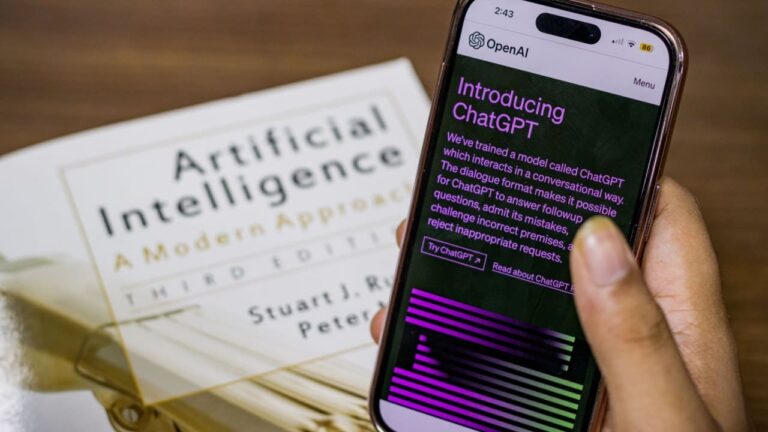


The sam altman elon musk lawsuit is not just a billionaire feud with better lawyers. It is a fight over whether the most important AI company in the world can still claim to serve humanity while operating like a high-speed corporate machine.
Quick Summary
- Elon Musk and Sam Altman are headed into a major California trial over the future of OpenAI.
- Musk argues he helped fund OpenAI on the understanding it would remain mission-driven and nonprofit at its core.
- The case could affect OpenAI’s corporate structure, leadership, and even its path toward a long-anticipated IPO.
- According to reporting from MIT Technology Review, Musk is seeking up to $134 billion in damages from OpenAI and Microsoft.
- The trial is expected to include testimony from Musk, Altman, Greg Brockman, and other major figures from the AI race.
- What looks like personal drama is really a power struggle over who gets to control advanced AI, the people building it, and the money flowing around it.
What Happened in the Sam Altman Elon Musk Lawsuit
The sam altman elon musk lawsuit grew out of a split that has been simmering since Musk left OpenAI in 2018. Musk says the company’s leaders, especially Sam Altman and Greg Brockman, moved away from the original promise that OpenAI would develop AI for broad public benefit rather than for private gain.
That argument now lands in federal court in Northern California. As reported by The Verge, the trial is high stakes enough that it could change how OpenAI is allowed to operate. As the company sits near the center of the AI boom, the courtroom is becoming a proxy battleground for a bigger question, who should control general-purpose AI systems that could influence everything from software jobs to national competitiveness?
Key Details on OpenAI’s Court Fight
The numbers alone explain why this case matters.
Musk is reportedly asking for as much as $134 billion in damages from OpenAI and Microsoft, though he has said any damages should go to OpenAI’s nonprofit side rather than to him personally. He is also seeking to remove Altman and Brockman from leadership and push the organization back toward its original nonprofit mission.
Why the sam altman elon musk lawsuit is unusually consequential
This is not a normal CEO dispute. According to MIT Technology Review, nine jurors will issue an advisory verdict, which means their decision guides the judge rather than binding the court in the usual way. That procedural detail matters because the judge still holds the real power over remedies that could reach deep into OpenAI’s structure.
Several prominent figures are expected to testify, including Musk, Altman, Brockman, Ilya Sutskever, Mira Murati, and Satya Nadella. That witness list reads like a map of the modern AI industry. It also suggests the court will hear not just a contract argument, but a history of how OpenAI changed from a lofty research lab into the commercial center of the generative AI market.
The timing is brutal for OpenAI. The company has spent years trying to balance its original mission language with the reality that frontier AI requires enormous capital, massive compute budgets, and partnerships with cloud giants. That tension is exactly why this case has become so combustible.
The legal claim is about promises, but the real fight is about control
Musk’s case rests on a relatively simple idea, that he backed OpenAI under one set of expectations and watched it become something very different. Altman’s side is expected to argue that OpenAI had to evolve in order to survive and compete.
That may sound abstract, but it has practical consequences. If the court limits OpenAI’s current structure or leadership, it could disrupt investor confidence, product roadmaps, and commercial partnerships. That matters because, as we argued in OpenAI Partnerships Are Becoming More Important Than Its Models, OpenAI’s leverage increasingly comes not just from raw model quality, but from the ecosystem wrapped around it.
What This Means for You Beyond the Sam Altman Elon Musk Lawsuit
If you use AI tools at work, build on OpenAI APIs, invest in tech, or compete with firms using these systems, this case affects you more than the headlines suggest.
For businesses, this is a stability test
Companies buying AI services want one thing almost as much as model performance, predictability. A court fight over governance creates the opposite. If OpenAI’s structure is challenged, enterprise customers may rethink how dependent they want to be on one vendor whose legal foundation is under active attack.
That does not mean OpenAI disappears. It means rivals get an opening. Procurement teams, CIOs, and startups may diversify faster, spreading workloads across multiple AI providers to reduce legal and strategic risk.
For workers, the issue is power, not philosophy
The public framing of the sam altman elon musk lawsuit often sounds moral, open source ideals versus commercialization. But workers should read it differently. Whoever controls OpenAI controls the deployment speed of tools that can rewrite white-collar workflows.
If one leadership model pushes harder on monetization, expect faster enterprise rollouts, more automation pressure, and less patience for the old “move carefully” rhetoric. If Musk were somehow to win meaningful structural changes, that would not automatically make AI gentler. It could simply swap one concentration of power for another.
For regulators, this case is free intelligence
Lawmakers and antitrust officials are watching because the trial could surface internal communications about motive, governance, and the Microsoft relationship. In that sense, the case may produce something more valuable than a verdict, a factual record.
That matters because AI governance has often been shaped by company blog posts and executive testimony. A courtroom forces a more adversarial version of truth-telling. Given OpenAI’s already fragile trust picture, explored further in OpenAI Is Facing Two Battles at Once, Trust at the Top and Money at the Edges, that exposure could be as consequential as the ruling itself.
What Others Missed About the OpenAI Trial
Most coverage treats this as a personal feud. That is the easiest frame, and probably the least useful one.
The deeper story is that OpenAI became the test case for an impossible business model. It started with nonprofit language because that sounded ethically serious and strategically smart. Later, it needed industrial-scale financing to train and deploy frontier models. Those two realities were always going to collide.
The sam altman elon musk lawsuit exposes AI’s original contradiction
The contradiction is simple. Society wants AI labs to act like public-interest institutions, but the market rewards them for acting like dominant platforms. You cannot build at OpenAI’s scale on ideals alone. Training, talent, inference, chips, and distribution cost too much.
So the sam altman elon musk lawsuit is not just about whether Musk was misled. It is about whether the founding story of modern AI was partly a bridge narrative, useful for fundraising, talent recruitment, and public legitimacy until commercial gravity took over.
That is why this trial feels bigger than the individuals involved. It threatens to puncture the mythology that the most powerful AI companies can remain meaningfully mission-first once the money gets serious.
Real Examples of How This Could Hit the AI Market
Consider a startup building customer service software on top of OpenAI APIs. If governance uncertainty rises, that startup may begin integrating competing models faster, even if OpenAI’s system still performs best. Legal risk becomes platform risk.
Think about a Fortune 500 company deploying AI copilots across finance, HR, or internal search. If the trial drags ugly details into public view, executives may slow rollouts until they feel more confident about vendor continuity and policy direction.
There is also the talent angle. Engineers and researchers do not just choose compensation, they choose institutional stability. A month-long public fight featuring top executives and former insiders could influence where elite AI talent goes next, especially if they believe OpenAI’s internal politics remain unsettled.
And then there is Microsoft. Even if it is not running OpenAI day to day, its strategic involvement means the trial could affect cloud demand, enterprise bundling, and perceptions of how tightly big tech should be allowed to entwine itself with frontier AI labs.
Pros and Cons of This Court Showdown
Pros
- The trial could force unusually clear disclosures about AI governance and financial incentives.
- It may pressure AI firms to define public-benefit claims more honestly.
- A serious ruling could create precedent for how mission-driven tech organizations convert into commercial powerhouses.
Cons
- Prolonged uncertainty could freeze product decisions and spook customers.
- The case may strengthen incumbents if smaller players struggle to navigate the fallout.
- Public trust in AI could fall further if the trial confirms that ethics language was always secondary to control and capital.
Conclusion on the Sam Altman Elon Musk Lawsuit
The sam altman elon musk lawsuit matters because it turns AI’s biggest unresolved question into a legal one, can a company promise public good and still behave like a private empire when the stakes explode? Musk and Altman are fighting over OpenAI, but the court is really testing the credibility of the entire frontier AI model.
What Happens Next (2026-2030)
Between now and 2030, the winners will be the firms that look boring in the best way, stable governance, diversified partnerships, and enough capital to survive public scrutiny. OpenAI may remain powerful, but it will likely emerge from this era with less innocence and more visible corporate armor. Musk could win points by exposing contradictions, even if he does not fully win in court. The broader industry will take a clear lesson from this fight, never let your mission statement become a legal weapon in someone else’s hands.
Sources
About the Author