
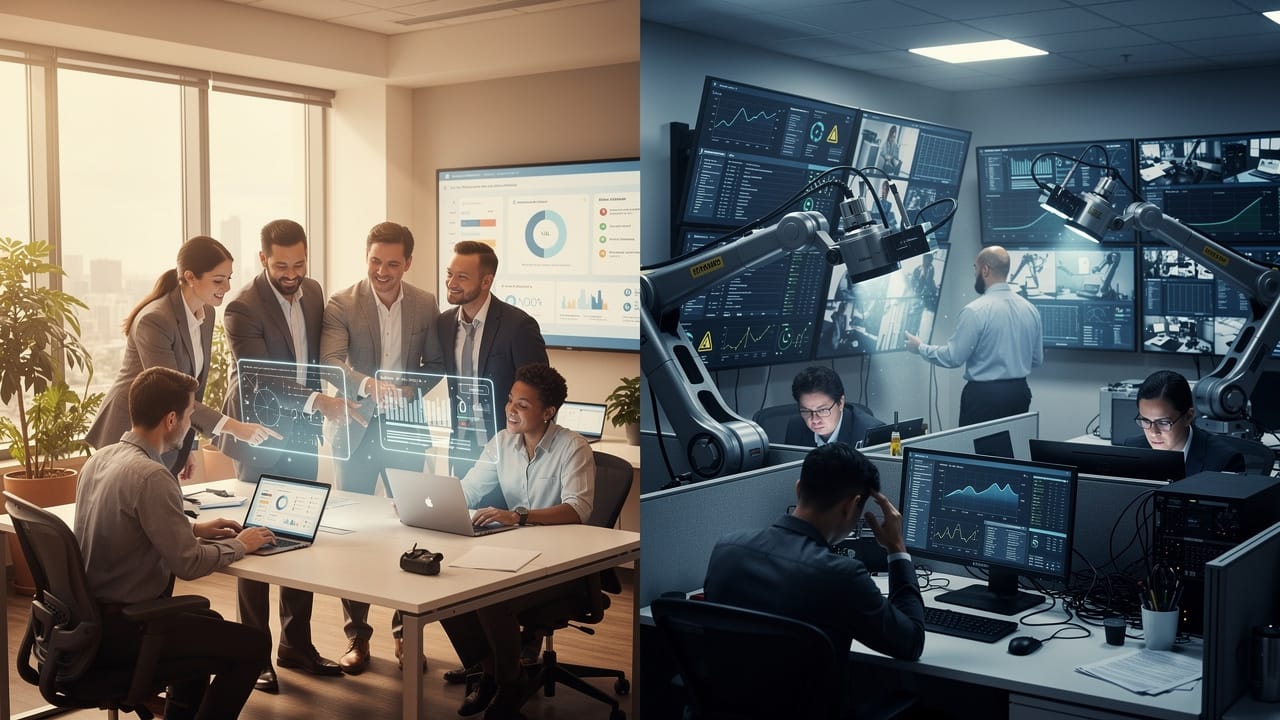
AI in the workplace is no longer one story. In one version, companies promise speed, smarter workflows, and less drudge work. In the other, workers get tighter surveillance, more mental fatigue, and a quiet expectation that they should produce more without getting more.
Quick Summary
- AI in the workplace is expanding fast, but the real divide is not adoption versus non-adoption, it is controlled AI versus always-on AI
- Public sector organizations are pushing a different model, favoring smaller, purpose-built systems over giant cloud-first tools
- According to research cited by MIT Technology Review, 79% of public sector executives globally are wary about AI data security
- New warnings about prolonged AI use suggest the debate is not just about jobs and efficiency, but also health, attention, and work quality
- The biggest winners may be organizations that use AI selectively and securely, not the ones that flood every workflow with chatbots
- For workers, the pros and cons of AI in the workplace now depend heavily on whether AI is being used as an assistant, a monitor, or a productivity whip
What Happened With AI in the Workplace Adoption
The current debate around AI in the workplace has moved beyond hype. Two stories are colliding at the same time.
First, organizations, especially in government and regulated sectors, are trying to make AI actually usable under real-world limits. A recent MIT Technology Review report focused on how public agencies are looking at smaller, purpose-built language models because they offer more control over security, governance, and infrastructure.
Second, a new warning highlighted by ZDNet is pushing a different concern into the spotlight, prolonged AI use may affect workers’ health and job performance. That matters because many companies are not just experimenting anymore. They are normalizing using AI in the workplace for writing, coding, support, search, scheduling, and decision support.
Put those together and the trend becomes clearer. The question is no longer whether AI will be used at work. It is how is AI used in the workplace, under what constraints, and who absorbs the downside when it goes wrong.
Key Details on Using AI in the Workplace
The most useful takeaway from the MIT report is that not every organization can use AI the Silicon Valley way. Government agencies often cannot send sensitive data freely across networks, cannot rely on permanent cloud connectivity, and cannot accept black-box systems they do not fully understand.
That is why smaller language models are getting serious attention. Instead of assuming every workplace needs the largest model possible, the emerging logic is simpler, build AI tools that fit the environment, the rules, and the risk tolerance.
One number stands out. 79% of public sector executives globally expressed concern about AI data security, according to the Capgemini study cited by MIT Technology Review. That is not abstract fear. It reflects legal obligations, classified or confidential information, and the reality that one bad deployment can become a political scandal.
Why smaller models matter for AI in the workplace
This matters well beyond government. Enterprises are discovering that the best version of AI in the workplace may not be the flashiest one. In heavily regulated sectors like healthcare, finance, defense, and critical infrastructure, a smaller model that runs in a controlled environment can be more valuable than a larger one that creates compliance headaches.
That is also where companies like OpenAI, ServiceNow, and Hewlett Packard Enterprise fit into the broader conversation. The market is shifting from pure model performance to operational fit, meaning security, auditability, cost, latency, and whether a tool can be trusted inside real workflows.
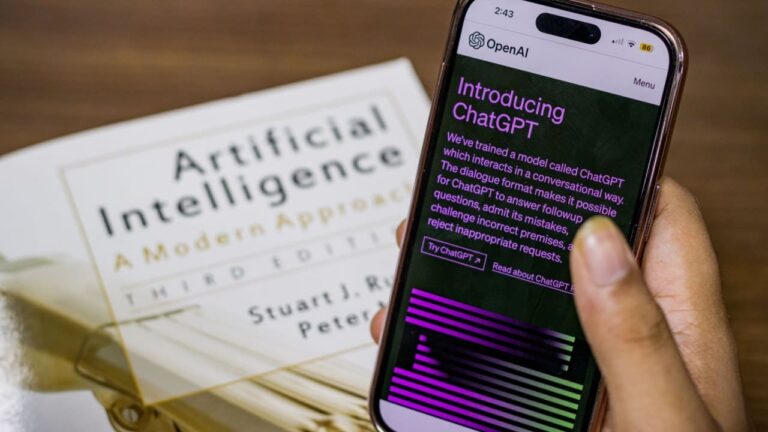
Meanwhile, consumer-facing AI tools like ChatGPT helped normalize AI at work, but the enterprise phase is different. This stage is less about novelty and more about permission, procurement, and risk controls.
What AI in the Workplace Means for You
If you are an employee, manager, or business owner, the central issue is not whether AI can help. It can. The real issue is what kind of workplace your employer is building around it.
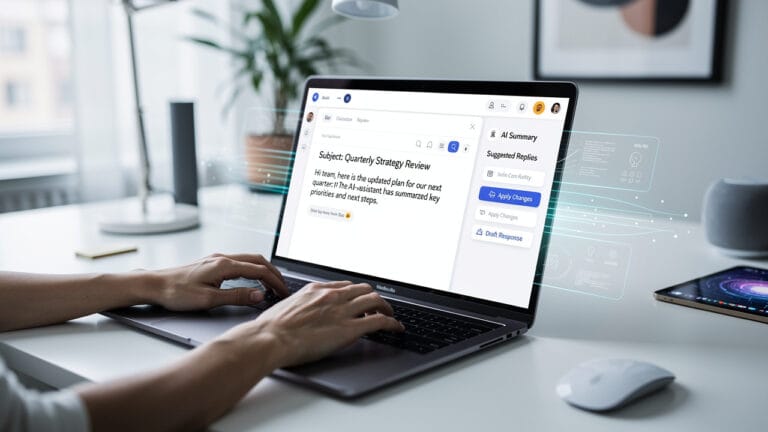
The benefits of AI in the workplace are obvious when the tool removes repetitive work. AI can summarize meetings, draft first-pass documents, search internal knowledge faster, and automate low-level support tasks. Used well, it can reduce bottlenecks and free up time for judgment-heavy work.
But the ugly version is easy to recognize too. Workers are being asked to use AI for more tasks without clearer boundaries, better training, or realistic workload expectations. In practice, that can turn AI from assistant to amplifier, amplifying stress, screen time, and pressure to produce at machine speed.
The worker experience is becoming the real battleground
The ZDNet warning deserves more attention than it will probably get. If prolonged AI use increases cognitive fatigue, encourages constant context-switching, or creates overreliance on machine-generated output, then companies may be introducing a productivity tool that quietly harms both quality and human stamina.
That changes the conversation around pros and cons of AI in the workplace. The risk is not just displacement. It is erosion, erosion of concentration, confidence, and ownership. Workers who spend all day validating machine output can end up doing a new kind of exhausting labor, one that looks easier from the outside than it feels from the chair.
Managers should pay attention here. If every workflow is redesigned around AI assistance, then review work increases. Verification becomes a job. Mistakes become harder to trace. Accountability gets blurry.
Who benefits, who loses
The winners are likely to be workers with domain expertise who can supervise AI rather than simply obey it. Analysts, engineers, project managers, and operators who know when the tool is wrong will remain valuable.
The losers may be entry-level workers whose basic tasks are easiest to automate, and mid-level employees forced into unrealistic output expectations. That tension is already visible in many recent ai in the workplace articles, including our own look at how AI in workplaces is about to change the workweek, not just your to-do list.
What Others Missed About AI in the Workplace
Most coverage still treats workplace AI as a software story. It is really a power story.
The MIT piece hints at something important, organizations with the toughest constraints may end up making smarter AI choices. That sounds backward, but it makes sense. When security, governance, and infrastructure limits are non-negotiable, companies are forced to ask better questions before deployment. What data should the model access? Where does it run? Who audits outputs? What happens when it fails?
By contrast, many private companies are still taking a “plug it in and see what happens” approach. That may look agile in the short term, but it can create long-term messes around compliance, worker trust, and accuracy.
Why restraint could beat scale
The next phase of AI in the workplace will likely reward selective adoption over blanket rollout. The winners will not be the firms that slap AI into every dashboard. They will be the ones that choose a few high-value use cases and build real guardrails around them.
This is also why the job-market panic often misses part of the story. AI is not only eliminating tasks, it is reorganizing authority inside companies. Teams that once relied on junior staff may rely on software plus a smaller number of reviewers. As we argued in AI and the Job Market: Disruption and New Rules, the deeper shift is not just automation, it is a rewrite of who gets hired, trained, and promoted.
Real Examples of How Is AI Used in the Workplace
Here is what this looks like in practice.
A government agency handling sensitive case files may avoid a giant internet-connected model and instead use a smaller internal system to search records, summarize policy documents, or assist staff with routine drafting. The goal is not creativity. It is controlled usefulness.
A hospital network might use AI to surface documentation suggestions without letting patient data leave tightly managed systems. A bank may use AI to help employees search compliance rules faster, but keep final decisions firmly with licensed humans.
In the private sector, teams are also using ChatGPT and other assistants for brainstorming, email drafts, customer support templates, coding help, and internal knowledge retrieval. That is where the line between useful and overused gets thin. An occasional drafting assistant is one thing. An all-day intermediary between worker and task is something else.
This is the answer to how is AI used in the workplace today, not as one universal tool, but as a stack of narrow helpers, copilots, search layers, and automation engines. Some save time. Some create new review burdens. Many do both.
Pros and Cons of AI in the Workplace
The benefits of AI in the workplace are real:
- Faster drafting, research, and search
- Better handling of repetitive or low-value tasks
- Improved access to internal knowledge
- Potential cost savings and shorter turnaround times
- More operational flexibility in constrained environments
The pros and cons of AI in the workplace become clearer when adoption gets deeper:
Pros
- Can reduce routine workload
- Helps small teams do more
- Useful in secure, purpose-built deployments
- May improve response times and service quality
Cons
- Security and governance risks remain significant
- Overuse can reduce attention and increase fatigue
- Workers may face higher expectations without higher pay
- Entry-level roles may shrink as basic tasks are absorbed by AI
- Human accountability gets fuzzier when outputs are machine-assisted
Conclusion on AI in the Workplace
AI in the workplace is not heading toward one clean outcome. It is becoming a test of whether organizations use automation to support people or to squeeze them harder. The smartest adopters will be the ones that treat AI as infrastructure with limits, not magic with no tradeoffs.
What Happens Next (2026-2030)
By 2030, the biggest gains from AI in the workplace will likely go to employers that build secure, narrow, high-trust systems instead of relying only on giant general-purpose models. Workers with expertise, judgment, and compliance knowledge will do better than workers whose value comes mainly from repeatable tasks. Big vendors will keep selling the dream of universal AI assistants, but many enterprises will quietly choose smaller, cheaper, more controllable systems. The real divide will not be AI versus no AI. It will be between workplaces that use AI to extend human capability and workplaces that use it to justify leaner staffing and constant output pressure.
Sources
About the Author