

The AI Restructuring Moment
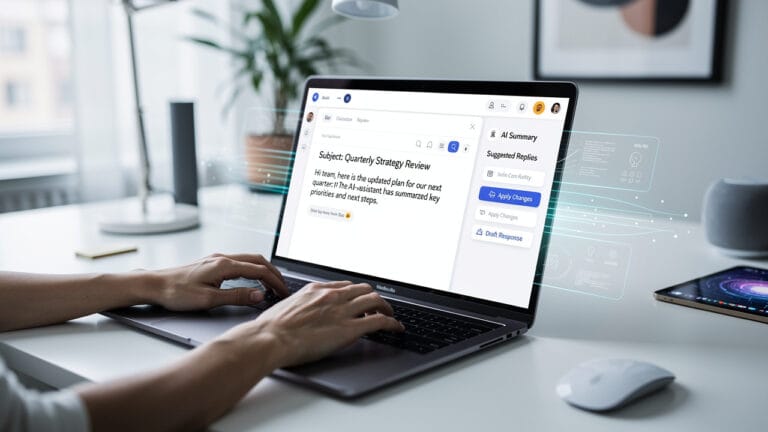
The headlines about tech layoffs and AI restructuring have moved from occasional shock to constant drumbeat. Large firms like Oracle are reportedly trimming staff as they pour resources into AI infrastructure and tools, channeling budgets toward data centers, specialized chips, and foundation models instead of human headcount. Articles such as the recent Forbes Innovation piece capture a mood that feels familiar across industries, a mix of aggressive automation plans, executive enthusiasm, and worker anxiety.
This is not the first time technology has reshaped the labor market. However, AI feels different because it is targeting tasks that were long considered safe for humans: writing, coding, decision making, and even emotional support. The result is a job market that is tighter in some places, booming in others, and confusing almost everywhere.
To understand what is really happening, we need to look beyond the headline numbers and examine three intertwined shifts: how AI is restructuring jobs inside companies, how it is changing human connection at work and beyond, and how it is fueling a surge in job-related fraud.
How AI Is Actually Restructuring Jobs
For many organizations, AI restructuring is less about mass replacement and more about reprioritization. Money that used to fund large middle layers of staff is being redirected into:
- Cloud and GPU infrastructure
- Data engineering and governance
- Smaller, more specialized teams that can design and manage AI systems
Firms are not just cutting to save costs. They are also racing to build AI capabilities they believe will decide the next decade of market leadership. As a result, some roles are disappearing while others are rapidly expanding.
Jobs Under Pressure
Several categories are particularly exposed:
- Repetitive knowledge work such as simple report writing, basic customer support, and routine data analysis is increasingly automated by large language models and chatbots.
- Mid-level coordination roles that focused on moving information between teams are harder to justify when AI can process documents, summarize meetings, and triage requests with little supervision.
- Entry-level “apprenticeship” roles in fields like marketing, law, and software development are shrinking as organizations expect junior tasks to be handled by AI tools.
The risk is not just unemployment. It is a broken career ladder. When fewer people are hired to do basic tasks, there are fewer opportunities to learn, practice, and gradually take on more complex work.
Jobs on the Rise
At the same time, AI is creating and expanding other roles:
- AI product managers who can define what problems to solve, manage data and model performance, and translate between technical teams and business leaders.
- Data and ML engineers who build pipelines, evaluate models, and keep systems reliable in production.
- AI safety, compliance, and governance specialists who ensure that automated systems operate within legal and ethical boundaries.
- Hybrid professionals such as lawyers, doctors, educators, and designers who use AI as a partner instead of a threat.
The key pattern is complementarity. Workers who can combine domain expertise with AI literacy tend to gain leverage. Those whose value is limited to what AI can already do at scale are more exposed to cuts or stagnating wages.
Emotional Labor, Loneliness, and the New Shape of Work
AI is not only changing what we do. It is also changing how we feel at work.
A growing market of AI companions and social chatbots is trying to address rising loneliness and disconnection. According to reporting in Digital Trends, early studies suggest these tools can reduce feelings of isolation for some people, at least in the short term. Workers who are remote, precariously employed, or between jobs might turn to AI chats for a sense of being “seen” during a stressful period.
This intersects with the job market in several ways:
- Displaced workers are more vulnerable to isolation and may lean on AI for emotional support when real community is harder to access.
- Customer-facing roles are increasingly offloading emotional labor to AI systems that simulate empathy during service interactions. Human workers then handle only escalations or complex cases, which can be more emotionally taxing.
- Managerial relationships risk becoming thinner if leaders rely heavily on AI dashboards and automated performance feedback, rather than direct human connection and mentorship.
Experts caution that while AI companions can help in specific contexts, they also carry a risk of emotional dependence and a subtle erosion of real-world social skills. No model can fully replace the mutual vulnerability, reciprocity, and unpredictability of human relationships. When work is already being automated, losing those relationships as well can deepen the sense of disposability.
In an AI-heavy workplace, organizations that intentionally invest in human connection, mentorship, and peer networks will have a significant advantage in engagement and retention.
The Dark Side: Job Scams in a Volatile Market
Economic uncertainty plus rapid technological change is a perfect recipe for fraud. According to a recent ZDNet report, the Federal Trade Commission has tracked a surge in job scams that total roughly 220 million dollars in losses.
AI plays into this trend in two ways:
1. More desperate job seekers. Tech layoffs and AI anxiety push many people to respond quickly to any promising lead, particularly if it references remote work or AI-related roles.
2. More convincing scams. AI tools can generate polished job descriptions, mimic corporate language, and even produce fake recruiter profiles with convincing photos and bios.
Recruiters and career experts point to several red flags:
- Requests for upfront payments, equipment fees, or “training costs”
- Interviews that never involve a live video or voice conversation
- Pressure to share personal data such as bank details or Social Security numbers very early in the process
In a world where AI is being used to both hire and deceive, verification skills become part of professional literacy. Job seekers should cross check company domains, use LinkedIn or official channels to confirm recruiter identities, and search for known scam patterns. The more AI drives volatility, the more critical it is to slow down when something sounds too good to be true.
How Workers Can Adapt Without Panic
Panic is understandable, but not very useful. A more constructive response is to treat AI as a new baseline technology, similar to spreadsheets or the internet, and to actively shape how it fits into your work.
Several practical strategies stand out:
1. Learn to use AI as a tool, not a crutch. Practice using generative models to draft, summarize, or explore ideas, then refine the output with your judgment and expertise. Employers increasingly expect this blended workflow.
2. Double down on domain depth. The more context and nuance a role requires, the harder it is to automate fully. Specialized knowledge in healthcare, law, operations, or a particular industry pairs strongly with AI.
3. Cultivate skills AI struggles with. Negotiation, conflict resolution, leadership, and cross cultural communication retain strong human advantage. These are central to management and client facing work.
4. Build visible proof of work. Portfolios, writing, public code repositories, and case studies make your value legible in a crowded market where AI can generate generic claims of competence.
5. Invest in real relationships. Mentors, peers, and communities help you see opportunities and navigate transitions, something no AI can currently do with the same lived perspective.
Ultimately, AI is amplifying existing inequalities and power structures more than it is inventing completely new ones. Workers who recognize this early can focus less on what AI might take away and more on where it can be an amplifier for their skills and values.
What Employers Need to Get Right
Organizations face their own version of the same challenge. Treating AI purely as a cost cutting tool is tempting, but short sighted. The best positioned companies will:
- Use AI to remove drudgery instead of pathways for advancement
- Retrain internal talent into AI adjacent roles rather than relying entirely on external hiring
- Be transparent about where and why automation is being deployed
- Support mental health and social connection as technology reshapes daily work
Viewed this way, AI is not just a technical upgrade. It is a test of organizational character. How firms handle this transition will matter at least as much as which models they deploy.
The job market is being restructured by AI, but not in a single, inevitable direction. There are multiple futures available, shaped by individual choices, company policies, and public regulation. The task now is to participate actively in that shaping rather than waiting passively for the next round of headlines.
Sources
About the Author