
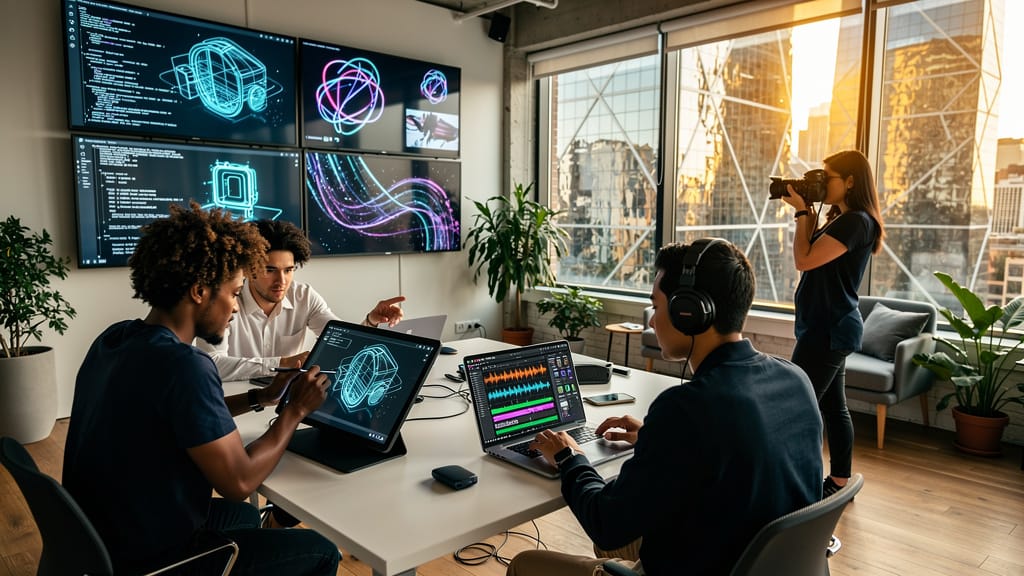
The New Wave of AI Creativity
Artificial intelligence is no longer confined to number crunching and data analytics. It is now composing songs, generating lyrics, and even performing convincing vocal impersonations. This rapid shift is turning music, writing, and other creative industries into test beds for both innovation and legal tension.
A vivid example is Suno, a music generator that can quickly produce tracks in the style of existing artists or recognizable genres. Tools like Suno give anyone the power to create polished audio without instruments, studios, or years of training. At the same time, they raise hard questions about copyright, authorship, and how far AI companies can go in mimicking human creativity without permission.
While other sectors, from AI health tools to autonomous vehicles, are already struggling with oversight and accountability, creative AI has its own distinct collision course with regulation and ethics.
Suno and the Rise of AI “Cover Slop”
According to reporting from The Verge, Suno can pump out finished songs from a short text prompt. Users can nudge the system toward particular artists or styles, then receive full arrangements with vocals that can sound like familiar performers.
The article describes how easy it has become to flood streaming services and social platforms with what critics call AI cover slop. These are songs that imitate popular tracks or artists closely enough that listeners might assume a connection, even when no license or approval exists.
Several concerns follow from this capability:
- Indistinguishable imitation: When AI outputs echo real artists so closely, it blurs the line between inspiration and copying.
- Scale of production: A single user can generate large volumes of music, which can overwhelm platforms that are already struggling with moderation.
- Monetization risks: Even if content is labeled as AI generated, it can still generate ad revenue, streams, and commercial value based on someone else’s style and reputation.
The core problem is not that machines can create music, it is how they do so, and what happens to the human work they are trained on and imitate.
Copyright Law Meets Generative Music
Copyright frameworks were designed for a world where human creators made discrete works that could be traced to an identifiable author. Systems like Suno strain these assumptions.
Key issues that surface in the Verge piece include:
- Training data opacity: There is intense debate about what music the system was trained on and whether those rights holders consented. If copyrighted recordings were used at scale without permission, the entire training process might become a legal flashpoint.
- Derivative works: When an AI output resembles a specific song or performance, it starts to look like an unlicensed derivative work, even if no direct audio samples appear in the final track.
- Vocal likeness: Replicating the sound of a recognizable singer raises separate questions about the right of publicity and control over a performer’s voice, not only over compositions and recordings.
This is why tools like Suno sit at the center of a growing copyright storm. They make it simple for ordinary users to skirt long established licensing systems that musicians and labels rely on for income.
Creative Freedom vs Creative Labor
AI fans see immense potential in these systems. With a prompt and a few tweaks, aspiring artists can prototype songs, experiment with genres, or add production polish that would otherwise be out of reach. AI can help with:
- Rapid songwriting drafts
- Style exploration without hiring session musicians
- Sound design for small projects, games, or videos
Yet the surge of AI generated work can undercut the economic value of human creativity. If online platforms fill up with machine made soundalikes, it can become harder for original voices to stand out or get paid. Established artists face a separate threat, their brand and style can be co opted by others in a way that dilutes their identity.
This tension between access and attribution is not unique to music. Large language models can already produce articles, stories, and scripts that echo well known authors. The creative economy as a whole is being forced to ask if there are limits to acceptable imitation when machines do the copying.
Lessons from Regulation and Other AI Battles
Broader AI debates show how messy and political these disputes can become. The MIT Technology Review newsletter on AI health tools and the Pentagon’s feud with Anthropic highlights two relevant patterns.
First, AI systems often reach the public with limited external evaluation. In healthcare, this creates obvious risks for patient safety. In music and writing, the harm is different, it falls on rights holders and creative workers who were not consulted before their work was used as fuel for new products.
Second, the Pentagon’s attempt to label Anthropic a supply chain risk, which a judge temporarily blocked, shows how political and legal fights around AI can spiral when established processes are bypassed. Instead of careful rule making, decisions end up shaped by public outrage, social media pressure, and rushed interventions.
The same could happen in creative fields. If lawmakers respond only after a high profile scandal around AI generated music or writing, the resulting rules may be reactive and blunt, rather than nuanced enough to balance innovation with protection.
Why Creative AI Needs Real Governance
Across domains, AI is pushing up against existing regulatory gaps. For example, coverage in Forbes Innovation discusses failures in robotaxi operations and the lack of transparency and accountability from developers. While that story is about transportation, the structural problems look familiar.
- Opaque systems: Users and regulators often know little about how systems are trained or how decisions are made.
- Weak disclosure: Companies may not volunteer details about failures, data sources, or the full impact on affected communities.
- Regulatory lag: Rules and standards arrive slowly compared to the pace of deployment.
Applied to music and writing, these same issues suggest that markets alone will not correct the imbalance between AI platforms and human creators.
Potential elements of better governance could include:
- Clear rules for training data consent, especially when copyrighted work or distinctive voices are involved
- Requirements for auditing AI systems that generate content in sensitive or heavily regulated industries
- Stronger labeling of AI generated content so audiences can make informed choices
- New kinds of collective licensing or compensation schemes that reflect the role of human works in training powerful models
Without such measures, creative AI may continue to grow mainly on the backs of uncredited artists and writers.
Finding a Sustainable Creative Future with AI
AI will not retreat from creative fields. Tools like Suno already show how quickly they can become popular and influential. The real question is whether the next phase of development will respect the rights and livelihoods of the humans whose work makes these systems possible.
A more sustainable path would treat AI as assistive rather than extractive. That means focusing on collaboration features, transparency about how models learn, and payment mechanisms that recognize the value of training data and artistic identity.
If policymakers, creators, and AI companies can align on that vision, then music, writing, and other arts can benefit from powerful new tools without erasing the people behind the culture.
Sources
About the Author