
The debate over the ai impact on jobs has moved past hype. What used to sound like Silicon Valley theater is now turning into a serious labor question, one that reaches from office cubicles to call centers to the weekly schedule of ordinary workers.
Quick Summary
- The ai impact on jobs is no longer just a prediction, companies and economists are now treating it like a policy problem.
- One of the most important missing pieces is price elasticity, or whether cheaper AI-powered work creates enough new demand to offset lost human tasks.
- OpenAI is publicly floating ideas like a four-day work week and more investment in people-facing sectors such as childcare, education, and healthcare.
- The impact of AI on jobs will not be uniform, administrative, service, accounting, and entry-level knowledge work are facing very different timelines.
- Comments and signals from large employers are adding urgency to the discussion, including growing interest around the ai impact on jobs Walmart CEO conversation.
- The biggest mistake is treating this as a simple “jobs disappear” story, the real shift is that work itself is being reorganized.
What Happened in the AI Impact on Jobs Debate
Two fresh developments pushed the ai impact on jobs conversation back into focus this week.
First, reporting from MIT Technology Review highlighted a deceptively simple idea from economist Alex Imas: if policymakers want to understand what AI does to employment, they need better data on price elasticity. In plain English, if AI makes a task much cheaper, do customers buy enough more of that service to preserve jobs, or even create new ones? That question may matter more than many of the dramatic forecasts people keep throwing around.
Second, the BBC reported that OpenAI is encouraging firms to experiment with a four-day work week and think more seriously about how labor should adapt as AI gets stronger. That is notable because it signals a shift from pure product evangelism to social adjustment. Even the companies building these tools are now openly discussing disruption.
Key Details on the Impact of AI on Jobs
The most useful detail in all of this is not a layoff headline. It is the argument that we still lack the right measurement system.
Why economists suddenly care about elasticity
For years, a lot of the public conversation assumed one of two extremes: AI either destroys vast numbers of jobs, or it simply boosts workers and creates new productivity. Reality is messier. The impact of AI on jobs depends on whether lower costs unlock enough new demand.
Take customer support. If AI cuts the cost of handling a customer interaction by 70%, a company might need fewer agents. But if that same lower cost means the company offers support in more languages, for more hours, across more channels, some human roles may remain or even expand into escalation, quality control, and relationship work.
That is why this data point matters so much. Without it, governments are mostly guessing.
Why OpenAI is talking about work weeks, not just software
OpenAI’s policy suggestions are revealing. The company is not just saying AI will raise productivity. It is also hinting that societies may need to share those gains differently. A four-day week is one way to do that.
Its other suggestion, creating more opportunities in care-heavy sectors, is equally important. AI is strong at pattern recognition, drafting, summarizing, and routine analysis. It is much weaker at emotional labor, trust-building, and physical presence. That makes childcare, education, healthcare, and similar roles look less like leftovers and more like strategic employment buffers.
The job categories most exposed first
The ai impact on accounting jobs is a good example of how this unfolds. Bookkeeping, invoice processing, expense categorization, audit preparation, and first-pass compliance checks are all increasingly automatable. That does not mean accountants vanish. It means junior staff may do less rote work and more exception handling, client advising, and systems oversight, if firms actually redesign the role intelligently.
Service work is another front line. The ai impact on service jobs will hit unevenly. Fast-food ordering, retail assistance, call center triage, scheduling, and basic claims support are exposed. But jobs requiring persuasion, in-person judgment, or conflict management are harder to fully automate.
What This Means for You as the AI Impact on Jobs Accelerates
This is where the story stops being abstract.
If you are a white-collar worker
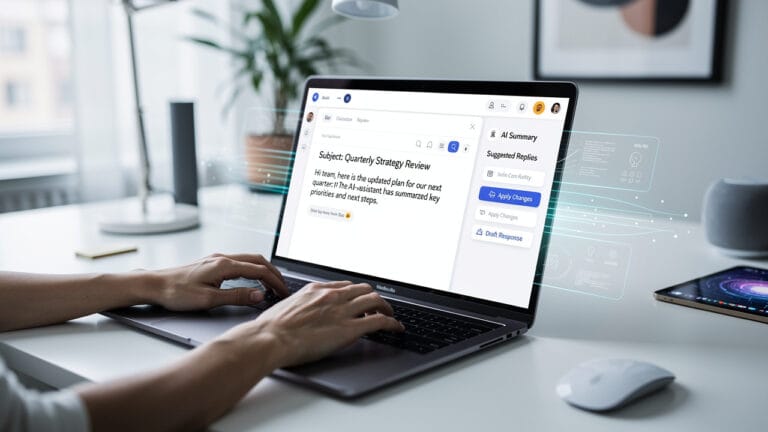
Many office workers assumed automation would hit factories first and leave professional work relatively safe. AI has scrambled that logic. Drafting emails, creating slide decks, writing summaries, coding boilerplate, scheduling, and documenting meetings are exactly the sort of repetitive cognitive tasks these tools can handle.
That does not always kill a role. Often, it changes the economics of the role. One manager may need fewer coordinators. One consultant may support more clients. One accountant may review work that used to require a small team. The ai impact on jobs by 2028 is likely to show up less as instant mass unemployment and more as slower hiring, thinner entry-level pipelines, and pressure on middle-skill administrative positions.
For workers, the practical move is not “learn to code” all over again. It is to become the person who can use AI, check AI, and fix AI’s mistakes. Oversight is becoming a job skill.
If you work in retail, logistics, or large frontline operations
This is why the ai impact on jobs Walmart CEO discussion keeps resonating. When leaders at massive employers talk about automation, people hear the stakes immediately. Retail and logistics are huge job engines. If AI improves forecasting, staffing, support chat, shelf monitoring, inventory analysis, and self-service systems, companies can run leaner without announcing dramatic robot takeovers.
That can mean fewer back-office roles, fewer repetitive service tasks, and more pressure on workers to handle the difficult edge cases machines cannot solve. In practice, the best jobs may increasingly belong to people who manage exceptions: angry customers, damaged shipments, fraud, local judgment calls, and coordination problems.
If you are early in your career
Entry-level workers face a specific risk. Companies historically hired juniors to do the repetitive, low-stakes work that teaches the business. AI now performs some of that work directly. If firms are not careful, they will automate the training ladder and then complain there is no talent pipeline in three years.
That issue connects with some themes we explored in AI-Driven Job Market Changes: Chaos, Anxiety, and New Opportunity, where the real danger was not just displacement, but instability in how careers begin.
What Others Missed About the AI Impact on Jobs
Too much of this debate is framed as “Will AI take jobs?” That is the wrong question.
The real fight is over bargaining power
The ai impact on jobs is also an employer-power story. AI gives companies a new way to measure, standardize, monitor, and deskill work. Even where headcount stays stable, workers may lose autonomy. Scripts get tighter. Output expectations rise. Fewer people may be needed to produce more, which weakens labor’s leverage.
That matters because productivity gains do not automatically improve life for workers. If those gains mostly become higher margins, then AI feels like speed-up, not progress.
A four-day week is not just a lifestyle perk
OpenAI’s support for shorter work weeks should be read as a strategic signal. If AI sharply cuts the time needed for certain tasks, societies have two broad choices: preserve the old work structure and squeeze labor demand, or spread the productivity gains through time. Shorter work weeks, retraining support, wage insurance, and sectoral investment are all ways to soften the landing.
This is one reason the ai impact on jobs by 2028 debate matters now. Labor-market policy moves slowly. Companies adopt tools much faster than governments redesign safety nets.
We are underestimating hybrid workforces
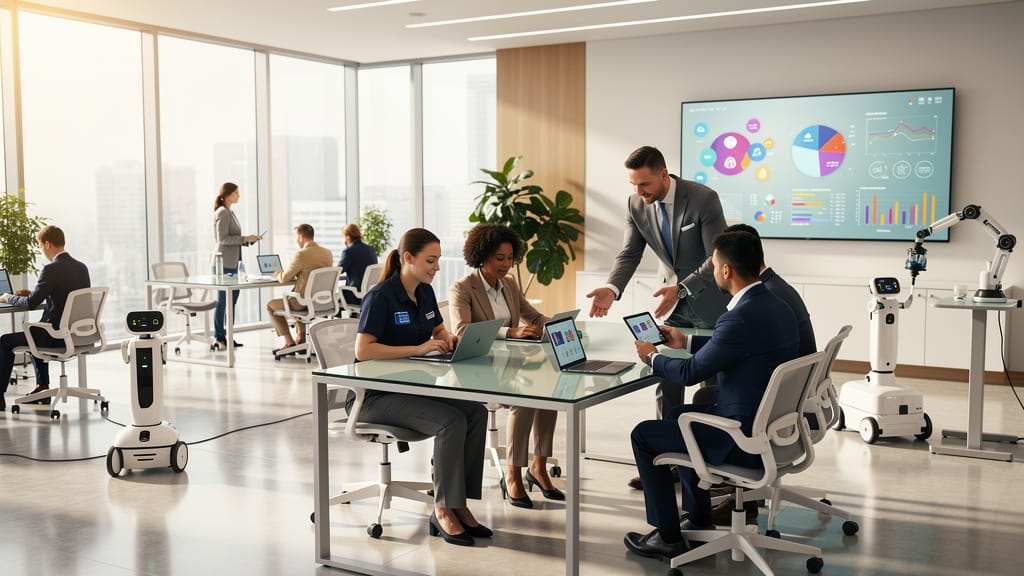
The future is not fully human or fully automated. It is blended. One worker, one AI system, one workflow. In some sectors that will be empowering. In others it will be exhausting, especially if workers are asked to supervise unreliable systems while maintaining the same performance targets.
We have already seen related pressures in automation-heavy labor markets, including trends discussed in AI and the Job Market: Disruption and New Rules. The pattern is familiar: technology removes some tasks, creates new ones, and then management tries to capture the efficiency gains before workers can.
Real Examples of How AI Impact on Jobs Shows Up Day to Day
A small business accountant now uses AI to classify transactions, draft client emails, and summarize cash-flow issues. That speeds up the job, but it also means fewer hours billed for basic tasks. The human value shifts to advice, interpretation, and error catching. That is the ai impact on accounting jobs in one snapshot.
A retailer deploys AI chat tools for routine customer questions and uses machine learning to optimize schedules. Fewer people answer “where is my order?” questions. More people deal with returns disputes, fraud flags, and upset customers. That is the ai impact on service jobs, not vanishing work but harder work concentrated in fewer hands.
An office team uses AI assistants to prepare first drafts, notes, and research digests. The junior analyst who used to do those tasks all day now needs stronger judgment and communication skills to stay valuable. The task list shrinks, but the performance bar rises.
Pros and Cons of the Current AI Impact on Jobs Shift
Pros
- Higher productivity for repetitive cognitive work
- Potential for shorter work weeks if gains are shared
- More room for human-centered sectors to expand
- Faster service and lower costs for consumers
Cons
- Entry-level roles may shrink before new pathways appear
- Wage pressure could rise in administrative and support jobs
- Workers may be asked to supervise flawed AI systems
- Productivity gains may go to employers, not employees
Conclusion on the AI Impact on Jobs
The ai impact on jobs is not a distant theory anymore. It is becoming a measurable economic reality, and the biggest question is not whether work changes, but who benefits from that change.
My bet is that the next two years will bring less of a sudden jobs apocalypse and more of a quiet restructuring, especially in support, service, and junior knowledge roles. If companies and governments wait for obvious damage before acting, they will already be late.
Sources
About the Author