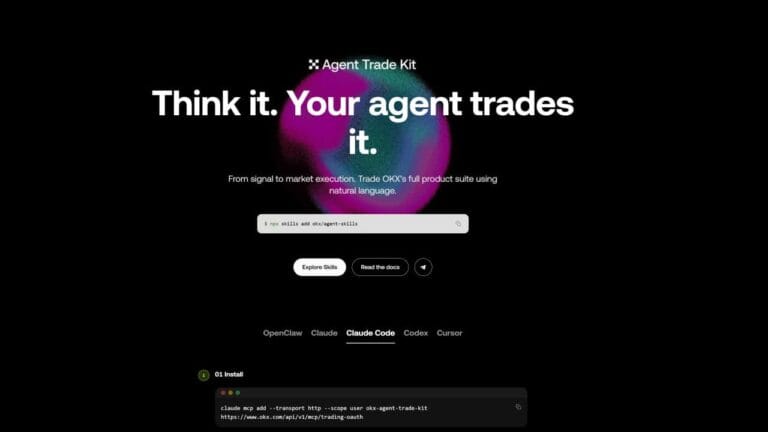


The rapid rise of generative AI agents has kicked off a new arms race in the tech industry. Every few weeks, major players unveil smarter, more specialized systems that can summarize documents, write code, manage workflows, and even answer sensitive medical questions. Underneath the hype is a quieter but crucial shift: the demand for fine‑grained customization. Organizations no longer just want generic chatbots, they want agents tailored to their domain, their rules, and their risk tolerance.
At the same time, this wave of highly capable, customizable agents is colliding with politics, regulation, and questions of trust. A recent clash between the Pentagon and Anthropic over alleged supply chain risk, along with the rapid rollout of AI health tools by firms like Microsoft, Amazon, and OpenAI, shows how technical progress can quickly spill into cultural and institutional conflict.
From generic chatbots to deeply tailored agents
The earliest mainstream generative AI tools behaved like generalists. You typed a prompt, they gave you some text. Today, what is driving competition is not just raw model capability, it is how easily those models can be turned into agents that act within specific environments.
These agents are being embedded in customer service desks, coding environments, productivity suites, and critically, in healthcare contexts. Major companies are racing to offer platforms where customers can:
- Adjust behavior through system prompts and configuration
- Attach domain specific data, such as internal documents or medical guidelines
- Set guardrails that limit what the agent can say or do
- Integrate the agent with internal tools and workflows
Customization is powerful because it turns a one size fits all model into a specialist that appears to understand your world. For a hospital, that might mean an AI triage assistant that aligns with local clinical protocols. For a government agency, that might mean an internal research assistant that strictly follows classification rules.
Yet the more customized these agents become, the more we have to ask: who is responsible if something goes wrong, the base model provider or the organization that tuned it?
AI health agents: promise, pressure, and missing evaluations
In the last few months, Microsoft, Amazon, and OpenAI have each launched medical chatbots or health oriented AI tools. These systems are often described as assistants that can help with things like:
- Answering basic health questions
- Interpreting medical notes or lab results in plain language
- Drafting documentation for clinicians
- Helping patients navigate complex healthcare systems
They respond to a huge unmet need. In many regions, people struggle to access timely medical advice, wait times are long, and clinicians are overburdened. A conversational agent that is always available can feel like a lifeline.
However, as highlighted in MIT Technology Review, an unsettling pattern has emerged. These tools are often rolled out to millions of users with limited external evaluation. Independent experts, regulators, and patient groups rarely see detailed evidence of:
- How accurately the systems perform across diverse populations
- How they behave in edge cases or rare conditions
- How often they provide incorrect reassurance or unnecessary alarm
- Whether they respect existing clinical standards
Customization makes this even more complicated. A hospital might adapt a general medical chatbot to its own guidelines, which creates a new system that behaves differently from the base version. If the tuned agent gives unsafe advice, is that the fault of the original model, the customization, or both?
The tension is clear. Companies feel enormous pressure to move fast and capture market share in healthcare AI. Patients and clinicians, however, need tools that are demonstrably safe, especially once those tools start sounding authoritative.
When AI customization meets culture war
The debate over AI agents is not confined to hospitals and tech blogs. It is now reaching the heart of government and national security.
A striking example is the running battle between the US Department of Defense and Anthropic, one of the leading AI labs. According to MIT Technology Review, the Pentagon attempted to label Anthropic as a supply chain risk, which would have effectively barred US agencies from using its tools. A judge has temporarily blocked that move, raising doubts about how the conflict was handled.
The dispute was not just a dry procurement question. It morphed into a culture war flashpoint, amplified by social media and political rhetoric. Allegations and counterallegations about safety, ideology, and national loyalty overshadowed the slower, more technical processes that usually govern supplier risk assessments.
In one sense, this clash is about AI agents and customization too. Government agencies want systems they can trust, configure, and deploy without fearing hidden vulnerabilities or biased behavior. Vendors want to prove they are safe partners without becoming pawns in political battles. When normal oversight processes are bypassed or politicized, both sides lose clarity about what counts as legitimate risk.
The court’s intervention suggests that the guardrails around how governments classify AI suppliers still matter. It also highlights how easily the narrative around AI can be pulled into broader partisan fights that have little to do with the underlying technology.
Regulation catches up: California’s move on AI rules
While federal agencies wrestle with individual vendors, states are starting to take a broader view. California has moved ahead with new AI regulations, even in the face of opposition from the federal government. As reported in the same MIT Technology Review piece, Governor Gavin Newsom has approved measures that the Trump administration had pushed against.
Although the detailed contents of the California rules are not fully described in the source text, the political signal is clear. Some jurisdictions are no longer willing to wait for industry self regulation or federal consensus. They want direct oversight of how AI systems are built, customized, and deployed.
For companies building AI agents, especially those offering high flexibility to customers, this trend matters. Rules about evaluation, transparency, and accountability can affect:
- How open platforms can be to user customization
- What evidence must be produced before deployment in sensitive domains
- How quickly updates and new features can ship
Customization is a selling point, but it may also become a regulated activity, particularly in areas such as healthcare, education, and public services.
Customization as both opportunity and liability
Across these stories, a pattern emerges. Customizable AI agents create huge value precisely because they can be molded to the needs of specific institutions. That same mutability, however, raises questions about oversight, safety, and trust.
Key challenges include:
- Attribution of responsibility
When an agent is customized by a third party, who is accountable for harmful outcomes?
- Consistency across versions
Each customized variant is, in effect, a new system. Evaluating them all is difficult, yet necessary when they operate in critical settings.
- Political and cultural pressures
AI providers can be swept into broader ideological disputes, which can distort how safety and risk are assessed.
- Regulatory fragmentation
Different states and agencies may impose different expectations, complicating deployment for national or global customers.
The arms race in agents will not slow down. Platforms are getting better at letting customers plug in proprietary data sets, define complex behaviors, and orchestrate multiple tools at once. What needs to catch up is the ecosystem around them: transparent evaluation, clear legal responsibility, and governance processes that are robust enough to resist culture war dynamics.
If that happens, AI agents and their customization options could evolve from a source of anxiety into a durable piece of infrastructure. They might become as boring, and as trusted, as the routing protocols that quietly move data around the internet today. Getting there will require less frenzy and more discipline from companies, governments, and users alike.
Sources
About the Author