
The next big fight in wearable technology trends is not about better step counting. It is about whether you are willing to wear devices that listen to you, cool your body, and quietly reshape what “normal” everyday tech feels like.
Quick Summary
- AI wearables are moving beyond fitness, with devices like Bee focusing on recording, transcribing, and summarizing real-life conversations.
- Amazon is betting that passive, always-nearby assistants will be more useful than people expect, even if they also feel invasive.
- Sony’s latest wearable air conditioner shows that wearable technology trends now include comfort tech, not just health tracking or notifications.
- The most important shift is practical: wearables are becoming tools for memory, climate control, and task management, not just wellness dashboards.
- Privacy risk is rising fast, because the same devices that help users stay organized can also create a constant ambient record of daily life.
- The companies that win the next phase of wearable technology trends will be the ones that make people feel helped, not watched.
What Happened in Wearable Technology Trends This Week
Two very different gadgets reveal where the category is heading.
First, TechCrunch got hands-on time with Bee, an AI wrist device acquired by Amazon last year. Bee’s pitch is simple and slightly unsettling: wear it, tap to record, and let it turn your day into searchable notes, summaries, and reminders. It is positioned like a personal assistant for people who forget things, juggle meetings, or simply want a machine-generated memory.
Second, Forbes highlighted Sony’s Reon Pocket Pro Plus, a wearable air conditioner designed to sit under clothing and help users deal with summer heat. That may sound niche, but it points to a broader truth about trends in wearable technology: the category is escaping the old smartwatch template.
The interesting part is not that these products exist. It is that they are being normalized by major tech companies and consumer brands at the same time. That tells you the market sees wearables as far more than wrist-based fitness accessories.
Key Details on the New Wearable Technology Market Trends
Bee works by pairing a wrist gadget with a mobile app. When activated, it records conversations, then produces a transcript and a readable summary afterward. According to TechCrunch’s description, the device shows a green light while recording, which is meant to signal that audio capture is happening. The basic concept is straightforward, but the social implications are not.
Why memory is becoming a product category
This is one of the clearest wearable technology market trends emerging right now: companies increasingly think forgetfulness, overload, and information sprawl are consumer pain points worth monetizing. A wearable that remembers what you said, what someone promised, and what meeting details slipped your mind is not just another gadget. It is a claim that human memory itself is now a software layer.
In the middle of the market, that creates a new kind of product. The first generation of wearables mostly measured the body. The next generation is starting to monitor context.
Sony’s device pushes the trend in a different direction. Instead of tracking biometrics or serving notifications, it deals with physical discomfort. The point is not data collection for its own sake. The point is relief. In a world of worsening heatwaves, that is not a gimmick. It is a strong argument for why wearable technology future trends may be defined by direct utility rather than broad lifestyle branding.
The category is widening faster than people realize
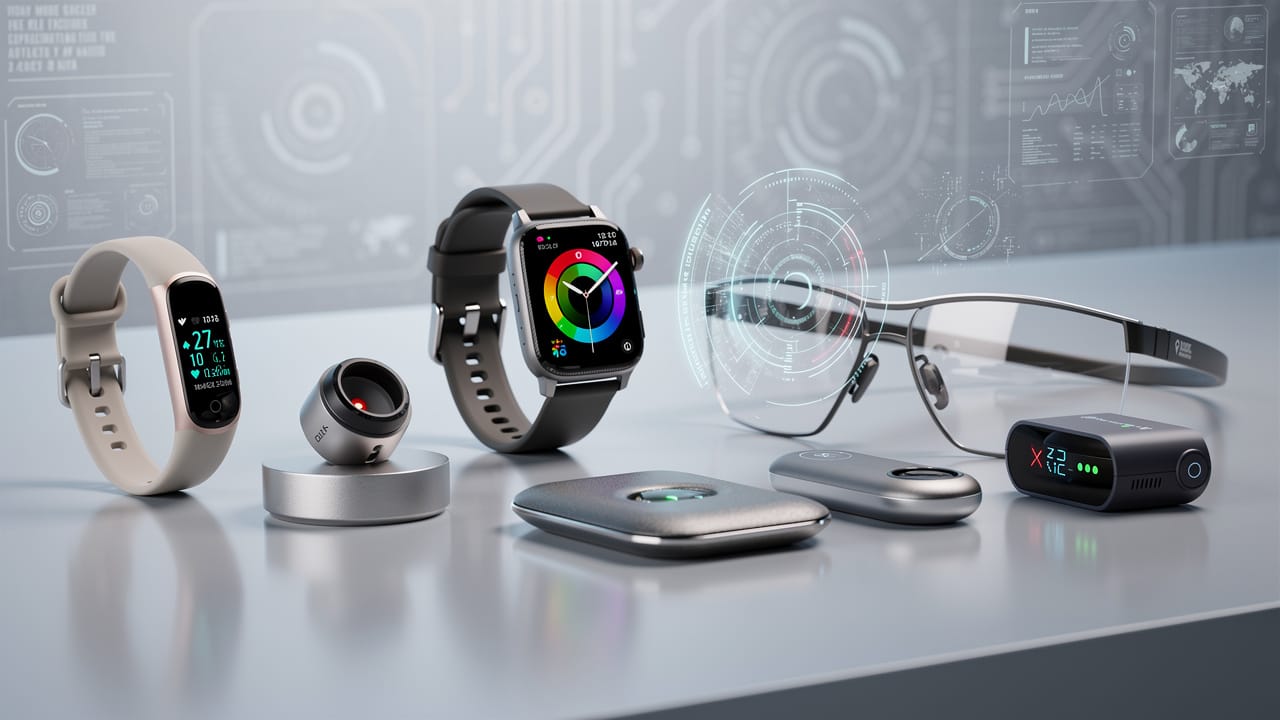
The old comparisons, including wearable technology trends 2017 and even wearable technology trends 2019, now look almost quaint. Back then, the conversation centered on smartwatches, fitness bands, earbuds, and maybe smart glasses. Today, the category includes AI memory companions, body-cooling devices, health rings, posture trackers, and specialized industrial gear.
That is why this moment matters. Wearables are no longer one market with one use case. They are becoming a collection of always-nearby computing tools, each designed to solve a narrow, high-frequency problem.
What Wearable Technology Trends Mean for You
If you are a consumer, this shift is both promising and risky.
The promise is obvious. If a device can summarize conversations, remind you about appointments, or help you tolerate extreme heat during a commute, then it is solving an everyday problem that many phones still handle badly. Passive convenience is the real selling point of today’s wearable technology trends.
The privacy tradeoff is no longer abstract
The problem is that convenience now depends on constant capture. Bee is useful precisely because it can collect details you would otherwise forget. But anyone who has ever hesitated before speaking near a smart speaker already understands the tension. A wearable that sits on your body and records real-world conversations raises a much more personal version of that concern.
The green recording light helps, but social trust is not built by LEDs alone. In practice, many people around the wearer may not notice it, understand it, or feel comfortable with it. That means the burden shifts to users to explain the device, manage awkward interactions, and decide when convenience becomes surveillance.
This is where a lot of coverage around wearable technology trends gets too soft. It treats privacy as a disclosure issue, when it is really a behavioral one. People do not reject invasive products only because of data policy. They reject them because those products make normal human interactions feel strange.
Utility is beating novelty
On the other hand, comfort wearables like Sony’s cooling device could have a much smoother path. They do not ask bystanders to participate. They do not need you to surrender intimate conversations. They offer a direct benefit that people immediately understand.
That difference matters commercially. The winners in wearable technology market trends may not be the flashiest AI products. They may be the devices that disappear into daily life and quietly solve one annoying problem very well.
It is also why health-adjacent categories remain strong. As we noted in our look at Google’s Fitbit Shake-Up Is Really a Power Move in health wearables technology, the biggest companies are rethinking wearables less as accessories and more as gateways to recurring health, behavior, and subscription ecosystems.
What Others Missed About Wearable Technology Trends
A lot of people will frame Bee as either exciting AI or creepy AI. That is too shallow.
The deeper story is that wearables are becoming permission machines. They ask users to accept new boundaries around what gets captured, processed, and acted on. Once that permission is granted, companies can move from simple tracking into interpretation: what you said, what you meant, what matters, what should happen next.
The real product is not the device
The device itself may end up being secondary. The larger opportunity is the service layer behind it, the transcripts, summaries, prompts, reminders, and future integrations that make a wearable feel smarter over time. That is a major shift in trends in wearable technology, because it pulls the category closer to AI platforms and cloud services.
Bee is a good example. The hardware is interesting, but the sticky value is likely the memory archive it creates. Once users depend on that archive, leaving becomes harder. That is not just gadget design. It is ecosystem design.
The same logic applies to climate wearables. A cooling device sounds simple, yet it could easily evolve into adaptive comfort systems linked to weather, work conditions, and personal heat tolerance. In other words, today’s “single-purpose” wearable is tomorrow’s data-rich service category.
Real Examples of Where These Wearable Technology Trends Are Headed
Consider the office worker who forgets action items after back-to-back meetings. A device like the Bee Pioneer Edition could turn spoken chaos into a usable recap. That sounds excellent, until one participant asks whether they consented to being recorded.
Now think about a commuter in a city hit by repeated summer heatwaves. Sony’s wearable cooling tech offers a far more straightforward value proposition. No one else has to change behavior for it to work. That is a meaningful advantage.
There is also a broader industrial lesson here. Wired’s reporting on robotic meal prep in San Francisco’s Tenderloin was not about wearables, but it highlighted the same market instinct: labor shortages, overload, and operational friction are pushing organizations toward practical automation. Whether it is a kitchen robot or a wrist assistant, buyers are increasingly rewarding technology that fills human capability gaps instead of merely producing more data.
That is why the most credible wearable technology future trends are likely to center on augmentation. Better recall. Better thermal comfort. Better disease monitoring. Better safety alerts. Not every device needs to become a general-purpose computer strapped to your body.
Pros and Cons of Today’s Wearable Technology Trends
Pros
- Solves real-world problems beyond fitness
- Makes AI feel more immediate and useful
- Opens new categories such as memory assistance and thermal comfort
- Could improve productivity for busy professionals and caregivers
- Expands accessibility for people with cognitive load or environmental sensitivity
Cons
- Privacy concerns increase sharply with audio-recording wearables
- Social acceptance is still low for devices that capture conversation
- Some products may create dependence on cloud summaries and subscriptions
- Narrow-purpose devices can be expensive if they solve only one problem
- The gap between what users think is being collected and what is actually stored may remain large
Conclusion on Wearable Technology Trends
The most important change in wearable technology trends is not smaller hardware or prettier design. It is that wearables are becoming more intimate, more specialized, and more willing to insert themselves into the messiest parts of everyday life.
Some of these products will flop because they ask too much trust too quickly. Others, especially the ones that solve a single painful problem cleanly, will define the next era of personal tech.
What Happens Next (2026-2030)
Between now and 2030, the biggest winners will be companies that make wearables feel invisible in use but obvious in value. AI memory devices will grow, but only if they can prove stronger privacy controls than the public has seen so far. Comfort tech, health wearables, and job-specific devices will likely expand faster than many consumer AI gadgets because their benefits are immediate and less socially awkward. The losers will be products that collect a lot, explain little, and expect users to normalize constant recording without resistance.
Sources
About the Author