
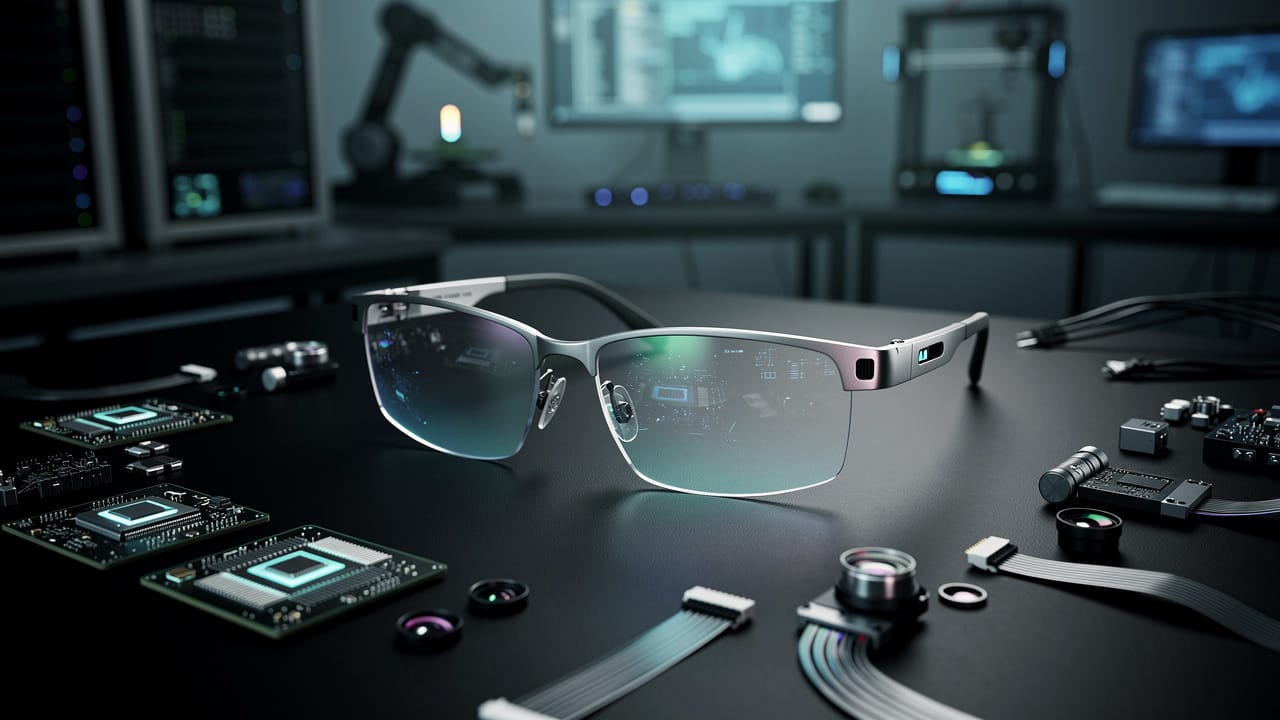
Smart glasses development is no longer a moonshot side project, it is becoming a fight over who gets to own the next screen on your face. The surprising part is that Apple may win by being less ambitious than everyone expected, not more.
Quick Summary
- Apple smart glasses development appears to be moving into a more practical phase, with reports that the company is testing four frame designs ahead of a possible 2027 launch.
- Instead of chasing bulky mixed reality hardware again, Apple seems to be prioritizing wearability, social acceptance, and everyday use.
- Design choices matter more than usual here because smart glasses fail fast when they look awkward, feel invasive, or raise privacy concerns.
- A key battleground in smart glasses development is not raw computing power, but whether people will actually wear these devices in public.
- Apple may be trying to avoid the “always-recording creepiness” problem that has followed rivals, including products from Meta.
- The next few years will likely split the market into two categories: lightweight AI glasses for everyday use, and premium immersive headsets for niche buyers.
What Happened in Smart Glasses Development
According to TechCrunch, Apple is reportedly testing four different smart glasses designs as it works toward a product that could arrive in 2027, with a possible preview by the end of 2026. The reported options range from larger rectangular frames to slimmer rectangular models, plus larger and smaller oval designs.
That sounds like a styling exercise, but it is really a signal that smart glasses development has entered the hard part. Building sensors, chips, and cameras is difficult. Building a face-worn computer that people don’t find ugly, awkward, or creepy is even harder.
Reports from Digital Trends suggest Apple is also thinking carefully about privacy signals and branding. That matters because the company is not entering an empty field. It is entering a category where consumers already have opinions, and many of those opinions are not flattering.
Key Details on Apple Smart Glasses Development
The most revealing detail is not that Apple is testing glasses, everyone assumed that. It is that the company is testing four frame shapes and multiple colors, including black, ocean blue, and light brown. In other words, Apple is treating eyewear as fashion first, hardware second.
Why design matters more than specs in smart glasses development
This is where a lot of coverage gets lazy. People talk about displays, AI, cameras, and battery life as if smart glasses are just tiny phones. They are not. Glasses live on your face, in public, all day. If the shape is wrong, the product dies before its software has a chance.
That explains why Apple smart glasses development looks more conservative than the company’s earlier augmented reality ambitions. The reported strategy is a step away from the grand mixed-reality vision that helped produce Vision Pro, a product that impressed reviewers technically but struggled to feel essential at its premium price.
There is also a chip angle worth watching. Apple smart glasses chips development will likely determine whether the final product feels seamless or compromised. Smart glasses need low heat, low weight, low power draw, and instant responsiveness. That combination is brutal. A device like this cannot feel like a beta project strapped to your temples.
Apple’s quiet contrast with Meta’s approach
Unlike Meta, which has leaned into recognizable eyewear partnerships and highly visible social hardware, Apple appears more interested in controlling the full stack, from frame style to silicon to privacy messaging. The comparison to the Meta Ray-Ban Display is unavoidable because that product helped normalize the idea that glasses could be both consumer electronics and accessories.
But Apple seems to be asking a different question. Not “How do we make smart glasses feel cool?” but “How do we make them feel normal?”
That distinction could define the next phase of smart glasses development.
What Smart Glasses Development Means for You
If you are a consumer, this race affects more than gadget headlines. It will shape how you interact with AI, cameras, notifications, and possibly navigation in everyday life.
The likely winners
People who already wear glasses are obvious beneficiaries. If tech companies can add useful features without forcing users into bulky headsets, smart eyewear becomes much easier to justify than something like a face computer you only use at home or at work.
Commuters are another likely winner. Hands-free directions, quick translations, message triage, and contextual reminders all make more sense in glasses than in a phone you have to keep pulling from your pocket. The same goes for accessibility features, especially visual or auditory assistance.
Workers in logistics, repair, warehousing, and field service could benefit too. That is where products tied to enterprise ideas, including the clunky legacy of google glass enterprise edition 2 development kit smart glasses, still matter. The consumer market gets the headlines, but enterprise often proves the utility first.
The likely losers
The biggest loser may be the standalone headset category, at least for mainstream buyers. If lightweight glasses become “good enough” for notifications, AI help, and simple visual overlays, many people will skip expensive immersive devices entirely.
Phone makers also face a long-term risk, including Apple itself. If glasses become the fastest way to access assistants, cameras, and real-time information, then the smartphone starts losing some of its grip as the default interface.
There is another risk for users, privacy fatigue. If smart glasses bring more cameras into public spaces, people may push back hard. That backlash will not be abstract. It will happen in bars, schools, offices, trains, and private businesses where people decide what is acceptable behavior.
What Others Missed About Apple Smart Glasses Development
Most coverage focuses on whether Apple can ship smart glasses. The more important question is whether Apple can make them socially survivable.
Privacy is not a feature, it is the product test
Digital Trends highlighted the possibility that Apple could use visible lighting cues to signal recording or sensing activity. That might sound minor, but it is actually central. Smart glasses are judged by bystanders as much as by owners.
This is where the category keeps running into a wall. People do not just ask, “What can these glasses do?” They ask, “Are those glasses doing something to me right now?” If a company cannot answer that instantly and clearly, adoption stalls.
Apple probably understands this better than most rivals. The company does not need to be first. It needs to be the first to make the category feel non-threatening.
Apple’s retreat might be a smarter advance
There is a lesson in the Vision Pro experience. Going bigger, richer, and more immersive did not automatically create a mass market. In fact, it may have clarified that the first real winner in wearable computing will be the company that removes friction, not the company that adds the most features.
That is why smart glasses development now looks less like a race to futuristic AR and more like a war over compromise. Enough intelligence to be useful. Enough battery to last. Enough style to wear. Enough privacy to tolerate.
The company that balances those tradeoffs best will probably beat the company with the flashiest demo.
Real Examples of How Smart Glasses Development Could Change Devices
Think about what happened to smartwatches. They did not replace phones. They became a faster, lower-friction layer on top of phones. Smart glasses could follow the same path.
A future Apple pair might handle turn-by-turn prompts, discreet message summaries, live language help, and simple camera-aware AI. That is a much clearer use case than projecting giant holographic workspaces into your living room.
The Meta Ray-Ban Display already points to one version of this market, glasses that blend camera functions, audio, and assistant features into something people can wear outside without looking like a prototype. Apple’s likely move is to take that basic premise and apply stricter polish, tighter ecosystem integration, and better trust signaling.
Enterprise use is another concrete example. Warehouses, hospitals, and maintenance teams do not need sci-fi visuals. They need glanceable instructions, hands-free checklists, and remote support. That is why the old google glass enterprise edition 2 development kit smart glasses conversation still matters. Consumer style and workplace utility may finally converge.
Pros and Cons of This Phase of Smart Glasses Development
Pros
- More focus on wearability means better odds of mass adoption
- Multiple frame tests suggest companies finally understand that fit and style are core product features
- Lightweight glasses could be cheaper and more practical than premium headsets
- Better privacy signaling could reduce social resistance
Cons
- Camera-enabled eyewear will continue to trigger trust issues
- Battery life and heat remain difficult engineering problems
- Many “AI glasses” features may feel trivial unless software is excellent
- Fashion cycles move faster than consumer electronics cycles, which complicates upgrades
Conclusion on Smart Glasses Development
The latest smart glasses development news matters because it shows the category maturing past fantasy. Apple is reportedly not chasing the loudest idea, it is chasing the most wearable one, and that may be the smarter bet.
If the company gets this right, smart glasses stop being a weird gadget and start becoming a believable next device. If it gets it wrong, the whole category risks another few years of expensive experiments nobody wants on their face.
What Happens Next (2026-2030)
From 2026 to 2030, the biggest winners will be companies that treat glasses as everyday products, not mini headsets. Apple smart glasses development could reshape the market if the company nails design, battery efficiency, and privacy cues before rivals do. Meta will still have an advantage in public familiarity and faster iteration, especially through products like the Meta Ray-Ban Display, but it may struggle if consumers keep associating camera glasses with surveillance anxiety. The losers will be firms betting on bulky, expensive hardware that demands behavior changes most people will never accept.
Sources
About the Author