
The new Netflix kids gaming app might sound like a small side project, but it signals something much bigger, Netflix wants a place on children’s screens that is not just passive video. That matters because the battle for kids’ attention is no longer about shows alone.
Quick Summary
- Netflix Playground is a new Netflix kids gaming app built for children ages 8 and under.
- It comes included with a Netflix subscription, with no ads and no in-app purchases.
- The app works on iOS and Android, and several games can be used offline.
- Launch markets include the U.S., Canada, U.K., Australia, the Philippines, and New Zealand, with a wider rollout set for April 28.
- The big play is not just games, it is deeper franchise loyalty for brands like Peppa Pig and other kid-friendly Netflix properties.
- This could become one of Netflix’s most practical family perks, especially for parents tired of aggressive mobile game monetization.
What Happened
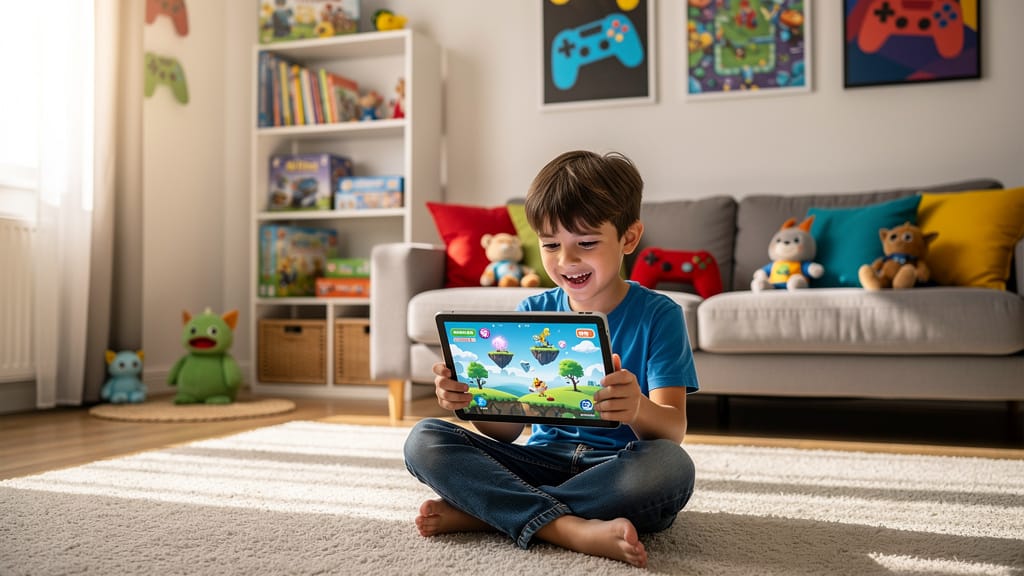
Netflix has launched Netflix Playground, a standalone Netflix kids gaming app aimed at younger children. Instead of hiding family games inside the main Netflix experience, the company is now giving kids their own separate app built around simpler navigation and age-appropriate play.
That separation is the real story. Netflix has offered games before, but this move makes its children’s strategy easier to understand. Parents do not need to hunt through a broader entertainment app, and kids get a more focused space designed for how they actually use tablets and phones.
At launch, the app is available in a handful of English-speaking and international markets, with a global rollout coming later this month. It is included with a regular subscription, which means Netflix is trying to sell convenience and safety, not microtransactions.
Key Details
The Netflix kids gaming app is designed for children ages eight and under. That age target matters because most mobile game ecosystems are either too cluttered, too commercial, or simply too confusing for younger users.
Here are the details that stand out:
- The app is called Netflix Playground
- It is available on iOS and Android
- It is free with a Netflix subscription
- It includes no ads
- It includes no in-app purchases
- It supports offline play, which is unusually useful for families
- It launches with games based on familiar children’s characters and shows
One early example is a Peppa Pig game, which makes the strategy obvious. Netflix is not trying to beat Roblox or Nintendo on complexity. It is building a soft, trusted lane inside the much larger kids entertainment market.
That distinction is important. A lot of mobile games for young children are effectively storefronts disguised as play. By stripping out ads and purchase prompts, Netflix is selling peace of mind as much as software.
What This Means for You With the Netflix Kids Gaming App
If you are a parent, the practical appeal of the Netflix kids gaming app is simple, fewer hidden traps. No pop-up purchase requests. No reward loops built around buying gems, coins, or upgrades. No need to wonder whether your child tapped something expensive while you were in another room.
For parents
This is potentially one of the cleanest family benefits Netflix has added in years. Streaming libraries are crowded and easy to swap out. A curated kids game app is different because it solves a specific problem, what to hand a child on a phone or tablet that will not turn into a monetized mess.
Offline support is especially valuable. Airplane rides, waiting rooms, road trips, grocery store errands, all of these are real use cases where parents need quick, reliable distraction. A game that works without Wi-Fi is not a luxury feature for families, it is the feature.
For kids
Children get a simpler environment built around familiar characters. That may sound minor, but it lowers friction immediately. Young kids do better when they recognize the world they are entering, and branded characters can make first-time gameplay feel less intimidating.
For competitors
This pressures the broader kids mobile gaming space. Subscription-backed, ad-free gaming is a direct contrast to free-to-play design. Developers that rely on ads or impulse purchases may find it harder to compete for parent trust, even if their games are technically free.
What Others Missed About the Netflix Kids Gaming App
Most coverage treats this as a cute extension of Netflix’s gaming push. It is more calculated than that.
First, the Netflix kids gaming app is a retention tool. Streaming services live and die by churn. Parents cancel subscriptions when they feel they are paying for one thing too many. But if Netflix becomes both the place for cartoons and the place for safe mobile games, cancelling gets harder. One subscription starts covering multiple forms of child entertainment.
Second, it gives Netflix a cleaner answer to a growing problem, kids increasingly expect to interact with characters, not just watch them. Video alone can feel static to children raised on touchscreens. A show-to-game loop keeps franchises alive between episodes and seasons.
Third, this helps Netflix own a bigger slice of the “quiet time” economy. That sounds cynical, but it is true. Parents are not just choosing content, they are choosing products that help fill moments of boredom safely. If Netflix can dominate those moments, it becomes more embedded in family routines.
Why the standalone app matters
A separate app also avoids one of Netflix’s recurring product issues, too many things under one roof. Kids do not need the same interface as adults. A dedicated app makes discovery easier and makes parental trust more likely.
It also creates room for expansion. Today it is simple mini-games for young children. Tomorrow it could be learning games, interactive storybooks, or companion experiences tied directly to major children’s franchises.
Real Examples
Picture a family with an old iPad used mostly by a six-year-old. Right now, parents often bounce between YouTube Kids, random App Store downloads, and a few streaming apps. That setup usually comes with tradeoffs, ads, confusing menus, or games that feel harmless until they start asking for money.
The Netflix kids gaming app could simplify that stack.
- On a flight, a parent can preload games and hand over the device without needing internet access
- In a car ride, a child can play a recognizable character game instead of tapping through a cluttered app marketplace
- During a doctor’s appointment, parents can open one trusted app instead of gambling on whatever free title was downloaded last month
- On a shared family phone, the lack of in-app purchases lowers the risk of accidental spending
This also fits well with low-cost Android tablets and older iPhones that many families repurpose for kids. Netflix does not need cutting-edge hardware here. It needs reliability, recognizable characters, and a frictionless setup.
Pros and Cons
Pros of the Netflix kids gaming app
- No ads, which is rare in kids mobile gaming
- No in-app purchases, which removes a major parent headache
- Offline play makes it useful in real life, not just at home
- Familiar characters can make games easier for young children to enjoy
- Included in an existing subscription, so there is no separate charge
Cons of the Netflix kids gaming app
- The value depends heavily on the quality and depth of the game library
- It is limited to households that already pay for Netflix
- A standalone app means one more app to manage
- Netflix still has to prove it can keep kids games fresh over time
- Parents may want stronger details about controls, profiles, and content filtering as the app grows
Conclusion
The Netflix kids gaming app is not just another download, it is Netflix trying to become more useful to families in the moments that matter most. Smart move, because parents are not looking for more entertainment options, they are looking for fewer headaches.
If Netflix keeps the app ad-free, easy to use, and stocked with strong children’s titles, this could become one of the company’s stickiest products. The next logical step is obvious, deeper ties between Netflix’s kids shows and the games children play every day.
Sources
About the Author