
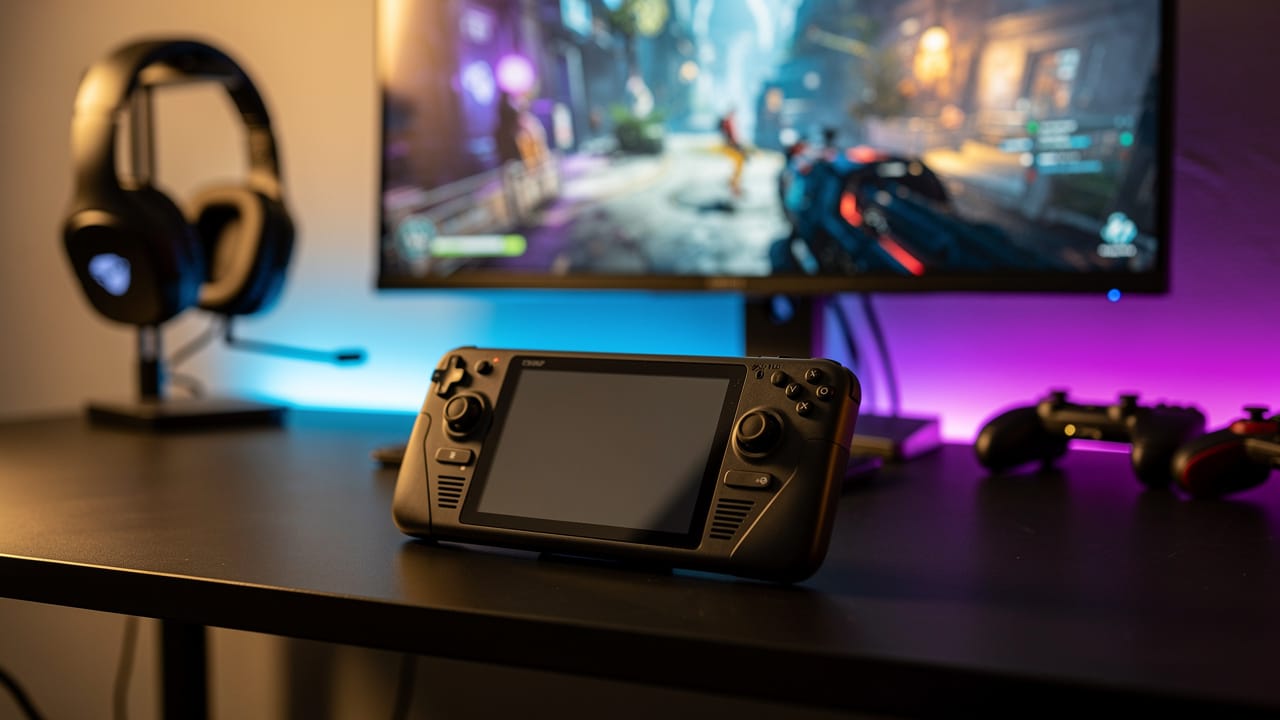
The latest gaming console price increase story is not about a shiny new machine. It is about a handheld that is already years old, and somehow now costs more than some brand-new premium systems. That should worry anyone who thought aging hardware was supposed to get cheaper, not drift toward luxury pricing.
Quick Summary
- Valve has sharply raised Steam Deck OLED prices in the US, with the 1TB model jumping from $649 to $949 and the 512GB model rising from $549 to $789.
- This is one of the clearest examples yet of a broader gaming console price increase trend hitting hardware buyers after years of unstable component costs.
- Valve says the hardware itself has not changed, and blames component costs and wider global logistics challenges.
- The new pricing makes the top Steam Deck more expensive than a PS5 Pro, which changes the value equation dramatically.
- Refurbished LCD Steam Deck models, still available for under $400 according to reports, now look like the real entry-level option.
- The bigger story is not just Valve, it is that gaming hardware is getting squeezed by AI-era supply chains, memory pricing, and companies protecting margins.
What Happened With This Gaming Console Price Increase
Valve quietly pushed up Steam Deck OLED prices in the United States, and not by the kind of small adjustment shoppers might shrug off. The biggest jump hit the 1TB OLED, which climbed by $300, while the 512GB OLED went up by $240.
That means a handheld once praised for bringing PC gaming to a more accessible price point is now pressing into premium territory. The top-end Steam Deck now sits near $950, a number that feels especially jarring because the hardware has not been refreshed to justify it.
According to reporting from Kotaku, Valve attributed the move to rising component costs and broader logistics pressures across the industry. In plain English, the company is telling customers that the market got uglier, and buyers are now expected to absorb the hit.
Key Details on the Steam Deck OLED Price Jump
The numbers matter here because they explain why this gaming console price increase is landing so badly.
The Steam Deck OLED 1TB moved from $649 to $949, a rise of roughly 46 percent. The 512GB OLED jumped from $549 to $789, also an increase of about 44 percent. PC Gamer framed it simply, and accurately: this is close to a 50 percent leap for a device that is not new.
Why this gaming console price increase stands out
Price hikes happen. What makes this one different is the combination of timing, product age, and category confusion.
The Steam Deck has never been a traditional living-room console, but to buyers it still competes in the same wallet space as a PlayStation, Xbox, Switch, gaming laptop, or budget desktop upgrade. Once a handheld crosses the $900 line, it stops being an impulse enthusiast purchase and starts being a serious capital decision.
Valve’s explanation is plausible. Memory, storage, and other components have seen periodic pressure, and AI infrastructure demand has become an increasingly important factor in semiconductor allocation. Reports cited by Kotaku point to shortages and rising costs tied to AI hyperscalers, a reminder that gamers are now competing with data centers for the same ecosystem of parts.
The value proposition just changed
The Steam Deck’s old pitch was easy to understand: portable PC gaming, good enough performance, giant library, and a price that undercut many alternatives. At $949, that pitch gets harder.
For that money, buyers start comparing it not just with rival handhelds, but with a full console setup, a discounted gaming laptop, or even a compact desktop build. This is why the backlash is not just about sticker shock. It is about a product crossing an invisible line where consumers ask, “Why am I paying flagship money for compromise?”
What This Means for You as Hardware Prices Keep Rising
If you were already planning to buy a Steam Deck OLED, this gaming console price increase changes the math immediately. The question is no longer whether the Deck is cool. It is whether it still makes financial sense.
For budget-conscious players, the answer may now be no.
Who gets hit hardest by this gaming console price increase
The first group is obvious, new buyers. A player who saved for a $549 or $649 handheld is not necessarily able to stretch another $240 or $300. That gap is the difference between “I can make this work” and “I’m out.”
The second group is parents shopping for a major gift. A Steam Deck used to look like an ambitious but reachable present. At nearly $1,000 for the 1TB model, it now looks like something you justify only if you are deeply invested in PC gaming.
Third, it hurts the exact audience the Deck helped build, people who wanted access to large PC libraries without the price or complexity of a traditional desktop setup.
The practical alternatives now look smarter
In the short term, the best value may be older stock and refurbished units. Kotaku noted that refurbished LCD Steam Deck models are selling for under $400, and those suddenly look much more appealing.
This also makes competing ecosystems more attractive. If you are mostly after affordable access to games, subscriptions can soften the blow. That is partly why broader platform strategy matters right now. Microsoft, for example, is leaning harder on service flexibility, even if it is messy, as we noted in our look at Xbox’s cheaper but more complicated Game Pass strategy.
Nintendo buyers should pay attention too. If you think hardware inflation is someone else’s problem, it is not. We already broke down why the Nintendo Switch price increase is becoming a real consumer risk, and the Steam Deck situation only makes that warning feel more urgent.
What Others Missed About This Hardware Story
A lot of coverage focuses on the sticker shock. Fair enough. But the more important point is that this gaming console price increase exposes a structural shift in the business of gaming hardware.
Gaming hardware is no longer insulated from AI demand
For years, gamers worried mostly about crypto miners driving up GPU prices. Now there is a bigger and more durable force in the market: AI infrastructure. Massive cloud and AI operators do not buy a few chips, they vacuum up supply across memory, storage, packaging, and data-center-adjacent components. Even when a Steam Deck is not using the exact same parts as an AI server, it lives in the same strained industrial ecosystem.
That matters because it suggests this is not a one-off. It may be an early warning.
Companies are relearning that enthusiasts will pay more
Valve has built enormous goodwill. It also knows the Steam Deck has a loyal audience that values software flexibility, PC game libraries, and portable access over raw benchmark bragging rights. In other words, the company likely believes enough buyers will still bite.
That is the part consumers should watch carefully. Once companies learn that premium pricing does not seriously dent demand, temporary increases have a way of becoming the new baseline.
Aging devices used to get cheaper, now they can get re-tiered
This may be the strangest part of the current market. Historically, older gaming hardware either dropped in price or stayed flat while becoming easier to recommend. Now some products are being repositioned upward because supply constraints and margin pressure make the old logic less attractive.
The result is a market where “wait for a better deal” is no longer always smart advice. Sometimes waiting just means paying more.
Real Examples of How the Gaming Console Price Increase Changes Buying Decisions
Consider a buyer with a budget around $800 to $1,000.
A year ago, that person might have looked at a high-end Steam Deck and seen strong value: portable PC gaming, premium screen, enough storage, and access to an existing Steam library. Today, that same buyer has to compare the Deck against a PS5 Pro, a discounted gaming laptop, or a console plus subscription bundle.
Here is another real-world example. If you mostly play indie games, older titles, emulation-friendly workloads, or less demanding PC releases, a refurbished LCD Steam Deck under $400 may now be the sweet spot. Spending more than double for the OLED version becomes much harder to defend unless display quality and storage matter more than value.
There is also the backlog problem. Many players do not need top-end portable performance. They need a convenient machine for games they already own. In that case, this gaming console price increase may push buyers toward used hardware, not away from gaming entirely.
Pros and Cons of Valve’s Price Move
Pros
- Reflects real supply-chain and component cost pressure instead of masking it
- May help Valve keep stock available instead of selling at weak margins
- Makes lower-cost refurbished models look more attractive for budget buyers
Cons
- Destroys part of the Steam Deck’s original value appeal
- Makes an older handheld feel overpriced against current-gen alternatives
- Risks turning portable PC gaming into a more premium, less accessible category
- Signals that more gaming console price increase moves could follow elsewhere
Conclusion on the Gaming Console Price Increase Trend
The Steam Deck story matters because it is not just about one handheld. It is a blunt reminder that gaming hardware is getting pulled into a more expensive global tech economy, where AI demand, component volatility, and margin protection all land on the same target, the player’s wallet.
If Valve can raise prices this aggressively on a mature device, other companies will be tempted to test the same limits. The era of assuming gaming hardware gets cheaper with age is looking very shaky.
What Happens Next (2026-2030)
Expect more segmentation. Premium handhelds will keep getting pricier, while refurbished, cloud-based, and subscription-backed options become the real mass-market entry points. Companies with strong ecosystems, especially those that can offset hardware pain with software revenue, will be in the best position.
The losers will be mid-budget buyers who want ownership without overspending. The winners will be platform holders that can sell convenience, financing, bundles, and recurring services instead of just a box. By 2030, the biggest change may be psychological: gamers will stop asking what a console costs, and start asking what monthly ecosystem they can afford.
Sources
About the Author