
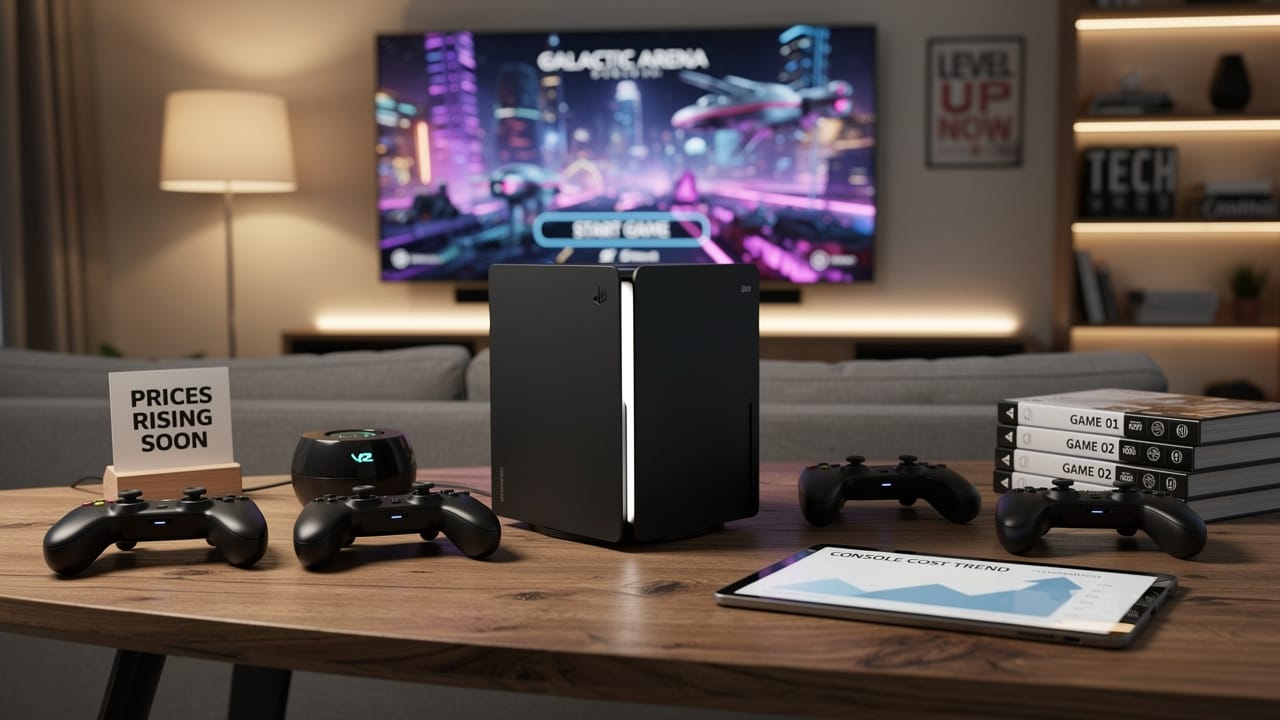
The Nintendo switch price increase is not just a boring MSRP tweak, it is a warning shot for the entire console market. If you thought game hardware usually gets cheaper with time, Nintendo is reminding everyone that in 2026, that old rule no longer applies.
Quick Summary
- Nintendo will raise the Nintendo Switch 2 price from $449.99 to $499.99 on September 1, a $50 increase, or about 11 percent
- The company pointed to shifting market conditions and a tougher global business outlook, language that strongly suggests component cost pressure
- This Nintendo switch price increase lands even as the system has sold nearly 20 million units in under a year, showing Nintendo is raising price from strength, not weakness
- The move puts Nintendo in line with Sony and Microsoft, both of which have also broken the old console pricing playbook
- Buyers who were planning to wait for bundles or holiday deals may now face the opposite outcome, a higher entry price and possibly pricier extras
- The bigger story is not just one console, it is that premium gaming hardware is starting to behave more like smartphones than old-school consoles
What Happened With the Nintendo switch price increase
Nintendo confirmed that the Nintendo Switch 2 will get more expensive later this year. Starting September 1, the console’s suggested retail price jumps to $499.99, up from its $449.99 launch price.
That alone makes this Nintendo switch price increase unusual. Console makers traditionally cut prices as hardware ages, or at least hold the line long enough for the increase to feel invisible through bundles. Nintendo is doing the opposite, and doing it after a commercially strong first year.
The stated reason is broad but revealing: changing market conditions and a difficult global business outlook. Read between the lines and this looks a lot like component inflation, especially in memory and storage, plus the wider cost pressure that has already hit other hardware companies.
Key Details on the Nintendo Switch 2 Price Increase
The raw numbers matter here. This is a $50 bump, which works out to roughly 11 percent over the launch price. For a company that usually guards pricing discipline carefully, that is not a token adjustment.
Why this Nintendo switch price increase is happening now
The sources point to a market that has become less friendly to consumer electronics makers. Ars Technica connected the decision to rising RAM and storage prices, which have been hitting hardware vendors for months. That matters because newer consoles are far more exposed to memory costs than older systems were.
Timing matters too. According to Eurogamer, Switch 2 sales are nearing 20 million units less than a year after release, even as Nintendo has lowered its forecast for 2027. In other words, this is not a panic move by a struggling platform. It is a company looking at demand, costs, and future margin pressure, then deciding it has enough brand strength to pass some of that burden to buyers.
That makes the Nintendo Switch 2 price increase feel less like an emergency and more like a recalibration.
This is bigger than Nintendo alone
Nintendo is not acting in a vacuum. Sony has already raised PS5 prices more than once in some markets, and Microsoft has also shown less interest in the old model where consoles only get cheaper over time. The industry’s dirty secret is now out in the open: modern consoles are expensive to build, and companies are less willing to swallow those costs just to preserve an outdated expectation.
That also raises fresh questions about related pricing. A Nintendo Switch 2 accessory price increase would not be surprising if cost pressure stays elevated. Controllers, docks, storage expansions, and first-party extras are often where companies protect margins even more aggressively.
What This Means for You After the Nintendo switch price increase
If you planned to buy the console soon, the practical advice is simple: buying before September 1 avoids the higher MSRP. That is the most immediate impact of the Nintendo switch price increase, and it is the one most shoppers will care about.
But there is a second-order effect that matters just as much. A higher console price tends to reshape the full cost of entry, not just the sticker on the box.
The real cost of joining the Switch 2 ecosystem
A console buyer is rarely just buying a console. You are usually buying at least one game, maybe a second controller, maybe a case, perhaps a microSD or other storage option, and in many homes a subscription. Once the base machine climbs by $50, the total first-month spend can push much higher than buyers budgeted.
That is why the Nintendo Switch 2 accessory price increase angle deserves attention even before any formal announcement. When companies face sustained supply and component pressure, accessories are often the easiest place to quietly widen margins. A controller that goes up by $5 to $10 feels minor on its own, but paired with a $50 system jump, the checkout total suddenly looks very different.
For families, this matters more than for enthusiast buyers. Nintendo’s audience includes parents shopping for birthdays and holidays, and they tend to think in all-in cost, not pure hardware MSRP.
Canada may feel this even more
The Nintendo switch price increase Canada story could be especially painful if currency pressure and regional pricing adjustments stack on top of global component costs. Even when a U.S. increase is clearly defined, Canadian retail pricing often ends up looking steeper after exchange rates, taxes, and retailer rounding.
That is why searches around Nintendo Switch 2 price increase Canada are likely to surge. Buyers there are not just asking whether the console is going up, they are asking how much worse the final number will look on an actual receipt.
The older hardware may also become part of the conversation again. A Nintendo switch 1 price increase would be much harder for consumers to accept emotionally, because that system is mature and no longer carries next-gen novelty. Still, once the market accepts that newer Nintendo hardware can move upward after launch, the psychological barrier around other pricing changes gets weaker.
What Others Missed About Nintendo’s Pricing Shift
Most coverage frames this as a simple cost story. Costs rise, price rises, end of discussion. That is too shallow.
The Nintendo switch price increase is also a confidence signal
Companies do not usually raise prices on popular hardware unless they believe demand can absorb the hit. The near-20 million sales figure is the clue. Nintendo appears to believe the Nintendo Switch 2 has enough momentum, enough exclusives, and enough family-friendly pull to survive a more expensive holiday season.
That is a flex.
It also suggests Nintendo may see the premium console market changing in a lasting way. For years, the accepted wisdom was that gaming hardware needed aggressive pricing to build installed base fast. Now the logic is shifting. If the audience is sticky enough, and software sales remain strong, a platform holder can protect margin without killing demand.
This could reset buyer expectations for years
The bigger consequence of the Nintendo switch price increase is psychological. Once consumers accept that a successful console can go up after launch, future increases across the industry get easier to justify.
That is why this is more important than one September date on a calendar. It chips away at one of gaming’s oldest assumptions: time no longer guarantees a better deal.
If you follow hardware markets closely, this starts to look a lot like smartphones, where premium devices hold value longer and official prices remain stubbornly high. Consoles used to be different. Increasingly, they are not.
Real Examples of How the Nintendo switch price increase Hits Buyers
A casual buyer who waits until fall could pay $499.99 for the console instead of $449.99, then add a game and an extra controller and quickly be staring at a purchase that is $100 or more above what they expected a few months earlier.
A parent shopping for the holidays may assume patience brings discounts. This year, patience could do the opposite. The Nintendo Switch 2 price increase flips the normal buying strategy on its head.
In Canada, the Nintendo Switch 2 price increase Canada angle could be even sharper. Even a straightforward U.S. increase can translate into a noticeably uglier retail price once exchange rates and local taxes enter the picture.
And for budget-conscious shoppers, this could revive interest in older hardware or secondhand units. If Nintendo keeps the premium lane expensive, more buyers may decide that “good enough” is better than “newest.”
Pros and Cons of the Nintendo switch price increase
Pros
- Nintendo may be protecting supply and margins instead of cutting corners on hardware quality
- Strong pricing can help sustain first-party investment if demand remains healthy
- Buyers still have a window to avoid the increase before September 1
Cons
- The barrier to entry is now higher, especially for families and younger players
- A Nintendo Switch 2 accessory price increase could make the ecosystem notably more expensive
- It undermines the long-held expectation that waiting leads to better console deals
- Regional buyers, especially those tracking the Nintendo switch price increase Canada, may feel the hit more sharply
Conclusion on the Nintendo switch price increase
The Nintendo switch price increase is not just about $50. It is about a console giant proving that, in a strong enough market, it can charge more after launch and still expect buyers to show up.
If you were already planning to buy, waiting now looks less like prudence and more like paying extra for no clear benefit.
What Happens Next (2026-2030)
From here, the winners are companies with strong exclusives and loyal ecosystems, because they can ask buyers to absorb higher hardware prices without losing momentum. The losers are value-focused consumers who grew up expecting game systems to get cheaper over time. Between now and 2030, expect more selective hardware price increases, fewer dramatic holiday markdowns, and a bigger gap between premium consoles and budget-friendly alternatives. Nintendo is not just reacting to the market here, it may be helping redefine what console pricing looks like for the rest of the decade.
Sources
About the Author