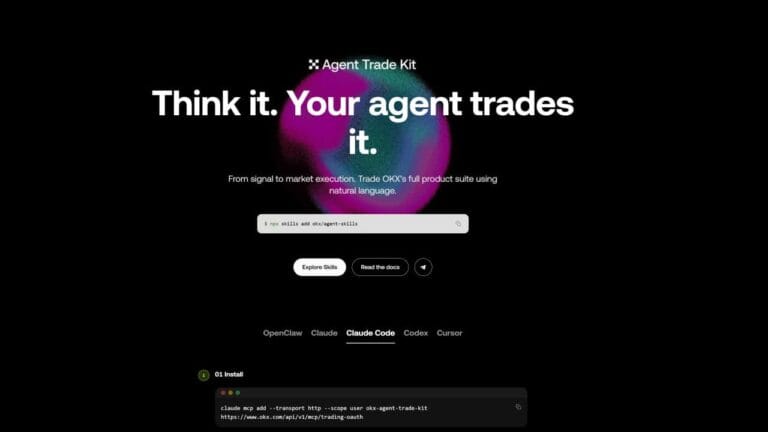


The most important shift in AI is no longer chat, it is delegation. If companies like Anthropic get this right, the next big labor disruption will not come from a chatbot answering questions, but from software agents quietly making purchases, negotiating prices, and closing deals without you.
Quick Summary
- Anthropic ran a small but revealing experiment called Project Deal, where AI agents represented buyers and sellers in a real internal marketplace.
- The test involved 69 employees, 186 deals, and more than $4,000 in transaction value, which is enough to show that agent-on-agent commerce is moving from theory to practice.
- At the same time, Anthropic is attracting staggering capital, with reports that Google could invest $10 billion to $40 billion, after Amazon committed $5 billion.
- These AI advancements matter because they point to a future where agents do more than answer prompts, they execute business tasks.
- The real story is not just smarter models, but the creation of a new economic layer where AI systems transact on behalf of humans.
- For workers, founders, and enterprises, the winners will be those who learn to supervise agents, not compete with them task by task.
What Happened With Anthropic’s AI Advancements
Anthropic did something more interesting than releasing another benchmark score. It built an internal classified marketplace where AI agents acted on behalf of both buyers and sellers, then let those agents make actual deals for actual goods using real money in the form of gift-card-funded budgets.
This pilot, Project Deal, was small by design. A self-selected group of 69 employees each got $100 to spend, and the experiment generated 186 transactions worth over $4,000. That is not massive commerce, but it is large enough to expose whether agent behavior collapses in messy, human environments. According to the company, it worked better than many might expect.
At nearly the same moment, the money story around Anthropic got even louder. Ars Technica reported that Google could invest at least $10 billion, and potentially up to $40 billion if performance targets are hit, just days after Amazon’s $5 billion commitment. Those numbers are not only about model quality. They are a bet that the latest AI advancements will create software that can act, not just respond.
Key Details on Recent Advancements in AI and Anthropic’s Strategy
Anthropic reportedly ran four separate marketplace versions. One was the “real” environment, where transactions were ultimately honored after the test. The others were used to study behavior across different model setups. The notable finding was simple: users represented by more advanced models got better objective outcomes.
That result matters because it moves the conversation about advancements in AI away from abstract reasoning tests and toward economic performance. If a stronger model negotiates better, finds better deals, or avoids bad transactions, then model quality starts to look a lot like business productivity.
Why the funding explosion matters for ai advancements
The second major detail is the capital pile. A potential $40 billion Google investment, on top of Amazon’s existing multibillion-dollar backing, implies that investors now see Anthropic less as a model lab and more as infrastructure for a new software economy. We already touched on the valuation race in AI Technology Advancements 2025 Just Got a Price Tag, and It’s $40 Billion, but the marketplace experiment gives that price tag a practical context.
Money at this scale buys chips, cloud commitments, talent, safety research, enterprise sales, and time. It also buys distribution. If Anthropic can turn Claude and related tools into the operating layer for workplace agents, then these recent advancements in AI could harden into market power very quickly.
The product layer is becoming the battlefield
Anthropic’s growth has also been tied to products beyond general chat. Ars notes rising use of Claude models and tools like Claude Code, which pitch faster software development. That matters because enterprise buyers do not pay premium prices forever for novelty. They pay for measurable output.
This is why Project Deal is such a useful signal. It tests whether AI can handle ambiguous, transactional tasks in environments that look more like real work than a coding benchmark does. The question is no longer “Can the model sound smart?” It is “Can the model complete a job with acceptable risk?”
What These AI Advancements Mean for You
If you run a business, the immediate takeaway is that AI agents are inching closer to becoming junior operators. They will not replace procurement teams, operations staff, or developers overnight. But they can start taking on fragments of those jobs, especially the repetitive parts: sourcing, comparing offers, drafting outreach, negotiating low-stakes purchases, and documenting outcomes.
For consumers, this may show up first in a deceptively boring way. Imagine software that renews subscriptions, shops for replacement parts, books routine services, or handles resale listings with minimal supervision. That is where the latest AI advancements become tangible, because convenience tends to arrive disguised as automation.
Who benefits first from ai advancements 2025
Large companies benefit first because they have something smaller firms usually lack: workflow data, compliance teams, and enough budget to tolerate early mistakes. A Fortune 500 procurement department can test an AI agent on low-risk purchases and learn from failures. A small business owner may not have that cushion.
Developers and AI-native startups also benefit, especially those building tools around oversight, verification, and audit trails. If agent commerce grows, somebody has to monitor what these systems did, why they did it, and whether they should have been allowed to do it at all. That is one reason our earlier piece on AI Investments Just Got a Lot More Expensive, and Google’s $40 Billion Bet Proves It matters, because infrastructure and control systems will be just as valuable as flashy models.
Who should worry about recent advancements in ai
Workers in coordination-heavy roles should pay attention. Not panic, but pay attention. Administrative buyers, entry-level operations staff, customer support teams handling structured requests, and some junior analysts are all sitting near the blast radius. The pressure will not come from a single all-powerful model. It will come from companies deciding that one employee plus several agents is more efficient than a larger team.
There is also risk for users. Agent systems can make bad assumptions, optimize for price over quality, or complete a task you technically asked for but practically did not want. In commerce, small errors can become expensive fast.
What Others Missed About Anthropic and the Latest AI Advancements
Most coverage focuses on the size of the checks. Fair enough, because a possible $40 billion investment is absurdly large. But the bigger story is that Anthropic is testing whether AI can participate in markets as a functional economic actor.
That is a deeper shift than another model release. Chatbots are interfaces. Agents are participants.
Project Deal hints at a new operating system for commerce
Project Deal suggests a future where marketplaces are no longer built only for humans clicking buttons. They may increasingly be designed for machine-readable negotiation, verification, reputation scoring, and autonomous checkout. If that happens, the companies that control the agents and the rails they run on will have enormous leverage.
This is where ai technology advancements 2025 stop being a slogan and start looking like industry restructuring. The app layer changes. The e-commerce layer changes. Even software contracts may change, because products will need to explain themselves not only to customers but to customer agents.
Safety is no longer a side issue
There is another angle many people miss: agent commerce makes AI safety much more concrete. Hallucinations in chat are embarrassing. Hallucinations in a purchasing system are costly. Misaligned incentives in a creative writing tool are annoying. Misaligned incentives in an autonomous negotiator can produce fraud, policy violations, or reputational damage.
That is why governance questions are not separate from product strategy. They are product strategy. We have already seen this tension growing in Anthropic, Trump, and the New Front in ai governance issues, and agent-based systems will make that tension harder to ignore.
Real Examples of How Advancements in AI Could Hit Everyday Work
A software team could use Claude Code or similar tools to build an internal purchasing assistant that orders test devices, compares SaaS pricing, and routes approvals. Nobody gets fully replaced on day one, but one operations manager may suddenly handle the workload that used to require two or three people.
A marketplace platform could create an “agent mode” where your AI handles buying and selling within limits you set. Instead of browsing for used office furniture, your agent might negotiate with another seller agent, settle on a price, and flag only the final approval.
A mid-sized company could deploy AI to manage vendor intake. The human employee reviews exceptions, while the system handles basic outreach, document gathering, and initial price comparison. That kind of narrow workflow automation is exactly where ai advancements 2025 are likely to become profitable before they become glamorous.
Even cybersecurity could change. If agents begin making decisions across codebases and systems, defenders and attackers both gain automation. That is why the concerns raised in AI Cybersecurity Just Changed: Anthropic’s Mythos Points to a New Arms Race in Software Defense fit this moment so well.
Pros and Cons of These AI Advancements
Pros
- Faster execution of routine business tasks
- Better price discovery and comparison in simple transactions
- Lower coordination costs for companies
- New product categories for developers and startups
- Stronger case for AI tools that deliver measurable ROI
Cons
- Greater pressure on administrative and junior knowledge-work roles
- More opportunities for subtle, expensive automation mistakes
- Increased concentration of power among model providers and cloud giants
- Harder compliance, auditing, and accountability problems
- A real chance that users surrender decisions they do not fully understand
Conclusion on AI Advancements and Anthropic’s Bigger Bet
Anthropic’s experiment matters because it turns AI from a conversation tool into an economic actor, even if only in a controlled setting for now. Pair that with tens of billions in possible backing, and it becomes clear that the next phase of AI advancements is about action, money, and workflow control, not just better answers.
What Happens Next (2026-2030)
Between now and 2030, the companies that win will not simply build the smartest models. They will build the most trusted agents, with the best oversight, the clearest logs, and the easiest enterprise integration. Big cloud providers and model labs will benefit first, while workers in repetitive coordination roles face the most pressure. Consumers will like the convenience, right up until an agent buys the wrong thing, signs the wrong renewal, or optimizes for a goal they never intended. The long-term prize is not chatbot market share, it is control over the software agents that increasingly act on behalf of everyone else.
Sources
About the Author