

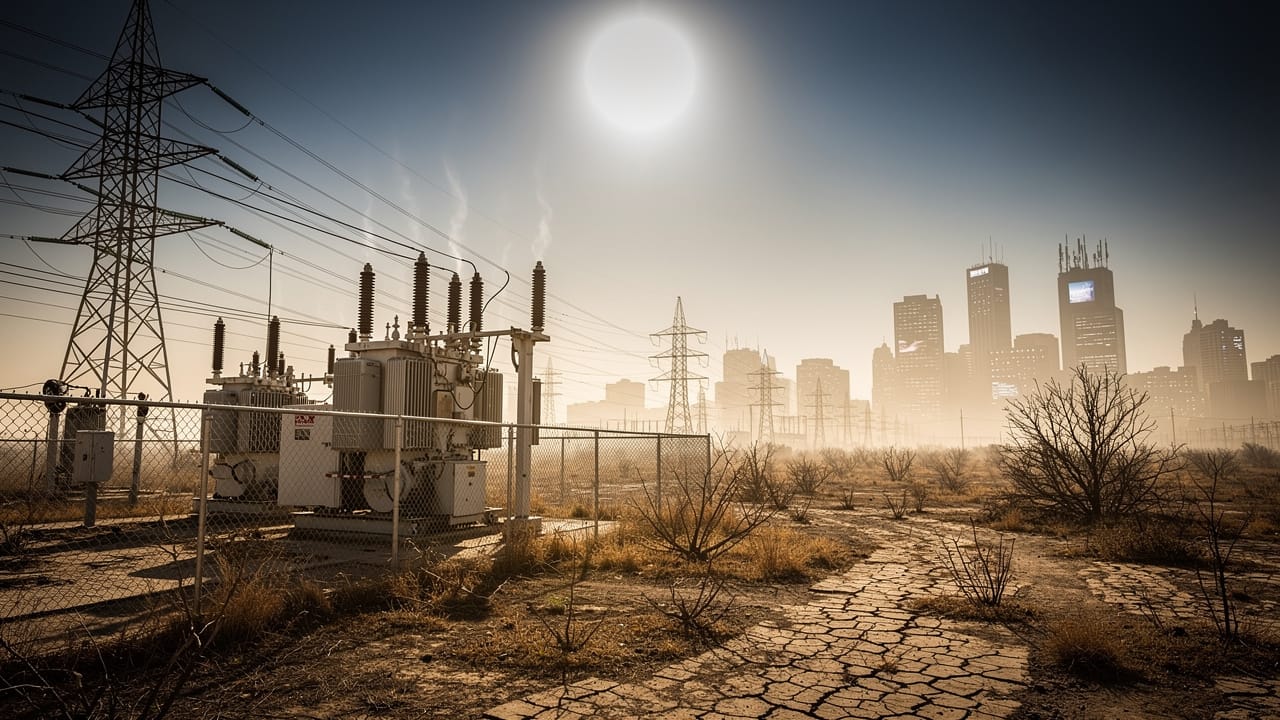
Europe’s latest heat wave is not just a weather story, it is a stress test for modern civilization. The uncomfortable truth is that the heat wave power grid problem is no longer about keeping people cool, it is about whether the systems built for yesterday’s climate can survive tomorrow’s summers.
Quick Summary
- Europe’s power system is under pressure as extreme heat drives up electricity demand for cooling while some power plants lose capacity at the worst possible moment.
- France recorded temperatures above 44°C, or 111°F, on June 23, its hottest day since records began in 1947, according to MIT Technology Review’s reporting.
- Nuclear and gas plants are vulnerable to heat, especially when river water used for cooling becomes too warm or too scarce.
- The heat wave power grid challenge is worsening because Europe’s energy system was historically designed around winter peaks, not summer air-conditioning demand.
- This is not just a European issue, the same risk pattern is relevant to the Texas power grid heat wave debate, the California heat wave power grid strain, and growing U.S. summer peaks.
- New tools like home batteries and virtual power plants, including models being expanded in the U.S., may help, but they are still a supplement, not a replacement for a stronger grid.
What Happened in Europe’s Heat Wave Power Grid Crunch
Europe is enduring a brutal early-summer heat event, and electricity networks are getting squeezed from both sides. Demand is climbing as households and businesses turn on fans and air conditioning, while some generating assets are becoming less reliable because the heat itself interferes with plant operations.
That is the part many people miss. A heat wave power grid emergency is not only about using more electricity. It is also about producing less of it when conditions get extreme.
In France, one reactor at the Golfech nuclear plant was shut down after the Garonne River, which helps cool the facility, got too warm. Other reactors were also facing output restrictions. According to MIT Technology Review, the expected river temperature reached 28°C, around 82°F, high enough to trigger environmental and operational limits on the water returned to the river.
Key Details on the Power Grid Heat Wave Problem
Europe’s grid planners are running into a climate-era mismatch. For decades, many parts of Europe expected their heaviest electricity use in winter because electric heating was the big seasonal driver. That assumption shaped maintenance schedules, reserve planning, and the timing of planned outages.
Now summer is becoming a second peak season, and in some places it may become the main one.
Why the heat wave power grid issue gets worse in summer
The current problem has two layers.
First, demand spikes when people need cooling. Air conditioners are still less common in Europe than in parts of the U.S., but adoption is rising quickly, and even a modest jump in cooling load can stress systems that were not built around it.
Second, supply becomes less dependable. Thermal power plants, including nuclear and natural gas, rely heavily on cooling. If rivers run too warm, operators may have to reduce output or shut units down. That is exactly what happened in France. These are not failures in the conventional sense, they are signs that power infrastructure is colliding with physical limits.
MIT Technology Review also highlighted a subtle but important planning issue, some plants had scheduled seasonal outages stretching from spring into summer because Europe historically peaked in winter. That leaves less generation available just as hotter summers begin rewriting the demand curve.
A lesson for the texas power grid heat wave debate
Americans should not treat this as a distant European drama. The same structural pattern shows up in every power grid heat wave story, whether the focus is Europe, PJM, or the increasingly familiar texas power grid heat wave today conversation.
The specifics differ. Europe is dealing more directly with river-cooled nuclear constraints right now. Texas has its own mix of gas, wind, solar, and storage challenges. California faces a different demand profile and regulatory structure. But the common thread is simple, extreme heat raises load, weakens infrastructure, and narrows the margin for error.
That is why the texas heat wave power grid discussion keeps resurfacing every summer. It is not just about one state making headlines. It is about a broader global reality, electricity systems built for historical weather are now being asked to operate in a new climate regime.
What This Means for You as Heat Wave Power Grid Risks Spread
If you are a consumer, a business owner, or a policymaker, this story matters more than most climate headlines because it hits everyday life directly. The grid is the hidden platform underneath almost everything else. When it strains, the effects spread fast.
Your power bill and reliability are both at risk
The first consequence is obvious, higher demand usually means higher prices. In markets where wholesale electricity prices react sharply to tight supply, heat waves can become expensive very quickly.
The TechCrunch report on Base Power offers a useful American comparison. In PJM, the largest U.S. grid operator by territory, wholesale electricity prices have nearly doubled over the past year, driven in part by demand growth and limited new generation. Heat is not the only factor there, but it shows what happens when the system gets crowded.
For households, that means larger bills during peak cooling periods. For businesses, especially energy-intensive ones, it can mean painful operating costs or pressure to cut usage during peak hours.
The real vulnerability is not inconvenience, it is compounding failure
The bigger risk is cascading disruption. During a serious heat wave power grid event, power is needed not just for comfort but for public health, refrigeration, hospitals, telecom networks, transit systems, and water infrastructure.
High overnight temperatures make things worse because they remove the system’s recovery window. France’s heat episode included unusually warm nights, according to the reporting, which means buildings, people, and the grid all start the next day already stressed.
This is also where the california heat wave power grid and Texas comparisons become practical for readers. Even if your region avoids a blackout, utilities may increasingly ask customers to shift usage, pre-cool homes, delay EV charging, or accept time-based pricing. The future grid will not just sell electricity, it will try to manage your behavior.
What Others Missed About the Heat Wave Power Grid Story
The easy headline is that climate change is increasing heat waves. True, but incomplete. The more important story is that electricity seasonality is changing, and utilities still have not fully rebuilt their planning around that fact.
The grid was optimized for an older climate
Europe’s power system was designed around one logic, winter was the stress season. That assumption shaped generation fleets, maintenance calendars, and reserve margins. A hotter world breaks that model. Summer is no longer the easy part of the year.
This matters because infrastructure changes slowly. Transmission lines take years. New generation takes years. Market rules take years. Consumers buy air conditioners much faster than governments can modernize a grid.
There is also a political blind spot. Policymakers love talking about clean generation targets, but the heat wave power grid problem is often a capacity, flexibility, and cooling-water problem, not simply a renewable-versus-fossil argument. A gigawatt on paper is not the same as a gigawatt available during a scorching evening when rivers are hot and demand is peaking.
Why distributed batteries suddenly look smarter
That is where companies building decentralized backup power may gain ground. TechCrunch reported that startup Base Power is expanding its home battery business into PJM territory, after launching in Texas. The pitch is straightforward, residential batteries can support households and also aggregate into a virtual power plant that helps stabilize the wider system.
This will not solve everything. Still, it points to the shape of the next phase. Grid resilience may increasingly come from thousands of smaller assets, home batteries, thermostats, EVs, rooftop solar, working together instead of relying only on giant centralized plants.
Even companies outside the power sector should pay attention. As IBM and others push more compute into AI-heavy workloads, electricity reliability becomes a competitiveness issue, not just a utility issue. Data centers, cloud services, and industrial digitalization all depend on steady power. The grid is becoming the bottleneck beneath the digital economy.
Real Examples of the Heat Wave Power Grid Stress You Can Actually Feel
You do not need to live near a French nuclear plant to feel these effects.
A family in a city apartment experiences it when overnight temperatures stay high, the AC runs longer, and the monthly bill jumps. A small grocery store feels it when refrigeration costs surge during peak pricing. A factory sees it when utilities ask large customers to reduce demand during hot afternoons.
The texas power grid heat wave today discussion often centers on whether supply will keep up with air-conditioning load in fast-growing communities. In California, the pattern is familiar too, late-day cooling demand can collide with tight supply margins. Europe is now moving toward a similar reality, only faster than many officials expected.
There is a consumer-side fix, but it requires planning. Better insulation, smart thermostats, battery backup, and efficient cooling systems all make homes less exposed. On the utility side, more transmission, storage, flexible demand response, and climate-adjusted maintenance schedules are now basic requirements, not optional upgrades.
Pros and Cons of the New Heat Wave Power Grid Response
Pros
- Growing investment in batteries and virtual power plants can add flexibility quickly
- Smarter pricing and demand response can reduce peak strain without building as many new plants
- Heat-related grid stress is forcing utilities to confront climate reality sooner
Cons
- Consumers may end up carrying more of the burden through higher bills and behavior changes
- Existing thermal plants remain vulnerable to hot water and hot air conditions
- Grid upgrades move slowly, while extreme heat is arriving now
- Regions that delay planning could face sharper reliability crises later
Conclusion on the Heat Wave Power Grid Future
The big lesson is harsh but clear, the power systems that made sense in the 20th century are starting to fail the climate conditions of the 21st. The heat wave power grid story is really about adaptation speed, and right now, the weather is moving faster than the infrastructure.
What Happens Next (2026-2030)
Expect utilities across Europe and the U.S. to treat summer peak demand much more seriously, with new investments in storage, grid software, and flexible customer programs. Regions that modernize early, including those experimenting with virtual power plants and home batteries, will be better positioned than those still relying on old seasonal assumptions. Losers will be utilities that keep planning around historical weather and consumers stuck in poorly insulated buildings with no backup options. By 2030, the most valuable energy asset may not be raw generation alone, but reliable capacity available exactly when extreme heat hits.
Sources
About the Author