
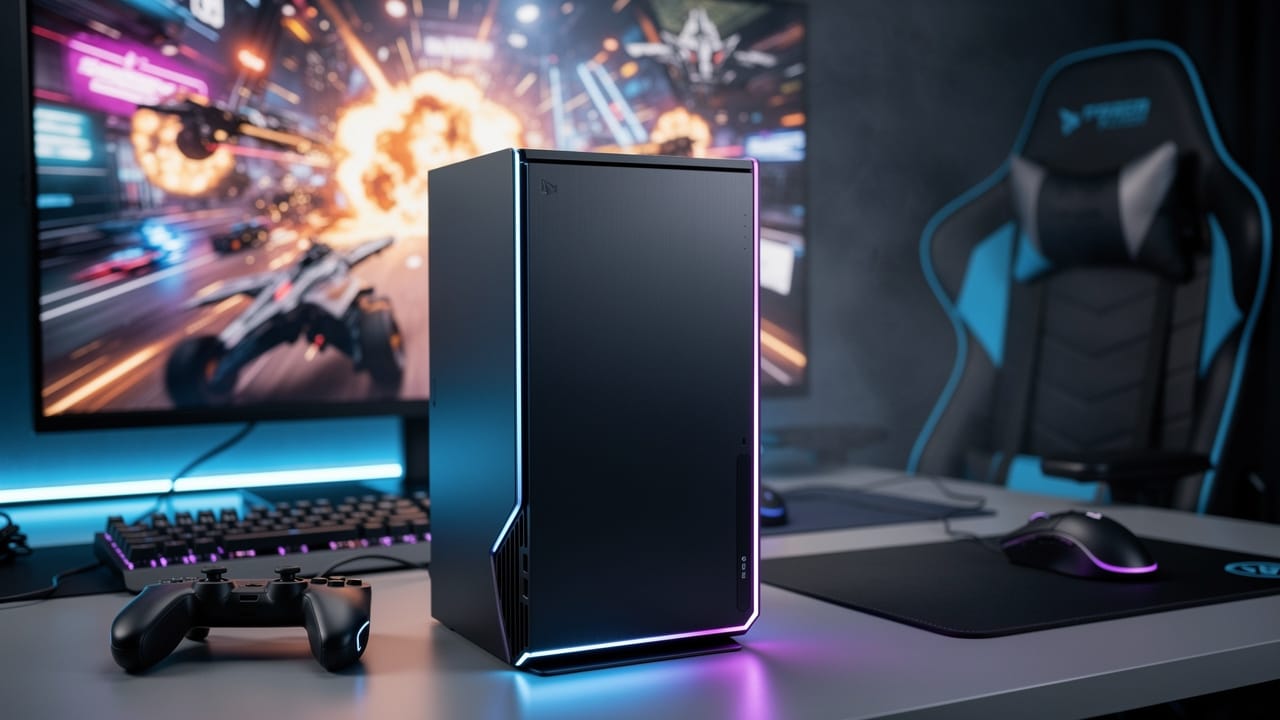
The Steam Machine gaming console was supposed to feel like PC gaming made simple. At $1,049, it instead lands in the most unforgiving part of the market, where buyers stop asking “Can this replace my console?” and start asking “Why not just build a better PC?”
Quick Summary
- The Steam Machine gaming console has been priced at $1,049, a figure that immediately puts it above mainstream console territory.
- Buyers can reportedly sign up for versions with 512GB or 2TB of storage, with an optional Steam Controller.
- The launch appears limited, with Valve signaling that supply is smaller than it wanted.
- This is not being sold like a subsidized console, which helps explain the high Steam Machine gaming console price.
- The bigger debate is no longer whether the device is interesting, it is whether a Steam Machine gaming pc makes sense against traditional desktop alternatives.
- For consumers, the real question is value: convenience and compact design versus flexibility, upgrade paths, and raw performance.
What Happened With the Steam Machine Gaming Console
Valve has finally put a real price on the hardware long discussed as a bridge between living-room simplicity and PC freedom. The Steam Machine gaming console starts at $1,049, according to reports from The Verge, PC Gamer, and Eurogamer, ending months of speculation about where the device would sit between consoles and small gaming desktops.
That number matters more than the launch itself. Plenty of experimental hardware can generate curiosity. Far fewer can survive first contact with a price tag above a PlayStation, above an Xbox, and deep into enthusiast PC territory. This launch turns the Steam Machine gaming conversation from “interesting idea” into “prove the value.”
Key Details on Valve’s Steam Machine Gaming PC Push
The headline fact is simple: the base entry point is $1,049. PC Gamer also points to 512GB and 2TB model options, plus an optional Steam Controller, which suggests Valve is pitching more than one configuration rather than a single locked box.
Eurogamer adds two critical pieces of context. First, Valve has acknowledged the final cost is higher than originally envisioned. Second, launch quantities are lower than the company wanted. Those details are not footnotes, they explain the strategy and the likely frustration around availability.
Why the Steam Machine gaming console price is so high
Traditional consoles often sell aggressively because platform owners make money elsewhere, through software sales, subscriptions, and accessory ecosystems. Valve appears to be making a different argument: this is a PC-like device, not a loss-leading console. If you do not subsidize hardware, compact premium hardware gets expensive fast.
That pushes the steam gaming machine into an awkward category. It is not cheap enough to be an impulse buy for console users. It is also not obviously powerful enough, based on the reporting, to dominate the custom PC crowd on pure specs alone. Eurogamer’s description of the hardware as relatively modest, even with appealing features like FSR 4 support, reinforces that tension.
The launch is not just about hardware
This release is also a test of whether players still want a simplified living-room PC in 2026. The original Steam Machine idea always had a seductive pitch: couch-friendly design, PC library access, less hassle. But the market is different now. Handheld PCs, mini gaming desktops, and more polished big-screen interfaces have all eaten into the space this product once had largely to itself.
In other words, the Steam Machine gaming console is arriving in a market that finally understands the category, but may no longer need this exact solution.
What This Means for You in the Steam Machine vs Gaming PC Debate
If you are a console player, the sticker shock is immediate. At $1,049, this is not competing with a standard console purchase. It is competing with your willingness to spend laptop-level money on a box under the TV.
If you are already a PC player, the calculation gets even harsher. The Steam Machine vs gaming pc argument usually comes down to three things: performance per dollar, upgrade flexibility, and simplicity. On simplicity, Valve has a legitimate case. On the other two, a Steam Machine gaming pc has to work much harder.
Who should actually consider the Steam Machine gaming console
There is a buyer for this. It is the person who wants PC storefront access, wants a compact living-room setup, hates building PCs, and values a more appliance-like experience. If that sounds like you, the Steam Machine could make sense, especially if you are already deep into Steam purchases and want a machine that feels less fiddly than a full desktop.
It may also appeal to players who treat hardware as furniture as much as technology. Small footprint, lower setup friction, cleaner aesthetics, and one ecosystem can matter. That is not irrational. It is just expensive.
Who should probably skip it
Budget buyers should look elsewhere first. At this price, every compromise becomes more visible. Storage choices like 512GB can feel tight for modern game libraries, while 2TB sounds better but will almost certainly push cost even higher depending on final configuration.
Tinkerers and value hunters are even less likely to be persuaded. A conventional gaming desktop often gives you clearer upgrade paths, broader peripheral support, and more control over thermals, noise, and future component swaps. The Steam Machine gaming console offers convenience, but convenience is hardest to sell when the premium gets this steep.
There is also a broader inflation problem in gaming hardware. We have seen players react badly when portable and console-adjacent devices jump in price, which is why the backlash around premium hardware keeps intensifying. That same consumer mood showed up in our coverage of the gaming console price increase shock, and Valve is stepping directly into that distrust.
What Others Missed About Valve’s Steam Machine Gaming Strategy
Most coverage will stop at “expensive” and move on. That misses the bigger point. This is a statement about what Valve thinks a console-like PC should be in an era when the old console model is getting harder to sustain.
Valve is rejecting the cheap-console playbook
By not framing this like a subsidized machine, Valve is effectively saying the hardware has to stand on its own economics. That is honest, but honesty is not always a winning retail strategy. Consumers have been trained for years to expect dedicated gaming boxes to look affordable upfront, even when the real costs appear later in software and services.
The Steam Machine gaming console price breaks that expectation. It says: pay now for a cleaner, more open experience. Some enthusiasts will respect that. Many mainstream buyers will not.
The real competition is not Sony or Microsoft
The most important rival may be the small-form-factor PC. A mini desktop can already do much of what this machine promises, and often with fewer ecosystem questions. The rise of handheld PC gaming also complicates the pitch. If your library already travels with you on another device, a dedicated living-room steam gaming machine has to justify why it deserves its own place in the home.
This is where Valve’s brand strength matters. Steam remains one of the most trusted storefronts in PC gaming. But storefront loyalty is not the same as hardware loyalty. Turning one into the other is much harder than it sounds.
Real Examples of How the Steam Machine Gaming Console Fits Into Actual Setups
Consider three common buyers.
First, the couch gamer with a huge Steam backlog. This person wants to play strategy games, indies, and older AAA titles on a TV without dragging a desktop into the living room. For them, the Steam Machine could be a neat all-in-one answer, especially if setup is smooth and controller support is polished.
Second, the parent buying one shared family gaming box. Here the math gets ugly. Spending $1,049 on a machine that still sits in a PC-adjacent category may feel much riskier than buying a familiar console platform with clearer exclusives and friend networks.
Third, the enthusiast with a monitor and spare keyboard already at home. That buyer will almost certainly compare the Steam Machine gaming pc to a DIY build or prebuilt desktop. In that comparison, the Steam Machine has to win on quietness, size, and convenience, because price-to-performance is unlikely to be its easiest argument.
A fourth example is the buyer cross-shopping premium portable hardware. Someone already considering high-end gaming handhelds or dockable systems may see this as part of the same trend: pay more for flexibility and design. But as with any premium gaming device, buyers are now more skeptical than they were a few years ago.
Pros and Cons of the Steam Machine Gaming Console
Pros
- Cleaner living-room approach to PC gaming
- Access to the Steam ecosystem in a more console-like format
- Multiple storage options, including 512GB and 2TB
- Potentially strong fit for buyers who value simplicity over tinkering
Cons
- $1,049 starting price is a major barrier
- Hard to ignore the Steam Machine vs gaming pc value comparison
- Limited launch quantity could frustrate early adopters
- Risks landing between categories, too expensive for console buyers, not flexible enough for PC enthusiasts
Conclusion on the Steam Machine Gaming Console
The Steam Machine gaming console is not failing because it is a bad idea. It is under pressure because it is a late idea entering a market that has become brutally good at comparison shopping. At $1,049, it needs to feel not just elegant, but unquestionably worth it.
What Happens Next (2026-2030)
Valve will likely win over a niche of players who want PC access without PC fuss, but the mass market is unlikely to follow unless prices drop or specs jump. Small-form-factor desktops and handheld PCs are the biggest beneficiaries if this launch normalizes premium spending without fully convincing buyers. Console makers probably feel little immediate threat, because the Steam Machine gaming console is not priced like a mainstream rival. By 2030, the real legacy of this device may be less about unit sales and more about pushing the industry toward a new category of living-room PCs that borrow console convenience without fully becoming consoles.
Sources
About the Author