

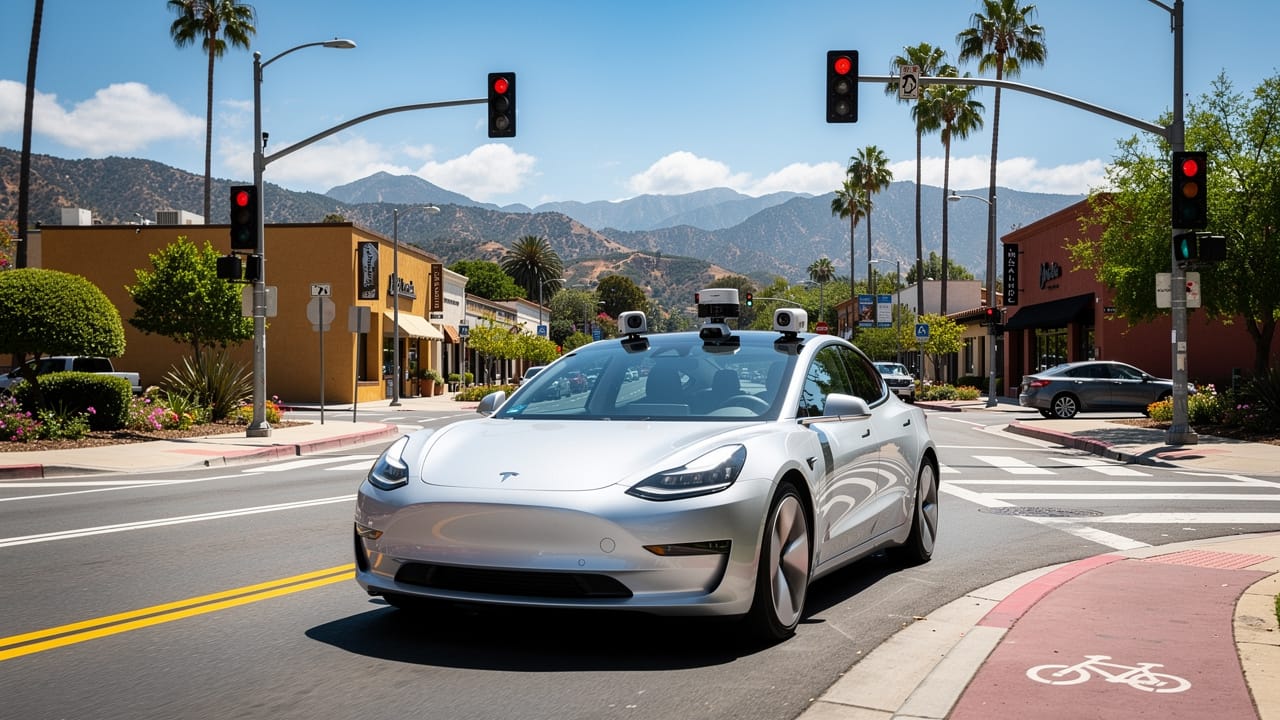
The biggest surprise about Waymo’s new Ojai is not the styling, it’s the timing. Just as tesla robotaxi technology dominates the hype cycle, Waymo is putting a real, public-facing robotaxi on actual streets and forcing the industry into an uncomfortable comparison between bold promises and deployable systems.
Quick Summary
- Waymo is rolling out its new Ojai robotaxi in Los Angeles, San Francisco, and Phoenix, with public rides starting in the coming weeks.
- The vehicle has a more futuristic, roomier design, including features described as “elevator-like” doors and a living-room feel.
- Ojai is not just a new shell, it comes with a meaningful autonomous driving system upgrade, which matters more than the van’s unusual shape.
- The launch lands at a moment when tesla robotaxi technology is under intense scrutiny over the gap between concept and scalable service.
- Waymo’s expansion is real, but not clean, the company recently paused service in six U.S. cities over flooding-related performance issues and also suspended highway driving tied to construction-zone concerns.
- For riders and cities, Ojai signals that the robotaxi race is shifting from flashy demos to a harder question: Which company can operate safely, consistently, and cheaply at scale?
What Happened With Waymo’s Ojai Launch
Waymo has introduced a new robotaxi called Ojai, a pale-blue, boxy minivan built to look less like a retrofitted car and more like something designed around autonomy from day one. Public riders in California and Arizona are expected to start getting access within weeks, and early rides are set to be free.
That alone would be enough to grab attention. But the more important part is what sits underneath the bodywork. Ojai arrives with an upgraded driving stack, which means this is not just a cosmetic refresh. It is Waymo trying to prove that the next phase of self-driving will be won by operational maturity, not by the loudest launch event.
This is why the Ojai debut matters far beyond one vehicle. The conversation around tesla robotaxi technology has trained people to look for moonshot announcements. Waymo, by contrast, is making a quieter but tougher claim: autonomous transport is a service business, and service businesses live or die on reliability.
Key Details on Ojai and tesla robotaxi technology
Ojai has been in the pipeline for years. According to reporting from WIRED, Waymo first announced the vehicle in 2021 and has been testing it on public streets since 2024. That long runway says a lot. Robotaxis are not consumer gadgets, they are safety systems wrapped in a transportation product, and every delay usually reflects hard engineering trade-offs rather than marketing hesitation.
The design is meant to change rider psychology
The cabin appears deliberately different from a normal ride-hail car. Mashable highlighted Waymo’s pitch around a “living room on wheels” feel, along with elevator-like doors that make entry and exit more intuitive. That sounds like branding fluff until you think about the actual user problem.
A robotaxi has to do two jobs at once. It must drive safely, and it must make passengers comfortable enough to trust a vehicle with no human in charge. Interior design, door movement, seating layout, visibility, and sensor placement all become part of the product, not decoration.
The brain upgrade matters more than the body
The strongest signal here is the software and hardware stack upgrade. Waymo is clearly trying to move beyond the idea that robotaxis are just regular EVs with sensors bolted on. Ojai looks purpose-built, and that matters because autonomous driving performance is shaped by vehicle architecture, sensor positioning, compute capacity, and redundancy.
Still, this is not a victory lap. Waymo recently shut down service in six U.S. cities because of trouble handling flooding conditions. It also suspended its highway driving program over concerns around operations near construction zones. Those are not minor footnotes. They are reminders that real-world autonomy still breaks at the edges, often where human drivers also struggle, but where machine failure is judged more harshly.
That context makes Ojai a more serious story than another futuristic render. In the debate over tesla robotaxi technology, Waymo is effectively saying that edge-case handling and fleet discipline matter more than any single AI narrative.
What Ojai Means for Riders, Cities, and the tesla robotaxi technology Race
For regular riders, Ojai’s appeal is simple: easier access, more interior space, and the novelty of a car that actually feels designed for autonomous use. If Waymo nails the pickup experience and keeps wait times reasonable, the cabin design could make robotaxis feel less experimental and more normal.
But there is a second layer here, one that matters more. Riders are not really choosing between one futuristic van and another. They are choosing between transportation systems with very different philosophies. Tesla robotaxi technology has been framed around vision-led scalability and a consumer-friendly brand halo. Waymo has leaned into geofenced deployment, heavier sensor suites, and slower expansion.
Why cities may prefer Waymo’s approach
From a city government perspective, predictability beats spectacle. Transit agencies, regulators, airport operators, and insurance stakeholders care about incident response, service maps, weather limitations, and passenger accessibility. A robotaxi company that openly defines where it can and cannot operate may be easier to work with than one promising a universal autonomous future.
That does not mean Waymo automatically wins. Heavier hardware can mean higher vehicle costs, more maintenance complexity, and slower rollout. But if Ojai reduces rider friction while preserving Waymo’s safety-first operating model, the company becomes much more dangerous to rivals.
The economic pressure is about fleet service, not cool cars
This is where the Ojai launch starts to cut into the mythology around tesla robotaxi technology. The real business is not “can a car drive itself once?” The real business is “can a fleet deliver millions of boring, uneventful rides at a cost structure that works?”
That includes cleaning, charging, remote assistance, repairs, software validation, and geographic expansion. It also includes surviving the bad headlines that come when a robotaxi freezes in floodwater or misreads a work zone. If you want a grounded look at that tension, this earlier piece on Tesla robotaxi technology’s reality check fits neatly into the same debate.
What the Media Missed About Ojai’s Strategy
A lot of coverage has focused on the vehicle’s looks, and fair enough, Ojai really does look like a concept car that slipped into production. But the design language is almost a distraction. The more revealing story is that Waymo is inching toward a dedicated autonomous product while still keeping practical compromises like a steering wheel.
That detail matters. It tells you the industry is still in transition. Companies want vehicles optimized for self-driving, but they also know regulators, manufacturers, and operational teams still live in a world built around conventional automotive assumptions.
Ojai is a political product, too
There is also a geopolitical wrinkle. WIRED notes that Ojai is Chinese-made, which adds an extra layer of sensitivity in a U.S. technology sector already under pressure over supply chains, manufacturing dependence, and national-security rhetoric. If robotaxis become critical urban infrastructure, where the vehicles are built will stop being a niche talking point and become a political fight.
And then there is the image war. Tesla robotaxi technology benefits from one huge advantage: people already understand Tesla as a consumer brand. Waymo does not have that emotional following. Ojai seems designed to fix part of that problem by creating a memorable object, not just an invisible service. In other words, Waymo finally appears to understand that autonomy needs industrial design as much as it needs machine learning.
Real Examples of Where Ojai Could Change Daily Transportation
In Phoenix, Ojai could matter most for routine airport or suburban trips, the kinds of rides that are repetitive enough for robotaxis to handle well and profitable enough to justify fleet expansion.
In San Francisco, the real test is different. Dense traffic, delivery chaos, aggressive cyclists, and constant curbside conflicts create a punishing environment. A vehicle that feels calmer and easier to enter may improve the passenger experience, but only if the autonomous stack can handle the city’s daily mess without awkward stops or confusing reroutes.
In Los Angeles, Ojai may succeed simply because comfort counts more in longer rides. If a robotaxi feels spacious rather than claustrophobic, riders may be more willing to treat it like a normal alternative to Uber or Lyft, especially for medium-length urban trips.
This is also where the rivalry with tesla robotaxi technology becomes tangible. Consumers will not compare white papers. They will compare how long the car took to arrive, whether it made weird driving choices, how easy it was to get in, and whether the ride felt worth repeating.
Pros and Cons of Waymo’s Ojai Robotaxi
Pros
- Purpose-built design could make robotaxis feel less improvised and more trustworthy.
- The brain upgrade suggests meaningful progress beyond aesthetics.
- Launching in three major cities gives Waymo a real-world platform, not just a pilot in isolation.
- Features like elevator-style doors and a roomier cabin address actual rider concerns.
Cons
- Recent shutdowns in six cities over flooding expose how brittle autonomy can still be.
- The suspended highway program shows Waymo is not close to solving every environment.
- A more specialized vehicle could be more expensive and harder to scale quickly.
- The Chinese manufacturing angle may become a political liability as the sector grows.
Conclusion on Waymo, Ojai, and tesla robotaxi technology
Ojai is not the robotaxi future arriving fully formed. It is something more important, a reality check for an industry that has spent years selling autonomy as a software miracle when it is really a messy transportation business.
Waymo’s new vehicle raises the bar because it looks intentional, feels user-centered, and arrives with enough operational baggage to seem credible. For all the noise around tesla robotaxi technology, Ojai is a reminder that the winner may be the company that makes autonomy feel boring first.
What Happens Next (2026-2030)
Between now and 2030, the likely winners are companies that can keep robotaxis limited, reliable, and commercially disciplined, not those chasing the broadest headline. Waymo could gain with cities and regulators if Ojai performs smoothly in dense urban service, but it will lose momentum fast if weather and edge-case failures keep piling up. Tesla robotaxi technology will remain the market’s most closely watched story because of scale and brand power, yet brand alone will not settle the question. What actually changes in the next few years is that riders will stop asking whether robotaxis are real and start asking which network they trust enough to use twice a week.
Sources
About the Author