
The biggest myth in games is that passion can replace leverage. It cannot, and the latest move in tech unionization shows workers are finally acting like they know it.
Quick Summary
- Double Fine Productions has moved to form a union with the Communications Workers of America, adding another Microsoft-owned studio to the growing labor push in games.
- The proposed bargaining unit includes 42 regular part-time and full-time employees, a small number with outsized symbolic weight.
- This follows major organizing wins at Microsoft-owned game teams, including 450 Blizzard Entertainment staff who unionized in August 2025 and 165 developers at id Software in December 2025.
- A crucial detail is Microsoft’s stated neutrality, with labor organizers saying the company agreed not to interfere with workers’ rights to organize.
- The bigger story is not one studio, it is how tech unionization is becoming a practical tool for game developers who want better schedules, stability, and a real say in production culture.
- If this pace continues, game industry labor may stop being treated as an exception and start looking more like the rest of modern tech work.
What Happened in This New Wave of Tech Unionization
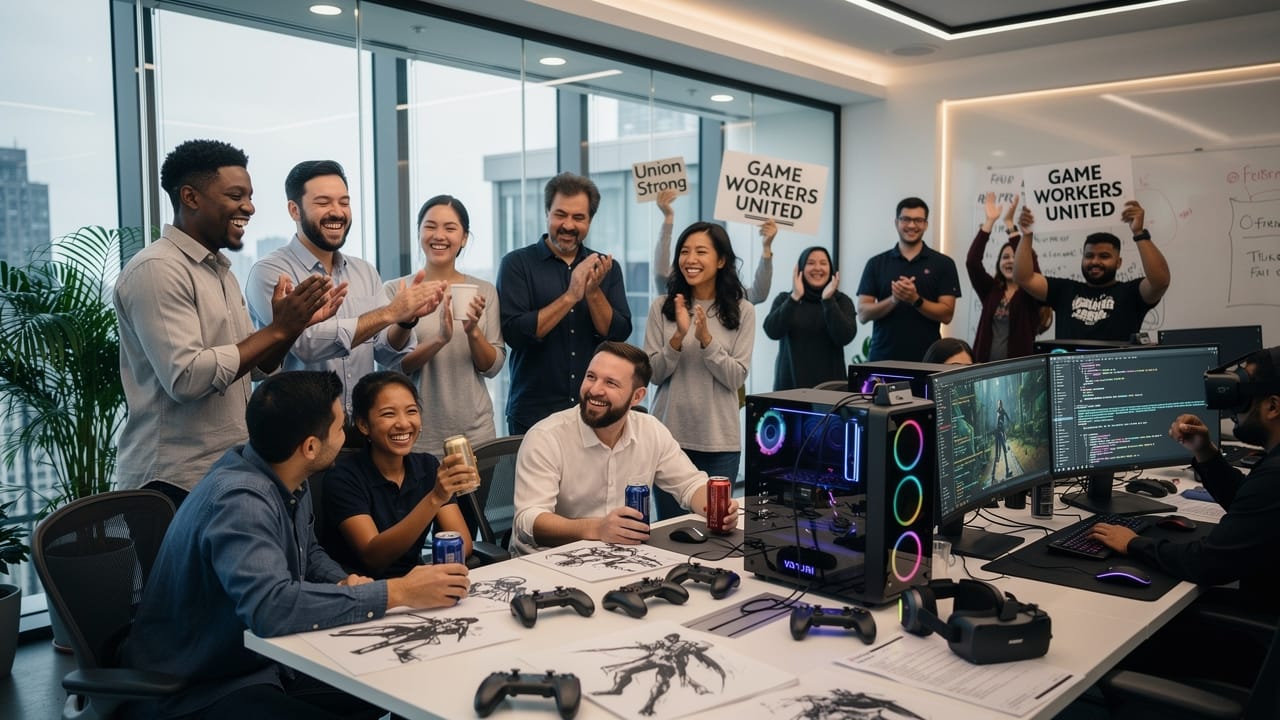
Workers at Double Fine Productions have taken formal steps to unionize, filing with the National Labor Relations Board and organizing with the CWA. The studio, best known for quirky, auteur-driven projects and the long-running appeal of Psychonauts, is now part of a labor trend that is no longer fringe.
That matters because Double Fine is not an isolated indie shop floating outside corporate gravity. It sits inside Microsoft’s gaming empire, which means this is another test of whether large tech companies can absorb organized labor without triggering the old anti-union playbook.
The immediate facts are straightforward. The union effort covers 42 employees, and it follows a string of Microsoft-studio organizing efforts over the past year. In other words, this is not a spark. It is a pattern, and tech unionization is becoming one of the defining business stories in gaming.
Key Details on Double Fine, Microsoft, and Tech Unionization
The most important fact here is scale, not just at Double Fine but across the broader Microsoft games portfolio.
According to reporting from IGN, Eurogamer, and Rock Paper Shotgun, Double Fine workers filed their petition on May 7, 2026. The union would include 42 regular part-time and full-time staff.
Why Microsoft’s neutrality matters
Labor groups said Microsoft agreed to stay neutral and not interfere with organizing. In labor politics, that is not a footnote. It is the difference between a difficult campaign and a brutal one.
Historically, union drives in games and tech have often collided with delay tactics, management pressure, or cultural messaging that frames unionization as somehow incompatible with creativity. Microsoft’s neutrality does not make it pro-union, but it lowers the temperature. That creates a clearer path for tech unionization inside studios that might otherwise stay quiet.
The pattern is now impossible to ignore
Double Fine follows 450 Blizzard Entertainment workers who voted to unionize in August 2025, plus 165 id Software developers who formed a union in December 2025. Those are not tiny experiments. They show organized labor is moving from QA and support roles into broader development teams, including prestigious studios with major franchises and strong identities.
This is where the story gets more interesting. For years, game labor organizing was discussed as a moral question. Now it is becoming an operational one. If multiple teams under one corporate umbrella can unionize without causing collapse, then the old executive argument, that unions are incompatible with game development, starts to look less like wisdom and more like habit.
What Tech Unionization Means for Developers, Studios, and Players
For workers, the appeal is obvious. Game development has long relied on a bargain that was bad even when people pretended it was romantic: lower security, periodic crunch, uneven pay growth, and the expectation that creative workers should feel lucky just to be in the room. Tech unionization is a way to renegotiate that bargain.
For studios, the benefits and costs are more complicated. A union can slow unilateral decision-making. It can force management to explain pay bands, promotion criteria, layoffs, outsourcing, and return-to-office demands. Executives rarely enjoy that. But it can also reduce one of the industry’s most expensive problems, churn. When experienced developers leave because the workplace is unstable or opaque, games suffer.
Why players should care
Players tend to hear “union” and assume it is an internal HR issue. It is not. Labor conditions shape the games that get made, how long they take, and whether talented teams stay intact long enough to ship something coherent.
A healthier studio does not automatically make a better game, but a burned-out studio often makes a worse one. Franchises drift. Live-service updates get messy. Creative risks disappear because no one trusts leadership enough to survive a miss. If you love games like Psychonauts, you should care about whether the people making them have any durable protection from bad management.
Who benefits, who loses
Workers benefit first if contracts produce real gains around pay transparency, workload protections, severance, and grievance processes. Mid-level managers often lose some informal power because “figure it out quietly” becomes less viable. Executives lose flexibility, at least in the short term, but they may gain a more stable workforce.
Publishers face the biggest strategic shift. Once one studio unionizes cleanly, others can point to a model. That is how tech unionization spreads, not through slogans, but through precedent.
What Others Missed About the Double Fine Union Push
A lot of coverage treats this as another item on the labor trend line. That undersells what is changing.
Double Fine is culturally important in a way raw headcount does not capture. This is a studio associated with personality, craftsmanship, and the kind of game development executives love to market as artist-driven. When workers at that kind of studio organize, they puncture one of management’s favorite narratives, that unions are for factories, warehouses, or “less creative” environments, but not for teams building art.
That idea was always convenient nonsense. Creative work is still work. In fact, creative workplaces can be especially vulnerable to exploitation because identity gets tangled up with output. People put up with too much when they think saying no makes them less committed to the art.
Small unit, big signal
The number 42 may look modest next to Blizzard’s 450. But smaller unions can matter more symbolically because they show labor organizing is not limited to giant, chaotic workplaces. If even compact, respected studios can unionize, then no company can credibly claim its culture is too special for collective bargaining.
The other overlooked angle is Microsoft itself. The company has positioned neutrality as a practical way to avoid a prolonged labor war while expanding its gaming footprint. That may turn out to be one of the smartest strategic choices in the sector. If Microsoft can live with unionized studios while rivals keep resisting, it could end up looking more attractive to talent, especially after years of layoffs across tech and games.
Real Examples of How Tech Unionization Changes Daily Work
Consider a common game studio problem: a milestone slips, leadership panics, and the team suddenly “volunteers” for nights and weekends. In a non-union shop, that often becomes the new normal because workers lack a formal structure to challenge it. In a unionized shop, workload expectations can become a bargaining issue instead of a whispered complaint.
Or take layoffs. The tech and games industries have both normalized abrupt cuts that arrive with vague corporate language about “restructuring.” A union contract cannot stop every layoff, but it can fight for severance standards, notification rules, and transparent criteria. That is not glamorous, but it changes people’s lives.
There is also the question of authorship and continuity. Games like Psychonauts succeed because teams build trust over time. When studios hemorrhage experienced staff, players feel it in the final product, whether they know the labor story or not. Better retention is one of the least flashy and most important arguments for tech unionization.
Pros and Cons of Tech Unionization in Game Development
Pros
- Better bargaining power for pay, benefits, workload, and job security
- Clearer workplace rules, which can reduce favoritism and confusion
- More stable teams, especially if union contracts improve retention
- Greater accountability for management decisions around layoffs, crunch, and outsourcing
Cons
- Slower decision-making when changes require bargaining or formal process
- Higher labor costs if contracts raise compensation and benefits significantly
- Potential friction between creative leadership and organized staff during high-pressure production cycles
- Uneven outcomes, because a union win is only the start, not the contract itself
Conclusion on Double Fine and the Future of Organized Game Work
Double Fine’s union push is not a quirky side story. It is another sign that tech unionization has moved from protest language to workplace strategy, especially inside gaming.
What matters now is not whether unions can appear in game studios. They can. The real question is whether publishers adapt early, or wait until labor conflict becomes much more expensive.
What Happens Next (2026-2030)
Between now and 2030, the winners will likely be workers at established studios with recognizable brands, because they have the public goodwill and internal cohesion to organize effectively. Companies that choose neutrality, as Microsoft has so far, may discover that unionized teams are easier to retain than burned-out ones constantly rebuilding after attrition. The losers will be executives still betting that “creative culture” can substitute for predictable working conditions. Expect more tech unionization in mid-sized studios next, then sharper fights over AI, outsourcing, and layoffs once the first major contracts are tested.
Sources
About the Author