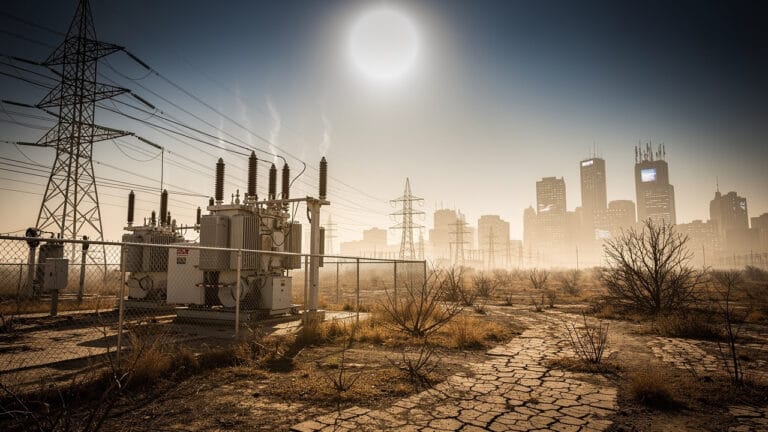

The next big fight in AI is not just about chips, it is about electricity, land, and who gets access to computing at all. If environmental sustainability tech does not get more local, cheaper, and safer, the green promise of digital infrastructure will start to look like marketing.
Quick Summary
- A UK company says it can turn 50,000 lampposts in Nigeria into a distributed, solar-powered computing network.
- The pitch is bold: use smart streetlights as both public infrastructure and a lightweight AI data platform, a fresh angle for environmental sustainability tech.
- The idea is promising for edge computing, local services, and energy access, but it is not a replacement for conventional hyperscale AI facilities.
- At the same time, AI is making cybersecurity harder, not easier, which means sustainable systems also need security built in from day one.
- New wearable and brain-sensing devices show where this is heading: more connected endpoints, more data at the edge, and more pressure to make environmental sustainability tech both efficient and trustworthy.
- The real story is not lampposts alone. It is the rise of distributed infrastructure, where computing happens closer to people, closer to sensors, and ideally with lower energy waste.
What Happened in environmental sustainability tech and smart infrastructure
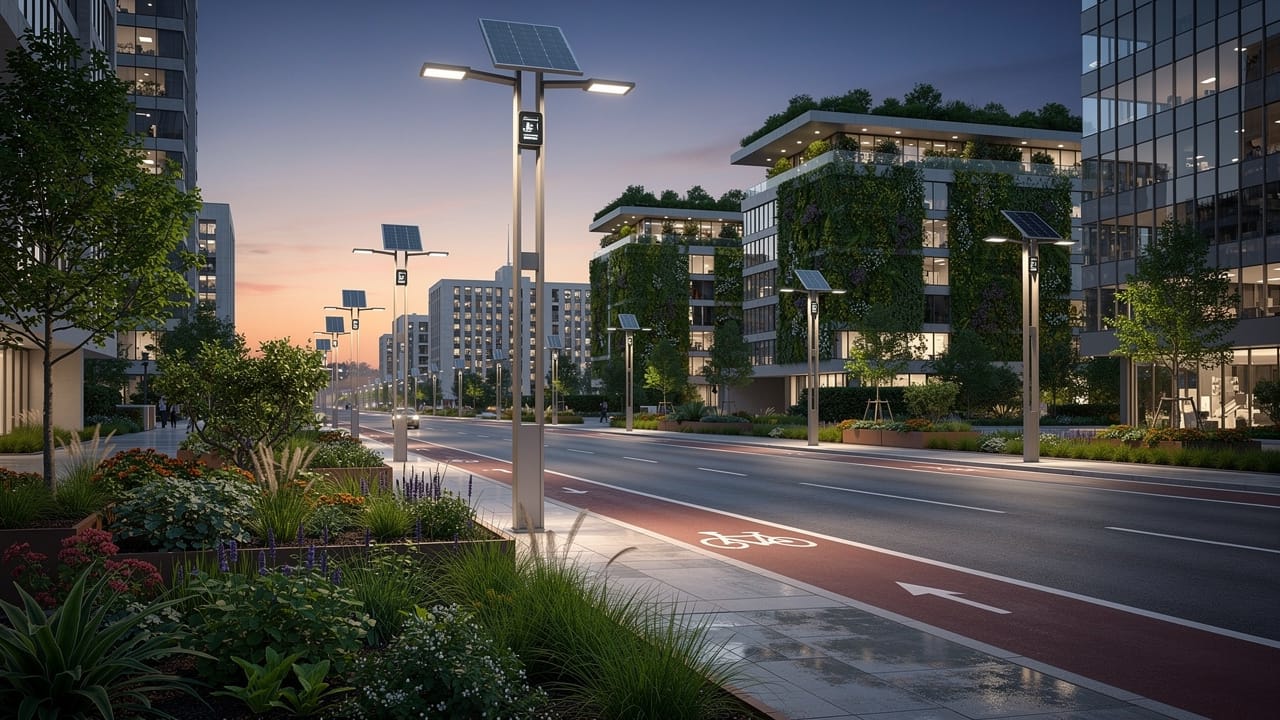
A British company, Conflow Power Group, is pushing a striking idea: transform solar-powered smart lampposts into a distributed data network. According to BBC Technology, the company has signed a formal agreement with a Nigerian state to deploy 50,000 of its iLamp units.
That matters because the proposal is not just about lighting streets. Conflow says these networked poles can also function as a revenue-generating, distributed AI data center. In plain English, it wants to spread some computing power across public infrastructure instead of concentrating it all inside massive industrial facilities.
This is exactly the kind of experiment that puts environmental sustainability tech under a microscope. Done well, it could reduce transmission waste, improve local digital services, and make use of solar generation in places where grid power is unreliable. Done badly, it becomes another flashy infrastructure pitch that underestimates maintenance, security, and real computing demands.
Key Details on environmental sustainability tech, AI security, and edge computing
The lamppost concept lands at a moment when digital infrastructure is colliding with two hard realities: energy consumption and cyber risk.
First, the energy side. Traditional data centers are power-hungry, water-hungry, and expensive to build near growing cities. That has triggered years of unusual experiments, from underwater data centers to proposals for orbital computing. The smart-lamppost model is less theatrical and arguably more practical, because it uses assets cities already understand: poles, solar panels, batteries, connectivity, and maintenance routes.
Still, there is an important caveat. Experts cited by the BBC make clear that this kind of distributed system is not a substitute for the biggest AI workloads. Training advanced models requires intense, centralized compute. Lamppost nodes are more realistic for lighter tasks, edge inference, localized analytics, and smart-city services.
Why environmental sustainability tech now has a security problem
The second pressure point is security. A recent MIT Technology Review event summary argues that AI is expanding the attack surface and exposing the limits of older security models. That warning matters here.
If cities start turning public hardware into mini compute nodes, they are not just deploying lights. They are deploying thousands of networked endpoints. Every endpoint can become a target. A sustainable system that gets compromised is not sustainable for long.
This is where many conversations about environmental sustainability tech go shallow. People talk about solar panels, battery efficiency, or carbon reduction, but skip the fact that distributed infrastructure creates distributed vulnerabilities. Security can no longer be added later as a software patch and a procurement checklist.
More devices, more local data, more pressure on the network
The broader tech market is moving in the same direction. A Digital Trends report on emerging brain-sensing wearables hints at a future where personal devices generate richer streams of health and behavioral data. Whether it is a smart lamppost, a wearable, or a roadside sensor, the pattern is the same: more intelligence at the edge, more data captured continuously, and more need for local processing.
That is why this Nigerian lamppost project is bigger than it sounds. It is a test case for whether environmental sustainability tech can support a world with billions of connected devices without simply building more giant, power-intensive boxes on the outskirts of major cities.
What environmental sustainability tech means for you
For most people, this sounds abstract until you connect it to everyday life. A distributed computing network can affect your internet speed, your utility bill, your privacy, and the reliability of basic services.
If you live in a fast-growing city, local compute can improve practical services such as traffic monitoring, public Wi-Fi, security cameras, and outage detection. Processing some tasks closer to where data is created often cuts latency and reduces the need to send everything back to a distant server farm. That is good for responsiveness and can be good for energy efficiency too.
The upside for cities and underserved regions
In places with weaker grid infrastructure, environmental sustainability tech built around solar-powered local nodes may offer a shortcut. Instead of waiting years for large centralized facilities and stronger transmission systems, cities can add capability incrementally. Street by street is sometimes more realistic than campus by campus.
There is also an economic angle. If public infrastructure can do double duty, lighting plus connectivity plus some computing, cities may get more value from each installation. That is especially attractive in markets where digital demand is rising faster than traditional infrastructure can keep up.
The risks people will feel first
But the downside is just as real. When infrastructure becomes “smart,” maintenance gets harder. A broken light is one problem. A broken light that is also a network node, battery system, and data endpoint is a stack of problems.
Then comes privacy and security. If AI expands the attack surface, as MIT Technology Review’s event warned, then every new edge device increases the burden on operators. Residents will care less about the elegance of the architecture than about whether the system stays online, protects data, and does not become an expensive public-sector headache.
The same logic applies to consumer tech. As wearables become more sensitive, including possible brain-focused devices, local processing will look appealing because it can reduce dependence on constant cloud transfers. But that only works if the hardware is secure and transparent.
What others missed about environmental sustainability tech and the lamppost idea
Most coverage of projects like this gets stuck on the novelty. Lampposts! AI! Solar! Nigeria! It is catchy, but the more important question is economic: why are companies suddenly trying to push computing outward, into streets, homes, vehicles, and wearables?
Because centralized computing is hitting friction. Power constraints are tightening. Land near demand centers is expensive. Grid upgrades take years. Public opposition to new data center builds is growing in some regions. Environmental sustainability tech is no longer a side project, it is becoming a workaround for infrastructure bottlenecks.
There is also a political angle. Distributed systems can be sold as development tools, not just tech products. A solar lamppost that brings light, connectivity, and local digital services is easier to defend than another anonymous warehouse full of servers. That narrative matters when governments decide what gets permits, subsidies, or public backing.
The hidden tradeoff in environmental sustainability tech
Here is the tradeoff many people miss: distributing compute can lower some environmental costs while raising operational complexity. You may reduce the need for giant centralized power draws in one place, but you now have thousands of units to secure, monitor, repair, and eventually replace.
That does not kill the model. It just means the winners in environmental sustainability tech will not be the companies with the flashiest hardware. They will be the ones that solve lifecycle management, software updates, battery replacement, theft resistance, and incident response.
Real Examples of environmental sustainability tech in daily life
Imagine three common scenarios.
A city intersection uses smart lamppost nodes to process traffic footage locally, adjusting signals in real time instead of sending every frame to a distant cloud. That saves bandwidth and may reduce response time.
A clinic in an underserved region uses nearby edge infrastructure to support diagnostics or health monitoring tools when connectivity is weak. In a future filled with advanced wearables, including brain-sensing devices, local processing could become essential rather than optional.
A utility uses distributed smart poles to detect outages or power anomalies faster. That is not glamorous, but it is exactly where environmental sustainability tech proves itself, not in conference demos, but in whether daily systems become cheaper, cleaner, and more reliable.
Pros and Cons of the smart-lamppost model
Pros
- Uses existing urban infrastructure in a more productive way
- Can support local services with lower latency
- Solar power makes it attractive where grids are weak or costly
- Scales incrementally, which is useful in fast-growing regions
- Fits the broader shift toward edge computing
Cons
- Not powerful enough for the heaviest AI training workloads
- Creates a large, distributed cybersecurity challenge
- Maintenance and replacement costs could be underestimated
- Public infrastructure projects often struggle with long-term upkeep
- Energy savings depend on real-world performance, not just design claims
Conclusion: The real test for environmental sustainability tech
The lamppost data center idea sounds unusual because it is unusual. But the instinct behind it is smart: push computing closer to where energy is generated and where data is actually used. That is likely to be one of the defining moves in environmental sustainability tech over the next decade.
What Happens Next (2026-2030)
Between now and 2030, the winners will be companies that make distributed systems boring in the best way, secure, maintainable, and cost-effective. Cities and emerging markets could benefit most, because they have the strongest incentive to stretch every infrastructure investment further. Hyperscale data centers will not disappear, but they will face growing pressure to justify their energy footprint. Expect a split future: giant facilities for heavy AI training, and a messy but fast-growing layer of local, greener compute for everything else.
Sources
About the Author