
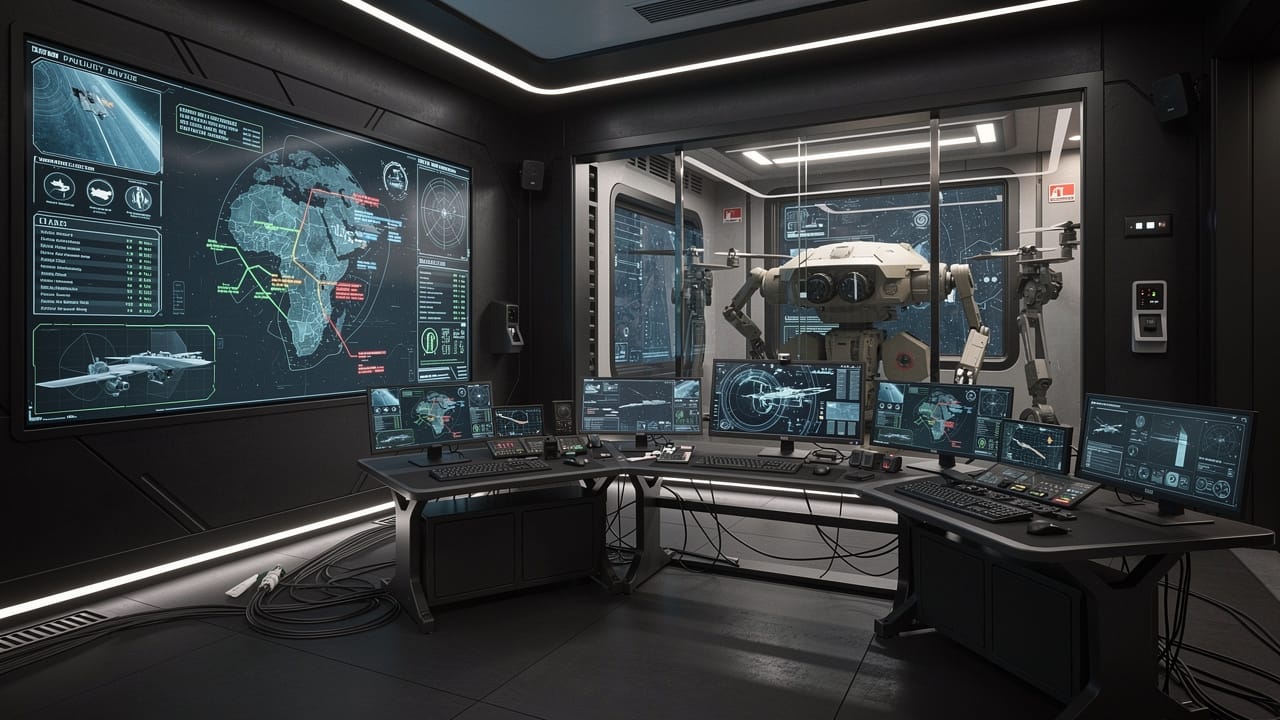
The real story is not that the Pentagon wants better chatbots. It is that ai in military applications is moving off demo servers and into classified systems, where software will increasingly shape targeting, logistics, intelligence, and the speed of wartime decisions.
Quick Summary
- The Pentagon has signed new AI agreements with major vendors including Google, OpenAI, Oracle, SpaceX, Nvidia, Microsoft, Amazon Web Services, and Reflection AI.
- The newest deals specifically allow AI tools and models to run on classified military networks for what the Defense Department calls lawful operational use.
- This marks a major escalation in ai in military applications, because the software is no longer confined to back-office experiments or unclassified testing.
- One major company is missing, Anthropic, after a dispute over guardrails, autonomous weapons, and domestic surveillance limits reportedly turned into a legal fight.
- The Pentagon is openly describing the U.S. military as an AI-first fighting force, which signals a procurement shift as much as a technology shift.
- The winners are likely to be cloud providers, chip companies, and defense integrators. The hardest questions now move from “can it work?” to “who controls it, and what happens when it fails?”
What Happened With AI in Military Applications at the Pentagon
The Pentagon announced a new wave of AI deals that expand its ability to deploy commercial models and infrastructure inside classified environments. That matters because classified networks are where the most sensitive military planning, intelligence workflows, and operational systems live. Once AI is admitted there, this is no longer a public-sector pilot project. It becomes part of the machinery of state power.
The latest agreements include Nvidia, Microsoft, Amazon Web Services, and Reflection AI, building on earlier arrangements with Google, OpenAI, SpaceX, and Oracle. According to the reporting, the Pentagon now has eight agreements spanning some of the most powerful firms in AI and cloud computing. The department’s own language is unusually blunt, it wants the U.S. military to operate as an “AI-first” force.
That phrase is not just branding. It means the Pentagon is trying to make applications of ai in military planning and execution a default capability, not a specialist add-on.
Key Details on Classified Networks, Vendors, and ai in military applications
The most important detail is the setting: classified networks. Running AI in a sensitive military environment requires more than access to a model. It demands secure compute, vetted data pipelines, identity controls, monitoring, and some way to audit what the model is doing. That is why this round of contracts leans so heavily on cloud giants and infrastructure vendors.
Another crucial detail is vendor diversification. The Defense Department appears determined not to depend on a single AI supplier. That is partly a technical choice, because different models perform better at different tasks. But it is also a political and contractual strategy. If one provider pushes back on military use cases, the Pentagon wants alternatives.
The Anthropic fight explains the new procurement strategy
The missing name here is Anthropic, and that absence may be more revealing than the new signings. Reporting indicates the Pentagon wanted broad use rights, while Anthropic wanted restrictions aimed at preventing uses tied to domestic mass surveillance and autonomous weapons. That dispute has reportedly spilled into court, with Anthropic winning an injunction in March against a Pentagon effort tied to supplier status.
That clash matters beyond one contract. It exposes the fault line at the center of ai applications in military work: the government wants flexibility; AI labs want to avoid being blamed for worst-case uses. If you want a deeper look at how that collision is reshaping policy, this piece on ai governance issues helps frame the larger struggle.
What the Pentagon is really buying
The military is not simply purchasing a chatbot for analysts. It is buying layers of capability: foundation models, cloud infrastructure, inference tools, chip access, and deployment frameworks that can survive inside secure environments. That is where products such as GenAI.mil become relevant, because the commercial race is now about packaging powerful models for controlled, enterprise-grade, often highly restricted settings.
The source reporting also gives us one useful scale marker: there are eight agreements now in place, and the named vendors span nearly the entire upper tier of American AI infrastructure. That concentration should make policymakers nervous even as it makes procurement easier.
What This Means for You as ai in military applications Expands
Most people will never log into a classified network, but they will absolutely live with the consequences of what gets built there.
First, expect more public money to flow toward the same companies that already dominate commercial AI. The Pentagon is not creating a parallel ecosystem from scratch. It is pulling Silicon Valley and hyperscale cloud providers deeper into national security. That means the future of ai in military applications will likely be shaped by firms that also build the tools used in offices, schools, hospitals, and software development.
Why this changes the AI market outside defense
Defense contracts do not just generate revenue. They harden products. If an AI system can operate inside a classified environment, with strict uptime, compliance, and security demands, that technology often becomes more attractive to banks, critical infrastructure operators, and healthcare systems too. Military procurement has a long history of making frontier technology feel safer for the rest of the market.
There is also a labor effect. As military AI spending rises, top engineers, cybersecurity talent, and model-operations teams become more valuable. Some will be drawn into defense-adjacent work, directly or through contractors. Others will resist. That cultural split inside tech is already visible, and it is likely to deepen.
The civil-liberties risk is no longer abstract
The Pentagon keeps using the phrase “lawful operational use,” but legality is not the same thing as clarity. The real issue is what these systems are permitted to do in intelligence analysis, surveillance support, battlefield assistance, and recommendation loops. Once applications of ai in military systems help prioritize targets or classify threats, human oversight can become a procedural checkbox instead of a meaningful brake.
That concern is not theoretical. The current procurement push looks a lot like the trend described in our earlier piece, AI in Military Operations Just Crossed a Line, and Silicon Valley Is Now Inside the War Room. The line is not whether AI touches defense. It already does. The line is whether civilian tech companies become permanent operational infrastructure for war.
What Others Missed About Nvidia, Microsoft, and AWS in This Shift
A lot of coverage treats this as a simple contract story. It is bigger than that. This is a control story.
The Pentagon is building leverage against AI vendors by signing multiple players at once. If one company balks at terms, another can step in. That weakens the ability of any single lab to enforce ethical red lines through contract language. In other words, diversification is not only about resilience. It is also about power.
ai in military applications is becoming an infrastructure business
The public conversation often focuses on frontier models, but the quieter winners may be infrastructure providers. Nvidia supplies the compute foundation. Microsoft and Amazon Web Services provide secure cloud environments, deployment pathways, and enterprise control layers. The AI model itself may change every year. The infrastructure contracts can last much longer.
This is why the Pentagon’s move matters to investors and industry watchers as much as to defense analysts. Once secure AI deployment becomes a standard requirement across agencies, the companies that own the rails can capture enormous long-term value. We have already seen the private market attach huge valuations to AI buildout, a trend connected to the spending surge discussed in this look at AI technology advancements in 2025.
The “AI-first” slogan hides a harder truth
Calling the military “AI-first” makes it sound modern and inevitable. It also conveniently skips over the fact that military organizations are bad at explaining software failure in public. If a model produces flawed analysis in a classified setting, outside scrutiny may be limited. Accountability gets thinner precisely where the stakes are highest.
That is the paradox. Ai applications in military settings may improve speed and pattern detection, but they can also make bad decisions scale faster.
Real Examples of How ai in military applications Could Show Up
Think less about humanoid robots and more about workflow software with lethal implications.
An intelligence analyst could use AI to summarize intercepted communications faster, highlight anomalies in satellite imagery, or generate alternative interpretations of a developing threat. A logistics officer could use the same stack to predict spare-parts shortages or reroute supplies when infrastructure is damaged. A commander might receive AI-generated options, ranked by confidence, before a human approves action.
These are not science-fiction scenarios. They are the practical edge of applications of ai in military systems, where software narrows choices before a human ever sees the full picture.
Products like GenAI.mil point to how this market will be sold, not as one giant super-intelligence, but as a menu of deployable services for secure summarization, search, inference, retrieval, and decision support inside tightly controlled environments.
Cybersecurity is another likely battlefield. Classified AI systems will become high-value targets for espionage, poisoning attacks, and model manipulation. That is why the next arms race may be as much about defending military software stacks as building them, a theme echoed in our coverage of AI cybersecurity.
Pros and Cons of ai in military applications Inside Classified Systems
Pros
- Faster analysis across intelligence, logistics, and planning
- Better use of large, messy datasets that humans struggle to process quickly
- More vendor competition, which may reduce dependence on a single supplier
- Potential operational advantages in speed, coordination, and resource allocation
Cons
- Reduced transparency when AI is embedded in classified decision systems
- Greater risk of overreliance on probabilistic outputs that appear more certain than they are
- Harder ethical oversight when multiple vendors and agencies share responsibility
- Increased concentration of national security power in a handful of tech firms
Conclusion on ai in military applications and the Pentagon’s New Bet
The Pentagon’s latest contracts are not just another government tech upgrade. They mark the point where ai in military applications becomes core infrastructure for classified operations, and where Silicon Valley’s biggest platforms move from support role to strategic dependency.
That may give the U.S. military a genuine edge. It also ensures that the next fight over AI will not be about hype, it will be about control, accountability, and who gets to draw the red lines once the software is already inside the bunker.
What Happens Next (2026-2030)
Between now and 2030, the biggest winners will likely be cloud providers, chipmakers, and defense integrators that can make secure AI boring enough for procurement officers to trust. The losers may be smaller AI labs that want strict usage limits, because the Pentagon is clearly building around them. Expect GenAI.mil style platforms to multiply as military buyers demand modular tools instead of one-off demos. The most important change will not be autonomous weapons appearing overnight. It will be AI quietly becoming the default interface between military leaders and the information they use to make decisions.
Sources
About the Author