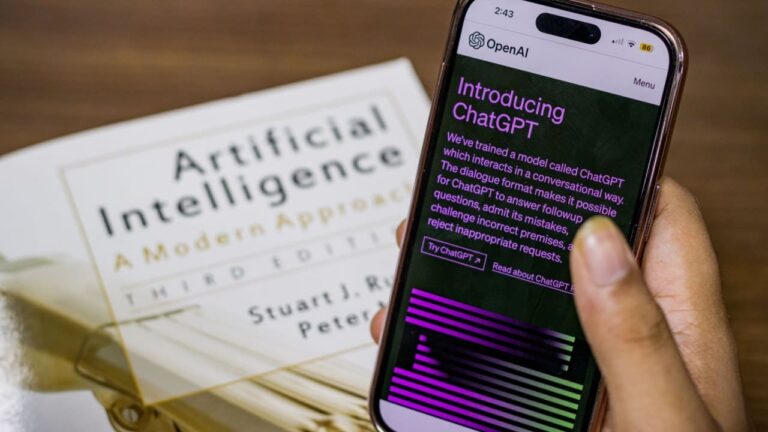


The elon musk sam altman rivalry is not really about hurt feelings or old founder drama anymore. It is a courtroom battle over whether the most powerful AI company in the world was built on a mission that can be rewritten once the money gets big enough.
Quick Summary
- Elon Musk spent roughly three days on the witness stand arguing that OpenAI abandoned the nonprofit vision he says he agreed to fund.
- The central dispute in the elon musk sam altman rivalry is whether Sam Altman and OpenAI changed the company’s purpose, from building AI for humanity to building a commercial empire.
- Court evidence reportedly includes old emails, texts, and Musk’s own public posts, turning years of private AI politics into a public record.
- One of the most damaging revelations so far is Musk acknowledging that xAI has used OpenAI models to help train its own systems, a notable admission given his criticism of OpenAI.
- This case matters beyond Silicon Valley gossip, because the outcome could influence how AI labs structure themselves, raise money, and claim to serve the public.
- If you use ChatGPT, invest in AI, build on AI APIs, or work at a company racing to deploy generative AI, this trial could shape what comes next.
What Happened in the Elon Musk Sam Altman Rivalry Trial
The latest phase of the elon musk sam altman rivalry played out in federal court, where Musk argued that he was misled when he helped start OpenAI in 2015. His claim is straightforward enough for anyone outside tech to follow: he says he backed a nonprofit intended to develop advanced AI for the public good, not a company that would later move toward a more conventional profit-driven model.
That sounds like an argument about corporate paperwork, but it is bigger than that. OpenAI’s rise, helped by its tie-up with Microsoft and its position at the center of the generative AI boom, turned what might have been a niche founder dispute into a referendum on who gets to define “benefit humanity” once tens of billions of dollars are at stake.
Key Details on OpenAI, xAI, and the Elon Musk Sam Altman Rivalry
The first week produced more heat than closure. According to the reporting, Musk testified for the better part of three days, framing himself as a donor and cofounder who was duped. He told the jury, in blunt terms, that he had effectively provided free funding for something that became a startup machine rather than a pure mission-driven nonprofit.
The evidence problem is real
What makes this case unusually compelling is the paper trail. The Verge reported that exhibits stretch back to 2015, which matters because early emails and messages are often where founders speak most honestly, before lawyers and PR teams smooth everything out. That evidence may become more important than the public statements everyone already knows.
Musk’s side is pushing a moral argument wrapped inside a legal one. His line, repeated in and around the case, is that you cannot convert a charitable mission into something else after attracting money and credibility under the original promise. OpenAI’s side, implicitly and explicitly, is arguing something many AI executives privately believe: world-scale AI is too expensive to build under idealistic nonprofit rules alone.
The most awkward moment for Musk
The MIT Technology Review report highlighted a particularly uncomfortable detail for Musk. He admitted that Grok, through xAI, uses OpenAI outputs or models in training workflows, a striking concession given how aggressively he has attacked OpenAI in public. In the same week, the courtroom also heard about poaching tensions and Musk’s broader efforts to build competing AI power centers.
That contradiction does not automatically destroy Musk’s case, but it weakens the cleanest version of his public image. He wants to be seen as the man warning the world about reckless AI commercialization. The problem is that he is also one of the people commercializing AI at speed.
This is happening during peak AI spending anxiety
The trial also lands at a fragile moment for the broader market. Big Tech has spent heavily on AI infrastructure, and investors are increasingly asking when the returns show up. Companies like Apple and Microsoft are under pressure to prove that AI is more than an expensive defensive necessity. That gives the elon musk sam altman rivalry extra relevance, because this fight is unfolding just as the industry is confronting the limits of brute-force spending.
What This Means for You if the Elon Musk Sam Altman Rivalry Reshapes AI
If you are a normal user, this case may sound distant. It is not. The structure of OpenAI affects product pricing, safety priorities, model access, and who gets favored when resources are scarce.
If you use AI tools at work
A more commercially aggressive OpenAI likely means faster product rollouts, deeper enterprise integrations, and more pressure on rivals to keep pace. That can be good for users in the short term. Better tools arrive faster. Features improve. Costs may even fall temporarily as competitors undercut each other.
But there is a catch. If the legal fight pushes AI labs to lock themselves down further, users could see less transparency, fewer open research norms, and tighter control over data, pricing, and access. The public-interest language stays, but the incentives shift toward platform capture.
If you build on top of OpenAI or rivals
Startups should be paying very close attention. If this trial pressures AI companies to clarify governance, that could help developers understand who really makes decisions about APIs, safety throttles, and pricing changes. Right now, many businesses are effectively renting core intelligence from a handful of labs whose governance structures remain murky.
That uncertainty is one reason the industry keeps diversifying. Developers are experimenting with multiple providers, self-hosted models, and fallback systems because they do not want their roadmap tied to one boardroom dispute. Our earlier look at how the Sam Altman Elon Musk lawsuit could reshape OpenAI, and the AI industry may not like the result argued that the biggest loser may be the illusion that AI governance is settled. That looks even more true now.
If you care about competition, not personalities
The real issue is market power. If OpenAI can evolve from nonprofit idealism into a dominant commercial force without a lasting penalty, every future AI lab gets the message. Start mission-first, collect trust, then scale like a corporation once the technology works. If Musk wins meaningful constraints, that playbook becomes riskier.
What the Media Missed About the Elon Musk Sam Altman Rivalry
Most coverage has focused on the spectacle, the witness stand, the old messages, the obvious personal bad blood. That misses the more uncomfortable truth. The elon musk sam altman rivalry is exposing how much of modern AI governance was built on ambiguity from the start.
The nonprofit story was always under stress
Advanced AI is brutally expensive. Training frontier systems requires enormous compute, elite talent, and vast infrastructure. Everyone in this space knew that idealism would eventually collide with capital needs. The unusual part is not that this happened. The unusual part is that OpenAI became the company where that contradiction became impossible to hide.
This is why the case matters more than a founder spat. It tests whether “mission” is a genuine constraint or just early-stage branding for companies that later need industrial-scale financing.
Musk and Altman are both arguing from interest, not purity
Musk is not wrong to point at mission drift. Altman is not wrong, at least in business terms, that scale costs money. Both things can be true. The cleaner narrative, hero versus villain, is simply too convenient.
Musk now runs a direct competitor to OpenAI through xAI, and Tesla has its own AI ambitions tied to robotics and autonomy. Altman, meanwhile, represents the faction of AI development that believes centralization and giant financing rounds are the only realistic path to staying ahead. Neither side is detached. Both are fighting over the future from inside it.
Real Examples of How the OpenAI Fight Affects Products and Markets
Think about enterprise software first. If OpenAI keeps consolidating its position, workplace AI inside coding tools, office suites, and customer support systems becomes more dependent on one company’s pricing and policy decisions. That does not just affect developers. It affects every employee whose daily tools are being rebuilt around AI.
Consumer products are next. If Apple leans on outside AI partnerships while keeping its own model ambitions selective, and if Microsoft stays deeply tied to OpenAI, then the courtroom outcome could influence which assistants, search layers, and productivity features reach users fastest.
Then there is the competitor effect. Musk’s admission involving Grok undercuts the fantasy that the major AI labs are morally sealed off from each other. In reality, this market is messy, interdependent, and opportunistic. Publicly, they talk about safety and principles. Privately, they borrow, compete, recruit, and scale however they can.
Pros and Cons of This Legal War Going Public
Pros:
- It forces rare transparency into elite AI decision-making.
- It could create clearer standards for nonprofit-to-profit transitions.
- Developers, investors, and regulators may finally get a clearer view of who controls frontier AI.
Cons:
- The case may harden rival camps instead of improving governance.
- It could encourage more secrecy at major AI labs.
- Users may get distracted by founder theatrics while the underlying concentration of power gets worse.
Conclusion on the Elon Musk Sam Altman Rivalry
The elon musk sam altman rivalry matters because it asks a simple but explosive question: when an AI lab says it exists for humanity, who gets to enforce that promise once the company becomes enormously valuable? Strip away the memes and ego, and this is a fight over legitimacy, not just ownership.
If the court exposes enough contradiction on both sides, the lasting effect may not be a clear winner. It may be the end of the industry’s favorite illusion, that world-changing AI can remain ethically pure while also becoming one of the most lucrative businesses on Earth.
What Happens Next (2026-2030)
Between now and 2030, the winners will likely be the companies that can combine massive financing with governance structures that look credible enough to survive scrutiny. OpenAI may stay dominant, but only if it can convince partners and regulators that scale has not completely erased mission. Musk could still benefit even in partial defeat, because every damaging disclosure about OpenAI helps position xAI and Grok as alternatives, even if that positioning is full of irony. The losers are likely to be smaller AI startups that cannot match the compute race and cannot claim the same public-interest halo. What actually changes is this: future AI companies will think much harder before promising a noble mission they may later need to outgrow.
Sources
About the Author