
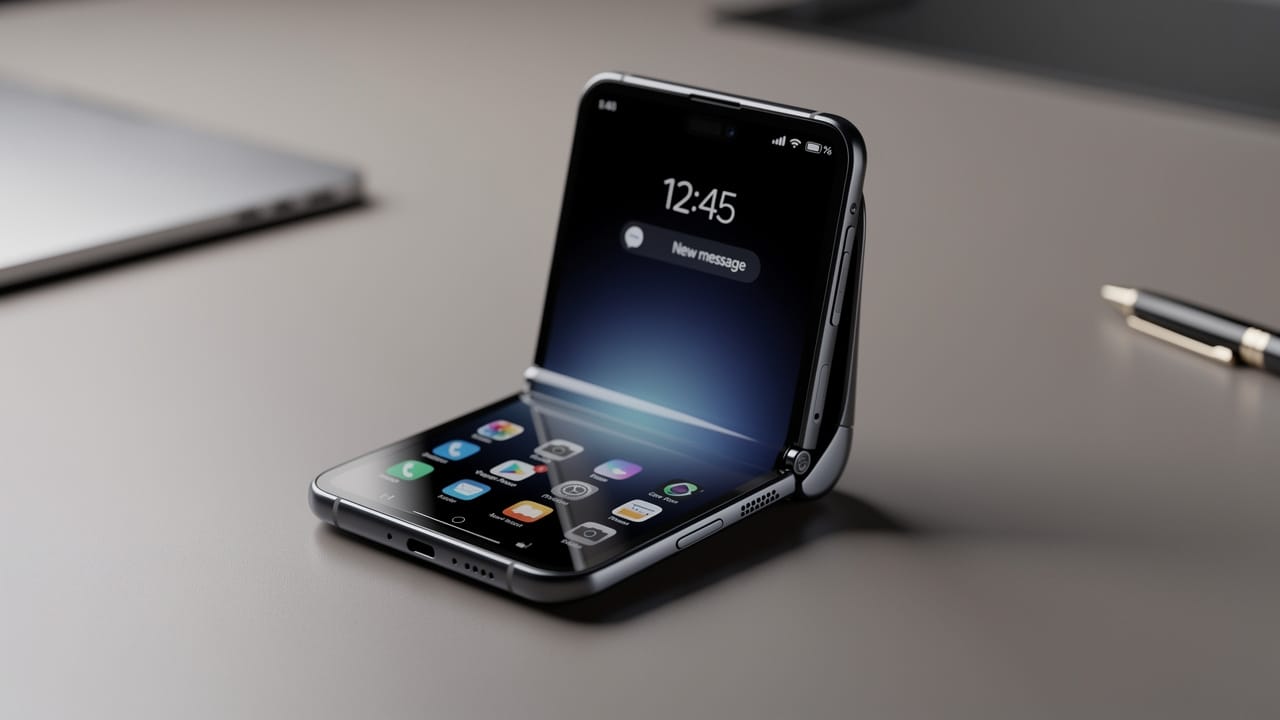
The new Motorola phone razr lineup is not exciting because it got dramatically better. It is exciting because Motorola is testing whether style, nostalgia, and slightly lower prices are enough to make people accept foldables that still cost too much.
Quick Summary
- Motorola has unveiled a new Razr family for 2026, including three flip models and a new book-style foldable.
- The headline device is the Razr Fold, which starts at $1,900, undercutting Samsung’s comparable foldable by $100.
- The flip lineup also got more expensive: the Razr Ultra is $1,500, the Razr+ is $1,100, and the standard Razr is $800.
- Preorders begin May 14, and retail availability starts May 21.
- The bigger story is not just the hardware, it is Motorola pushing the Motorola phone razr brand into both flip and book-style foldables at the same time.
- For buyers, this means more choice, but not necessarily better value.
What Happened With the Motorola Phone Razr Launch
Motorola just expanded the Razr idea beyond the familiar clamshell. Alongside its latest flip phones, the company finally made its first book-style foldable official, the Motorola phone razr entry called the Razr Fold.
That matters because the Razr name has always carried a very specific identity. For a lot of people, the flip phone Motorola razr v3 was not just a gadget, it was a fashion object. Motorola is now trying to stretch that legacy into a broader foldables lineup, one that includes both pocketable flip phones and a tablet-like fold-open device.
The catch is price. According to reporting from Wired, every new Razr model costs more than the one before it. And while the new Motorola Razr Fold comes in below Samsung’s rival on price, it is still firmly in luxury-tech territory.
Key Details on the Motorola Razr Flip Phone and Fold
The most important numbers are straightforward, and they tell the story better than any marketing line.
- Razr Ultra: $1,500
- Razr+: $1,100
- Razr: $800
- Razr Fold: $1,900
That means Motorola raised prices by $200 on the Ultra and $100 on both the Razr+ and the base Razr, based on Wired’s reporting. The foldable launch schedule is also simple: preorders start May 14, and the phones go on sale May 21.
Why the Motorola phone razr pricing stands out
The obvious comparison is Samsung, because Samsung still defines the mainstream foldables market in the US. Digital Trends noted that the Motorola Razr Fold undercuts the Galaxy Z Fold 7 by $100. On paper, that makes Motorola look aggressive.
But there is another way to read it. A $1,900 device is only “affordable” inside the distorted economics of foldables. In the real world, it is still wildly expensive for a phone, especially in a year when many buyers are hanging onto devices longer.
The Motorola flip phone razr strategy is now split in two
Motorola is no longer selling a single foldable idea. It is selling two:
1. The clamshell lifestyle device, meaning the familiar Motorola razr flip phone
2. The productivity-status hybrid, meaning the Razr Fold
That is a smart move if the company wants to grow beyond nostalgia. It is also risky. The Razr brand works because it feels iconic and simple. Expanding it too far could dilute what made it memorable in the first place, just as many brands lose their edge when they become product families instead of signature devices.
What This Means for You if You’re Shopping a Motorola Phone Razr
If you are actually considering one of these phones, the decision is less about specs and more about what kind of compromise you are willing to live with.
For many people, the best argument for a Motorola phone razr is still size. A flip folds into something compact, more pocketable, and undeniably more fun than another glass slab. That emotional appeal is real. It is the same reason the pink Motorola razr phone became a cultural moment years ago, and it still helps Motorola stand out now.
If you want style, Motorola still has an edge
A lot of Android phones feel interchangeable. The Motorola flip phone razr does not. Even people who do not care about chipsets or camera sensors understand instantly why a folding flip is appealing. It is tactile, recognizable, and a little playful.
That matters more than tech reviewers sometimes admit. Plenty of buyers choose phones based on how they fit into daily life, how they feel in the hand, and whether they look distinct in a market full of sameness.
If you want value, the story gets worse
This is where things get harder to defend. At $800, even the cheapest Razr is no longer an impulse buy for nostalgia lovers. At $1,100 and $1,500, the higher-end models are competing directly with powerful non-folding flagships that usually offer fewer durability concerns, better cameras, and fewer long-term repair headaches.
And the new Motorola phone razr in Fold form is even trickier. Yes, it is cheaper than Samsung’s equivalent. But cheaper than extremely expensive is not the same as good value.
Who should actually buy one
These phones make the most sense for:
- Buyers bored by standard smartphones
- People who truly value pocketability
- Fans of the old Razr brand who want a modern version of that feeling
- Early adopters who want foldables without paying Samsung’s full premium
They make less sense for:
- Budget-conscious shoppers
- Camera-first buyers
- People who keep phones for four or five years and worry about hinge wear
- Anyone hoping the Motorola razr 2025 flip phone style pricing would hold steady into the next generation
What Others Missed About the Motorola Phone Razr Push
Most coverage focused on the sticker shock, and fair enough. But the more interesting question is why Motorola thinks this is the right time to raise prices while expanding the lineup.
The answer is probably simple: foldables have moved out of the experimental phase, but they have not gone mass market. That creates an awkward middle zone where brands stop pricing for curiosity and start pricing for margin.
Motorola phone razr is being positioned as premium, not disruptive
For years, Motorola’s foldables often felt like stylish alternatives to Samsung, slightly cheaper, slightly more design-driven, and aimed at people who wanted something different. Now the company seems to be betting that “different” itself deserves a premium.
That is a strategic shift. Motorola is not trying to be the bargain foldable brand anymore. It is trying to be the cool foldable brand with just enough price advantage to seem reasonable.
The old Razr nostalgia is still doing heavy lifting
The power of the Razr name should not be underestimated. The flip phone Motorola razr v3 remains one of the most recognizable phone designs ever made. Even now, the modern Razr line benefits from that emotional residue.
But nostalgia has limits. Buyers will forgive middling specs for a while if a device feels iconic. They will not do it forever. If yearly updates remain modest while prices climb, the brand starts to look less like a comeback and more like a premium tax on memory.
If you have followed other phone launches recently, you have probably noticed the same tension across the market: companies are charging more while innovation feels smaller. That is not a Motorola-only problem. It is an industry pattern.
Real Examples of Where the Motorola Razr Fold Fits
A commuter who wants a pocket-friendly device may still prefer the classic Motorola razr flip phone over a larger slab phone, even at a higher price, because it actually changes how the phone fits into everyday life.
A business traveler, meanwhile, might look at the Motorola Razr Fold and see a mini tablet that can replace carrying both a phone and a second screen. That use case is real, especially for email-heavy work, reading documents, and multitasking on flights.
Then there is the status buyer. Some people simply want a phone that sparks conversation. The Razr line has always done that better than most Android devices. A modern foldable with clear roots in the old pink Motorola razr phone era still carries that social appeal.
The challenge is that these are all niche advantages. None of them automatically make the Motorola phone razr lineup the obvious purchase for most people.
Pros and Cons of the Motorola Phone Razr Lineup
Pros
- Distinctive design in a crowded smartphone market
- New choice between flip-style and book-style foldables
- Razr Fold pricing comes in below Samsung’s closest rival
- Strong brand nostalgia still has real consumer pull
Cons
- Across-the-board price hikes
- Incremental upgrades make the increases harder to justify
- Foldables still carry durability and repair anxiety
- The value proposition weakens fast once prices cross standard flagship territory
Conclusion on the Motorola Phone Razr Strategy
The new Motorola phone razr lineup is not a breakthrough release. It is a confidence test. Motorola is betting that buyers care enough about design and brand identity to pay more for foldables that are still not fully mainstream.
That may work for the stylish niche that has always loved the Razr name. For everyone else, the smarter move may be to admire these phones, then wait for prices to come back to Earth.
What Happens Next (2026-2030)
Between now and 2030, the winners will be the companies that make foldables feel ordinary, reliable, and only slightly more expensive than flat phones. Motorola has a shot, but only if it stops treating the Razr mystique as infinite. Samsung will keep benefiting from scale, while Motorola can benefit from personality, if it does not price itself out of that advantage. The Motorola Razr Fold could help broaden the brand, but the real battleground is still the flip category, where style matters and price sensitivity is brutal. If foldables ever truly go mainstream, it will not happen because they look cool. It will happen when buyers stop worrying they are paying extra to be beta testers.
Sources
About the Author