

Colorado’s Experiment in Letting People Fix Their Stuff
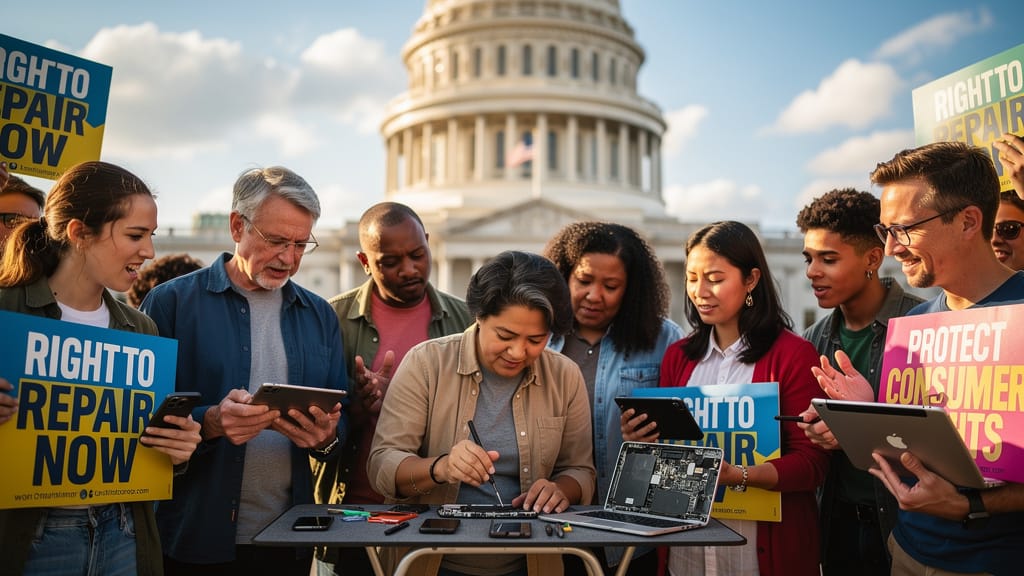
In the United States, the right‑to‑repair movement has shifted from a niche cause for tinkerers into a mainstream consumer rights battle. Nowhere is that more obvious than in Colorado. Since 2022, the state has steadily passed laws that give people more control over fixing and upgrading what they own, from mobility devices to farm machinery and everyday gadgets.
According to reporting highlighted by Ars Technica, Colorado lawmakers have already approved repair rights for wheelchairs, agricultural equipment, and consumer electronics. Those laws require manufacturers to provide tools, repair manuals, and access to parts so that owners and independent shops can carry out repairs themselves. That approach contrasts with the default model in which companies keep repair information locked down and steer customers into costly, brand‑authorized service networks.
Consumer advocates point to Colorado as the leading edge of a national shift. Danny Katz, who heads the Colorado branch of the public interest group CoPIRG, describes the state as having the broadest repair rights in the country and frames this as something residents should be proud of. In practical terms, “broadest” means that Colorado’s laws reach across multiple sectors instead of focusing on only one product category at a time.
This matters beyond state lines. Similar bills have been introduced in every US state, and eight have already enacted at least some form of right‑to‑repair legislation. Colorado’s early and wide‑ranging rules have turned it into a test case for how far such policies can go, and how hard tech companies will fight back.
Why Tech Companies Feel Threatened by Repair Rights
Manufacturers often present repair as a question of safety, cybersecurity, or product quality. The economic incentives tell another story. As Ars Technica outlines, companies can earn significant revenue by controlling every step of the repair process. When they are the only source of specialized tools, diagnostic software, and genuine replacement parts, they can:
- Charge premium prices for basic repairs
- Push owners to replace a product when it fails instead of fixing it
- Keep independent repair shops out of the market
Right‑to‑repair laws threaten this model. If a farmer can get diagnostic software and an independent mechanic can order an engine part directly, dependence on the manufacturer drops. If a wheelchair user can access a full repair manual along with affordable parts, they are less likely to accept weeks‑long waits and high fees from a single authorized vendor. The same logic applies to smartphones, laptops, and other electronics.
Some companies have started to make their products a bit more repairable, often after years of advocacy and public pressure. Others have moved in the opposite direction and are now actively working to weaken, delay, or narrowly interpret right‑to‑repair rules that have already passed.
The New Strategy: Neuter the Law Instead of Stop It
The Colorado experience, as detailed in the Ars Technica piece on efforts to undermine the state’s landmark law, shows that the political fight does not end when a bill is signed. Instead of only trying to block legislation outright, manufacturers and trade groups are turning to quieter tactics that aim to hollow these laws out from the inside.
Those tactics include:
- Pushing for broad exemptions that carve entire classes of devices out of repair requirements
- Narrowing definitions during rulemaking so that only a fraction of products or components are covered
- Lobbying regulators to accept company‑controlled repair programs as “good enough” alternatives
- Raising technical objections about cybersecurity or safety that limit what information or tools must be shared
This approach lets companies claim they “support repair” or “follow the law” while preserving most of their control in practice. For example, a manufacturer might agree to provide documentation but withhold the software keys needed to complete a repair. Or they might share parts and diagrams only for older models, keeping current products effectively locked down.
Colorado’s broad ambition now collides with this more sophisticated corporate strategy. The way state agencies write and enforce the detailed rules will determine whether the legislation becomes a model for strong consumer rights or an example of how industry influence can neutralize reform.
A National Consumer Rights Debate in the Making
What is happening in Colorado sits within a wider conversation about how modern technology reshapes basic consumer expectations. If a person buys a tractor, a wheelchair, or a phone, do they truly own it if they cannot repair it without the manufacturer’s permission?
The TechCrunch reporting on congressional scrutiny of autonomous vehicle companies illustrates how similar questions of transparency and control appear in other tech policy areas. In that case, lawmakers criticized what they described as a “stunning lack of transparency” around remote assistance workers who help guide self‑driving vehicles. Although the topic is different, the pattern is familiar. Companies deploy complex technical systems, hold tight control over how they operate, and resist outside scrutiny or independent intervention.
Right‑to‑repair advocates argue that repair is one of the most straightforward ways to rebalance that power. When owners and independent technicians can open up devices, replace components, and see how systems work, it becomes more difficult for manufacturers to hide design flaws, inflate service costs, or silently withdraw support.
The stakes run beyond consumer frustration. Repair restrictions can affect livelihoods, such as farmers who cannot fix machinery during harvest, and the autonomy of people who rely on medical and mobility devices. They also influence environmental outcomes, because products that are difficult or impossible to fix are more likely to be discarded and replaced.
What Colorado Reveals About the Future of Repair
Colorado’s laws, and the subsequent efforts to water them down, highlight several key dynamics that are likely to shape the next phase of the right‑to‑repair movement:
1. Legislation is only the first step
Passing a bill sets the direction, but the details decided in rulemaking and enforcement will determine whether everyday users actually gain new repair options.
2. Industry influence is shifting from “no” to “not like that”
Instead of outright opposition in every case, many companies now aim to redefine what counts as repair, or to limit it to controlled, manufacturer‑friendly channels.
3. State leadership sets national benchmarks
Since bills have been introduced across all fifty states, the way Colorado’s laws function in practice will influence the language and ambition of future legislation elsewhere.
4. Consumer awareness is critical
Advocates like CoPIRG have elevated right‑to‑repair from a technical policy issue to a tangible quality‑of‑life question for wheelchair users, farmers, and gadget owners. That public framing makes it harder for companies to quietly erode the rules.
As the Ars Technica article suggests, the struggle in Colorado serves as a glimpse of how far manufacturers will go to protect repair revenue and keep their products closed. At the same time, it shows that sustained local organizing can secure broad legal rights, even if those rights must be defended again in the regulatory trenches.
The broader consumer rights debate is not just about whether a phone screen can be swapped out at a neighborhood shop. It is about who controls technology after the sale, how transparent complex systems should be, and whether people can maintain essential tools in their lives without being locked into a single corporate gatekeeper.
In that sense, Colorado’s experience is less an endpoint and more an early chapter in an ongoing story. The outcome will inform not only how we fix our devices, but also how we think about ownership and autonomy in a world where nearly everything we use contains software, sensors, and a connection to a distant company server.
Sources
About the Author