
Most remakes sand off the edges that once made a game memorable. This gothic remake review matters because Gothic 1 Remake does the riskier thing, it keeps the cruelty, confusion, and hard-won satisfaction that modern RPGs usually dilute.
Quick Summary
- Gothic 1 Remake modernizes a cult RPG without turning it into a generic open-world checklist.
- The game’s biggest strength is also its biggest commercial risk, it expects patience and tolerates failure.
- Reviews suggest strong critical reception, with Metacritic listings showing multiple 80-range scores, including 80 from Vgames and 80 from TheSixthAxis.
- The remake launched on June 5, 2026, according to Game Informer, and is available on PC, PlayStation 5, and Xbox Series X/S.
- Alkimia Interactive appears to understand that Gothic’s identity lives in friction, not polish alone.
- Any serious Gothic 1 Remake review has to grapple with one central fact, this is not a game trying to please everyone.
What Happened in this gothic remake review cycle
The current conversation around the gothic remake review wave is not about whether the game looks better. Of course it does. The real issue is whether a 2001 RPG famous for awkwardness, hostility, and freedom could survive a modern rebuild without losing its spine.
By most accounts, it has. Critics broadly describe the remake as a faithful reconstruction of a formative European RPG, one that influenced later games more than many players realize. Game Informer framed it as a successful revival of an old classic, while the broader review picture on Metacritic points to a solid reception from critics who appreciate old-school role-playing design.
Key Details on Gothic 1 Remake review impressions
The headline fact is simple. This is not a prestige remake that exists only to trigger nostalgia. THQ Nordic has backed a project that tries to preserve the original game’s social hierarchy, hostile world design, and minimal hand-holding, while Alkimia Interactive rebuilds it with far more modern presentation.
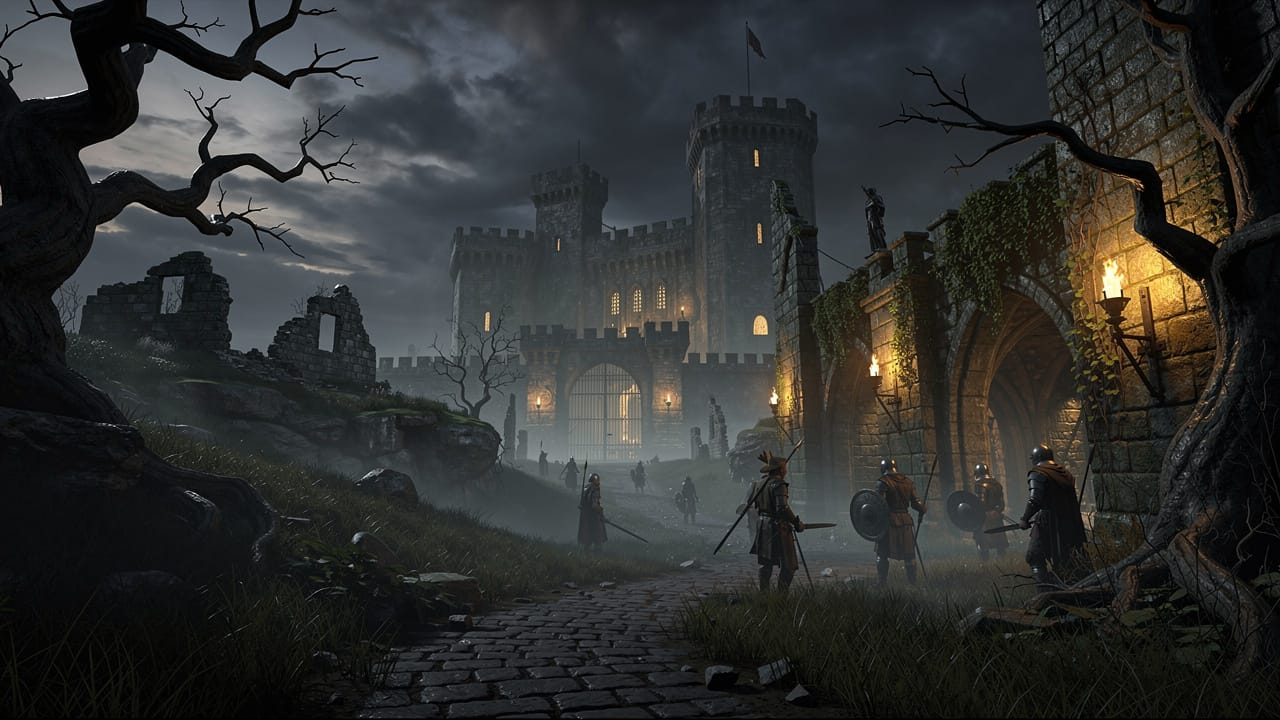
Game Informer notes three concrete details that matter. First, the remake released on June 5, 2026. Second, it launched on three platforms, PC, PS5, and Xbox Series X/S. Third, it rebuilt the penal colony in Unreal Engine 5, which helps explain why so much of the discussion centers on atmosphere as much as mechanics.
Why the world matters more than the combat in any gothic remake review
The original Gothic earned its reputation less through elegance than through commitment. You were not the chosen one. You were disposable until you proved otherwise. That design philosophy still defines this remake.
That is why many reactions, including what amounts to a gothic remake demo review carried over from early hands-on impressions, focus on the same tension. The game’s appeal comes from being rough, demanding, and socially unforgiving. Progress is not delivered through glowing markers and frictionless quest logs. It is earned by learning how the colony works.
This is also where the review spread gets interesting. On Metacritic, one critic praised the sense of danger and meaningful exploration while criticizing dated quest design, awkward combat, and a punishing economy. Another highlighted the lack of handholding as a virtue, not a flaw. That split tells you exactly what kind of remake this is.
The Gothic 1 Remake demo review question never really went away
Early skepticism around the Gothic 1 Remake demo review discussion was fair. Fans worried the remake would either become too sleek for its own good or too reverential to function for new players. The final release seems to land somewhere smarter. It updates the presentation and broad structure, but it does not fully rescue players from Gothic’s old instincts.
That choice will limit the audience. It will also probably make the right audience love it.
What This Means for You if you’re reading a gothic remake review before buying
If you want a modern RPG that constantly reassures you, this is probably the wrong game. The remake’s biggest promise is not comfort. It is immersion through consequence.
For older fans, that is excellent news. For newcomers, it depends on tolerance for friction. The colony is built to make you feel weak, poor, and outclassed at the start. Some players call that bad onboarding. Others call it role-playing.
Who should actually buy Gothic 1 Remake
You should pay attention to this gothic remake review if you fall into one of three groups:
- You love RPGs where exploration matters more than map icons.
- You miss games that let you fail, wander, and learn systems indirectly.
- You are curious about the lineage connecting Gothic to later European RPG design.
If, on the other hand, your ideal RPG resembles a smooth theme park, abundant fast travel, crystal-clear quest directions, and combat that feels good in the first ten minutes, this game may irritate you before it impresses you.
The real cost of authenticity
There is a reason so many remakes overcorrect. Preserving old design can preserve old frustrations too. In this Gothic 1 Remake review, that trade-off is the central buying consideration.
The positives are substantial. A dangerous world feels more memorable than a safe one. Joining factions means more when the world does not revolve around you. Small upgrades feel valuable when resources are tight.
But the cost is real. Awkward combat does not become brilliant just because it is faithful. Sparse guidance can produce wonder, but it can also waste time. A harsh economy can increase immersion, yet still feel annoying in practice.
That is why the game’s audience is narrower than the marketing language around “classic remakes” usually admits.
What Others Missed about the Gothic 1 Remake review debate
A lot of coverage treats this as a simple quality question, is it good or not? That misses the more important point. Gothic 1 Remake is testing whether the market still has room for RPGs that do not center player convenience.
That matters well beyond one title. For years, big-budget RPG design has moved toward clarity, accessibility, and retention-friendly structure. Quest markers got louder. Tutorials got longer. Friction got designed out. Players gained convenience, but often lost the feeling of entering a world that did not care about them.
The gothic remake review argument is really about design philosophy
The best reading of this remake is not nostalgia. It is resistance.
By keeping systems that feel abrasive, Alkimia Interactive is betting there is still demand for worlds that feel socially and mechanically indifferent. That is a meaningful design stance in 2026, especially when so many open-world games are terrified of letting players feel lost.
This is where a thoughtful gothic remake demo review becomes more than a technical assessment. The demo-era worry was whether the team understood Gothic’s emotional architecture. The final product suggests they mostly did. The colony has to feel unfair before it feels intoxicating.
There is also a business angle. If THQ Nordic can make cult revivals profitable without sanding them into sameness, publishers may become more willing to fund remakes that preserve identity instead of replacing it.
Real Examples from the Gothic 1 Remake demo review to full release
The easiest way to understand the appeal is to compare player experience rather than feature lists.
In many current RPGs, a low-level encounter is a suggestion. In Gothic, it is often a warning. Walk into the wrong area too early and the world does not scale itself down to your ego. That changes how exploration feels. Curiosity becomes exciting because it carries risk.
Faction progression is another example. Instead of treating social groups as flavor text, Gothic uses them to define access, power, and belonging. Joining a camp is not just a menu choice. It reshapes how the world reads you. That remains one of the most interesting things in this Gothic 1 Remake review conversation because so many modern RPGs imitate faction systems without giving them real teeth.
You can also see the distinction in environmental design. Critics repeatedly point to the density of the colony, not just its graphical upgrade. A better-looking map is nice. A map that feels dangerous, layered, and worth learning is far rarer.
If you’ve followed other revival projects, this one lands closer to “restore the original intent” than “rebuild it as blockbuster fantasy.” That alone makes the Gothic 1 Remake worth watching, even for people who never played the first game.
Pros and Cons in this gothic remake review
Pros
- Preserves the original’s harsh identity instead of flattening it
- Strong sense of place and danger
- Exploration appears meaningful rather than checklist-driven
- Faction and progression systems still feel consequential
- Visual overhaul gives the colony modern presence
Cons
- Combat can still feel clumsy
- Sparse guidance will alienate some players
- Economy and quest structure may feel dated
- Narrower appeal than most big RPG remakes
- Faithfulness sometimes protects frustration as much as flavor
Conclusion on the gothic remake review verdict
The best thing about this gothic remake review is that it points to a remake with convictions. Gothic 1 Remake is not trying to be universally lovable, and that is precisely why it stands out. It sounds like a revival that understands the original game’s meanness was part of its magic, not a bug to be patched away.
What Happens Next (2026-2030)
If the remake sells well, expect more publishers to revisit cult RPGs without over-modernizing them. The winners will be players who are tired of over-explained open worlds and studios willing to trust older design ideas. The losers will be games stuck in the middle, too old-school to feel smooth, too sanitized to feel distinct. By 2030, the real legacy of Gothic 1 Remake may be proving that friction, when used intelligently, is still commercially viable.
Sources
About the Author