
Here is the uncomfortable truth: a four-year-old gaming chip still makes a lot of new CPU buying advice look wasteful. The latest AMD cpu gaming benchmarks around the Ryzen 7 5800X3D are not just nostalgic, they are a reminder that the smartest upgrade is often the one that avoids a full platform rebuild.
Quick Summary
- The Ryzen 7 5800X3D remains one of the most important reference points in AMD cpu gaming benchmarks, especially for DDR4-era systems.
- Its 96MB of L3 cache still matters in games more than many buyers realize, particularly at 1080p where CPU limits show up fastest.
- For existing AM4 owners, this chip can deliver a major gaming uplift without the cost of new DDR5 memory and a new motherboard.
- General-purpose benchmark scores still matter, but they do not tell the full story for gaming, where cache-heavy designs often punch above their age.
- The 5800X3D also exposes the gap between synthetic CPU rankings and actual playability in modern titles.
- Older search terms like AMD FX 8350 gaming benchmarks and AMD A8 7650K gaming benchmarks show how much platform value has changed, but the 5800X3D is the rare part that extended a platform instead of merely ending one.
What Happened With These AMD CPU Gaming Benchmarks
A fresh look at the Ryzen 7 5800X3D has put an old question back on the table: how long can one CPU stay relevant if its design was aimed squarely at games? The answer, based on the latest AMD cpu gaming benchmarks, is longer than many expected.
That matters because the 5800X3D was never supposed to be a broad “best at everything” processor. It was a targeted part, 8 cores and 16 threads, built on AMD’s Zen 3 architecture, with a giant slab of 3D V-Cache attached to improve gaming performance. In workloads that reward sheer frequency or more cores, it can be outclassed. In games, it keeps hanging around.
For people still on AM4, this re-review lands like a warning shot. If you already own a compatible board and DDR4 memory, the upgrade path is unusually efficient. In an industry that loves telling users to buy a new platform, the 5800X3D is evidence that sometimes the old socket still has one last great move.
Key Details on AMD CPU Gaming Benchmarks and the 5800X3D
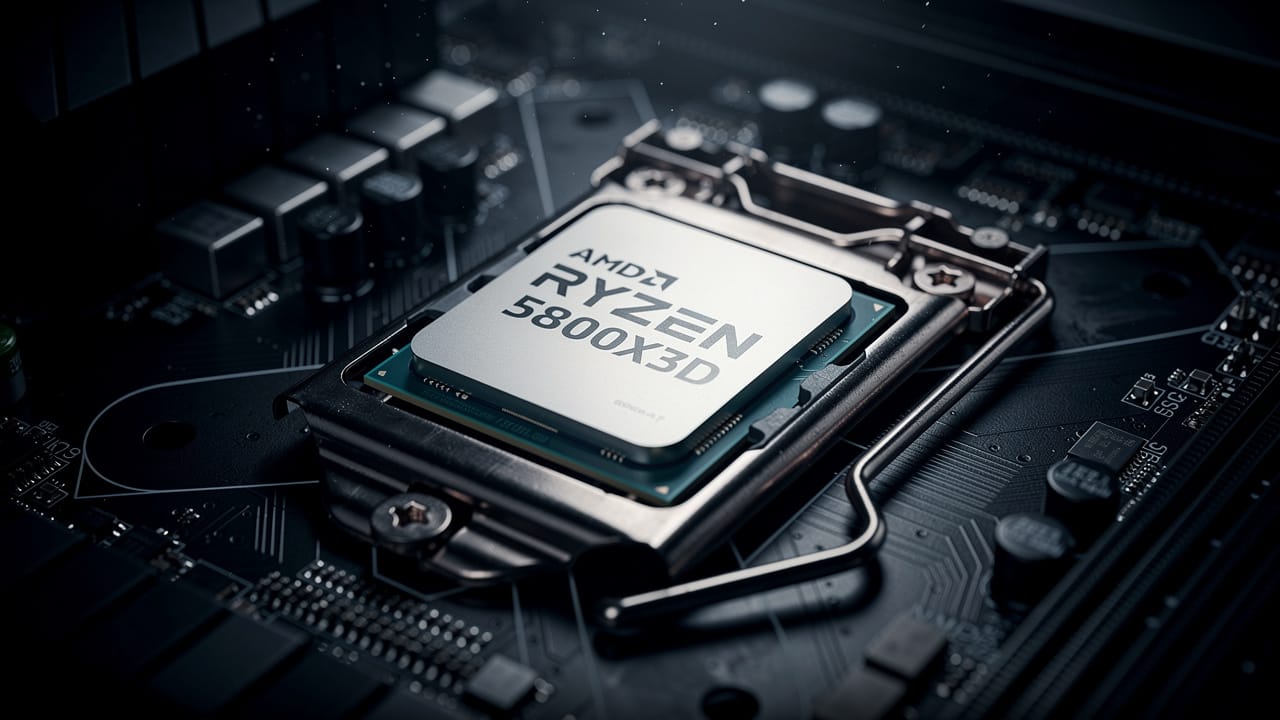
The most important fact is architectural, not emotional. The AMD AMD Ryzen 7 5800X3D carries 96MB of L3 cache, far above a standard Ryzen 7 5800X. That cache is the trick. It reduces trips to slower memory in many games, which is why this chip has aged so well in gaming-focused comparisons.
According to AMD’s official specs, the processor has a base clock of 3.4 GHz and a max boost of up to 4.5 GHz. On paper, those numbers are no longer jaw-dropping. Yet gaming rarely rewards spec-sheet reading as neatly as marketing departments want. The 5800X3D wins by feeding game engines data faster, not by simply chasing higher clocks.
There is also a useful contrast with broader CPU scoring. The PassMark entry for the chip places it in strong company for overall compute, but not at the absolute top of today’s stack. That is exactly why these AMD cpu benchmarks gaming conversations matter. A CPU can rank merely good in all-purpose tests and still be excellent where gamers care most.
Why cache still beats “newer is better” in AMD cpu gaming benchmarks
This is where many readers get tripped up. Newer CPUs often offer more modern I/O, faster memory support, and stronger productivity results. But at 1080p, where the graphics card is less likely to hide CPU differences, game performance can hinge on latency and cache behavior. The 5800X3D was built for that.
That is also why older searches like AMD FX 8350 benchmarks gaming and AMD FX 8350 gaming benchmarks feel almost historical now. The FX era was often about squeezing value from aging designs that were clearly falling behind. The 5800X3D is different. It did not just survive the platform’s late years, it redefined them.
What This Means for You if You Actually Play Games
If you are already on AM4, this is one of the easiest upgrade decisions in the current market. You may not need a new motherboard. You may not need new RAM. You may not even need to touch your cooler, depending on your setup. That turns the 5800X3D from a benchmark curiosity into a brutally practical purchase.
A full jump to AM5 or Intel’s newer platforms can mean buying three things at once: CPU, motherboard, and DDR5. That cost adds up fast. For a gamer whose priority is frame rates, especially competitive gaming at 1080p or smooth high-refresh play, the AMD cpu gaming benchmarks around the 5800X3D suggest there is still real money to be saved by staying put.
The best buyer for these AMD cpu gaming benchmarks
The ideal buyer is not building a dream workstation. It is the person with a Ryzen 2000, 3000, or non-X3D 5000 chip who wants a final AM4 upgrade before moving on years later.
That buyer gets three advantages:
1. Lower total platform cost
2. Meaningful gaming uplift
3. Less rebuild hassle
On the other hand, brand-new builders have a harder calculation. If you are starting from zero, AM5 gives you a future path. The 5800X3D gives you a great endpoint. Those are not the same thing.
Why older benchmark searches still matter
People still look up AMD A8 7650K gaming benchmarks because budget buyers often inherit older hardware or build from spare parts. The lesson from those older chips is simple: platform longevity is usually a myth until one part changes the equation. For AM4, that part was the 5800X3D.
And for buyers comparing halo-tier parts, searches like AMD Ryzen 9 9950X3D gaming benchmarks highlight the other side of the market. Yes, the newest X3D chips are faster. But the price of chasing the top few percentage points is often much steeper than marketing admits.
What Others Missed About the Ryzen 7 5800X3D
Most benchmark coverage focuses on who wins the chart. That is useful, but incomplete. The real story is that the 5800X3D changed what “obsolete” means for a gaming platform.
It effectively gave DDR4 and AM4 a second life. That is not normal. Usually, an old platform gets cheaper, slower, and harder to justify. Here, one late-generation CPU created a premium off-ramp for millions of existing users.
Synthetic scores vs. real gaming feel
This is the part too many buying guides flatten into a table. Synthetic CPU rankings are good at measuring broad compute performance. They are much worse at capturing how a CPU “feels” in game-heavy use, especially when frame-time stability and 1% lows matter as much as peak averages.
The 5800X3D’s reputation was built on exactly that mismatch. It showed that a CPU can look merely respectable in all-around rankings and still be outstanding in the gaming workloads that actually drive enthusiast spending.
There is also a strategic lesson for AMD here. X3D was not just a product feature, it was a market correction. It told gamers that adding the right cache could matter more than brute-force clock chasing. That thinking now shapes the way people read top-end searches like AMD Ryzen 9 9950X3D gaming benchmarks, where buyers expect gaming-first design, not just bigger numbers.
Real Examples From Actual Upgrade Paths
Consider three real-world situations.
First, the player with a Ryzen 5 3600 and an RTX 4070-class GPU. In many modern games at 1080p, that system can become CPU-limited before the graphics card runs out of room. Dropping in a AMD Ryzen 7 5800X3D can unlock more of the GPU without replacing the rest of the platform.
Second, the user holding onto an older AM4 part because every upgrade looked too expensive. For that person, these AMD cpu gaming benchmarks say something rare: you do not need to rebuild your whole PC to get a meaningful step up.
Third, the budget shopper comparing eras, maybe even looking at AMD FX 8350 benchmarks gaming out of curiosity or necessity. The difference is stark. Older AMD value platforms often required compromise after compromise. The 5800X3D era showed what happens when one final upgrade is genuinely worth doing.
Pros and Cons of the 5800X3D in 2026
Pros
- Excellent gaming performance for an aging platform
- 96MB L3 cache still gives it a clear identity
- Avoids motherboard and DDR5 replacement costs for AM4 users
- One of the best late-cycle gaming upgrades any socket has ever received
Cons
- Limited future upgrade path compared with AM5
- Not the best choice for buyers focused on heavy productivity workloads
- Brand-new builders may get better long-term value elsewhere
- Availability and pricing can make “old but great” less attractive if sellers overcharge
Conclusion on AMD CPU Gaming Benchmarks
The 5800X3D still matters because it solved a problem most CPUs do not solve: it made an old platform feel new enough to keep. In the latest AMD cpu gaming benchmarks, that is the deeper takeaway, not just that it remains fast, but that it remains economically smart.
What Happens Next (2026-2030)
From 2026 through 2030, the winners will be gamers who bought into cache-heavy CPU design early and stretched their platforms intelligently. The losers will be buyers who keep paying platform-tax premiums for small gaming gains they barely notice outside benchmark overlays. Expect newer X3D chips to keep dominating enthusiast mindshare, but also expect the AMD Ryzen 7 5800X3D to stay the benchmark people cite when they ask whether an upgrade is truly worth it. That is a rare legacy for any processor, and an even rarer one for a chip tied to DDR4’s final act.
Sources
About the Author