
The most important EV news out of Detroit is not a new truck or crossover. It is that GM unveils new LMR battery technology for electric vehicles at the exact moment the industry is discovering that flashy product launches mean little if battery costs stay stubbornly high.
Quick Summary
- GM unveils new LMR battery technology for electric vehicles as part of a broader reset of its EV strategy, centered on a new battery development complex in Warren, Michigan.
- The company says the new approach could cut EV costs by nearly 10% and speed battery commercialization by about one year.
- GM’s new Battery Cell Development Center spans 500,000 square feet across two buildings and sits inside a wider $900 million investment.
- This is not just a chemistry story. It is a manufacturing story, a cost story, and a timing story, all at once.
- Better battery technology for electric vehicles could shape who can afford an EV, who profits from making one, and which automakers survive the next price war.
- The bigger backdrop matters too: energy systems are under pressure everywhere, from road transport to aviation, while cheaper AI hardware is showing how fast industries move when the economics finally click.
What Happened With GM’s Battery Technology Electric Vehicles Push
General Motors is trying to fix the hardest problem in the EV business, building batteries that are both cheaper and commercially viable at scale. That is why GM unveils new LMR battery technology for electric vehicles alongside a new in-house battery development center, rather than treating battery chemistry as a lab curiosity.
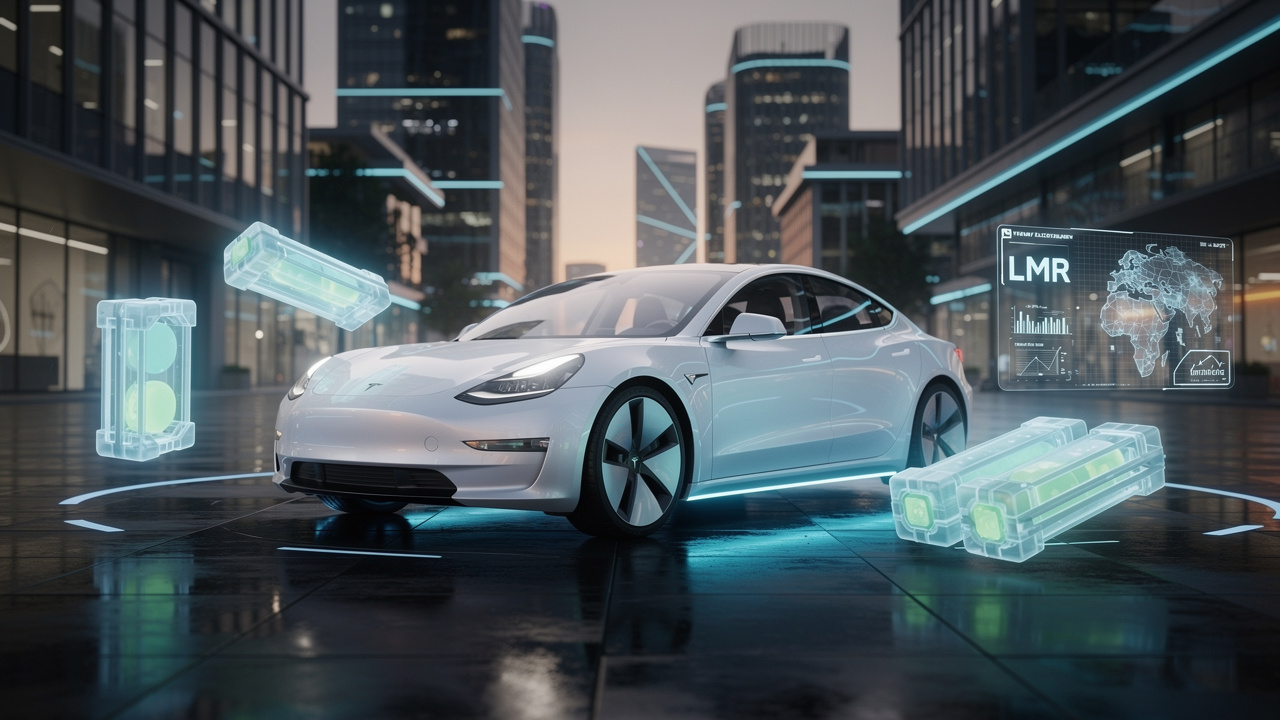
The headline chemistry is Lithium-Manganese-Rich (LMR) Battery Chemistry. GM sees it as a path to lower costs without surrendering too much performance. Just as important, the company says the new facility will let it move from prototype to production faster, trimming roughly a year off the usual process.
That matters because GM has not had a smooth EV run lately. TechCrunch reports the automaker took a $1.6 billion charge last year while reshaping EV production and cutting jobs. In plain English, GM is no longer pretending that EV growth alone will bail out a flawed cost structure.
Key Details on GM Unveils New LMR Battery Technology for Electric Vehicles
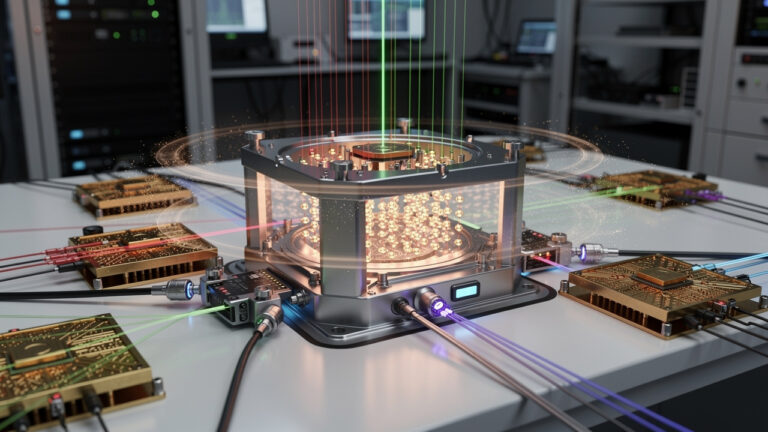
This is where the story gets more serious than a typical battery announcement. GM unveils new LMR battery technology for electric vehicles inside a dedicated development system designed to test, validate, and industrialize cells under one roof. The new center covers 500,000 square feet, a scale that signals GM wants tighter control over electric vehicles battery technology, not just dependence on outside suppliers.
Why LMR matters in the latest battery technology for electric vehicles
LMR chemistry is attractive because it leans more heavily on manganese, a material generally viewed as cheaper and more abundant than some alternatives used in high-performance battery packs. The pitch is simple: keep range respectable, improve affordability, and make mass-market EVs easier to price competitively.
GM’s claim of nearly 10% lower EV costs is the number to watch. In a market where a few thousand dollars can decide whether a buyer chooses an EV or a gas model, that is not trivial. It is the difference between “interesting technology” and “move actual inventory.”
This is also a race against delay
TechCrunch’s most revealing detail may be the timeline. GM says this setup could bring new battery types to market a year faster than planned. That is enormous in a sector where every delay compounds, supplier contracts, factory scheduling, consumer incentives, and model rollouts all hinge on battery readiness.
The broader tech economy offers a useful comparison. The BBC reported that Raspberry Pi now expects at least $38 million in adjusted earnings for the first half of 2026, and its shares jumped as much as 25% on AI demand. Different industry, same lesson: when a technology becomes cheap enough and available enough, adoption accelerates. Battery technology electric vehicles need that same economic inflection point.
What This Means for You in Battery Technology for Electric Vehicles
If you are shopping for an EV, the best outcome here is not a scientific breakthrough headline. It is a cheaper sticker price, lower financing burden, and fewer compromises on range. That is why GM unveils new LMR battery technology for electric vehicles matters beyond investors and engineers.
For buyers, lower battery cost is the whole game
Batteries remain the most expensive component in many EVs. So any credible reduction in pack cost can ripple into real consumer benefits:
- lower upfront prices
- better lease terms
- more affordable entry-level trims
- less pressure to reserve EV improvements for luxury models
That could especially matter in a used market that is already getting more dynamic. We have seen this in our coverage of how used EV car sales are booming, where falling prices and wider supply are bringing more buyers into the market. Better battery technology electric vehicles only reinforces that trend over time.
For workers and suppliers, the stakes are harsher
Cheaper batteries are good for EV adoption, but not everyone wins evenly. Greater in-house development can shift bargaining power away from suppliers. Faster commercialization can also intensify pressure on factories and labor, especially after GM’s recent restructuring and layoffs.
Consumers often hear “innovation” and imagine progress without friction. That is rarely how industrial transitions work. Better battery technology for electric vehicles usually means someone’s old process, old contract, or old plant becomes less valuable.
For the wider energy economy
The Wired reporting on sustainable aviation fuel shows another side of the same story. As oil markets tighten under geopolitical stress, transport sectors are scrambling for alternatives. Cars and planes are not interchangeable, of course, but they are both being pushed by the same reality: fossil fuel dependence is becoming more financially and politically fragile. The rush for the latest battery technology for electric vehicles is part of that larger reshuffling.
What Others Missed About GM Unveils New LMR Battery Technology for Electric Vehicles
A lot of coverage will frame this as GM finally catching up, or as a routine chemistry upgrade. That misses the deeper point. The real announcement is organizational, not just chemical.
The building may be as important as the battery
The Battery Cell Development Center is a physical admission that battery development cannot stay fragmented. Lab science, pilot production, validation, and scale-up have to live closer together. In modern manufacturing, whoever shortens that loop wins.
That is why GM unveils new LMR battery technology for electric vehicles should be read as a supply chain story. GM is trying to shrink the distance between invention and factory output. That is often where EV programs fail, not in the chemistry itself but in the handoff from promise to production.
Public science, private innovation, and competitive reality
There is also a larger lesson in battery technology for electric vehicles public science and private innovation. The underlying advances in materials science do not appear from nowhere. They emerge from universities, national labs, supplier ecosystems, and corporate R&D budgets. But the company that packages those insights into something manufacturable gets the commercial reward.
This is happening across transportation. Even micro-computing has its own version of this pattern, where lower-cost platforms suddenly become powerful enough for real AI deployment. In mobility, the equivalent is when battery improvements stop sounding impressive in presentations and start making mainstream vehicles cheaper to own.
Real Examples of Electric Vehicles Battery Technology in Daily Life
Think about what a 10% cost cut could do in practice.
A compact electric SUV that currently sits just above a buyer’s comfort zone might finally qualify for the monthly payment they can tolerate. A fleet operator deciding between gas vans and electric ones may find the total cost equation tilting faster toward EVs. A rideshare driver could benefit from lower long-term energy and maintenance costs, if purchase prices fall enough upfront.
There is also a second-order effect: better batteries improve confidence. That matters in categories beyond cars. As micromobility grows, even adjacent markets are being judged more seriously on battery reliability, range, and value, which is part of why reviews on electric bikes suddenly matter more than ever in the EV race. Consumers are learning to ask sharper questions about charging, degradation, and real-world performance across all electric transport.
And for GM specifically, LMR could show up first not as a miracle battery, but as a practical one. That may mean vehicles that are less glamorous than a halo model, but more important to sales volume.
Pros and Cons of GM’s Latest Battery Technology for Electric Vehicles
Pros
- Potential near-10% EV cost reduction
- Faster path from development to production
- Less dependence on costlier battery inputs
- Stronger internal control over battery commercialization
- Better chance of bringing EV pricing closer to mass-market reality
Cons
- New chemistries often look better in pilot stages than in scaled production
- Cost cuts do not automatically translate into lower retail prices
- Supply chain transitions can disrupt workers and suppliers
- Consumers may not see benefits immediately if rollout takes time
- Competition is moving fast, so a one-year gain can disappear quickly
Conclusion on GM Unveils New LMR Battery Technology for Electric Vehicles
GM unveils new LMR battery technology for electric vehicles because it has to, not because it wants a clean headline. If the company is right, cheaper batteries could do more for EV adoption than another round of oversized screens, premium trims, or marketing slogans.
What Happens Next (2026-2030)
The winners will be automakers that turn Lithium-Manganese-Rich (LMR) Battery Chemistry and similar advances into reliable, affordable mass production before the decade closes. Buyers should benefit through lower prices first in mainstream crossovers and fleet vehicles, then in the used market as those models age in. Suppliers that cannot adapt to faster battery development cycles will get squeezed. If GM executes well, this will look like the moment it stopped chasing EV hype and started attacking the real bottleneck, cost.
Sources
About the Author