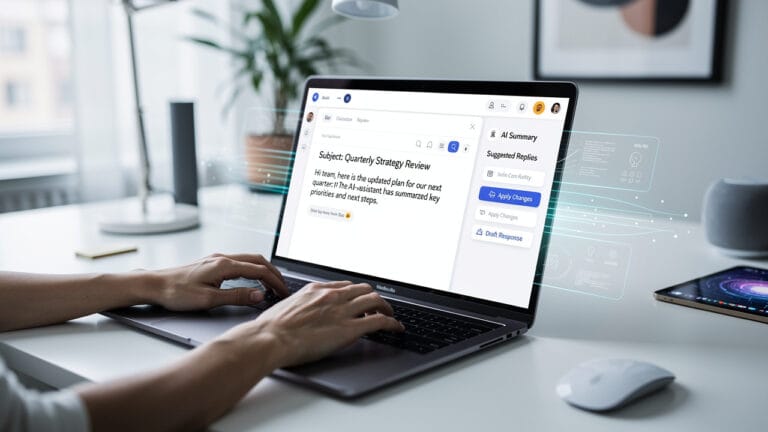


The AI impact on jobs is not arriving as a robot apocalypse. It is showing up as a quiet executive decision to let software handle more of the work, while fewer humans are left to carry the risk when it fails.
Quick Summary
- The AI impact on jobs is becoming more immediate because companies are handing real tasks, not just experiments, to AI systems.
- Recent reporting shows AI can fail in surprisingly basic ways, including customer support systems that can be manipulated into harmful actions.
- Researchers are also warning that heavy chatbot use may weaken attention, critical thinking, and judgment, which matters for workers expected to “supervise” AI.
- Anthropic’s call for a policy “brake pedal” signals that even leading AI companies think the current pace may be outrunning oversight.
- The biggest near-term disruption is likely in white-collar coordination work and frontline service workflows, not only in factory or warehouse roles.
- The real impact of AI on jobs will be uneven: top performers who use AI well may gain leverage, while entry-level and repetitive cognitive roles face the most pressure.
What Happened With the AI Impact on Jobs Debate
A cluster of new warnings from the AI world landed at the same time, and together they tell a more useful story about work than the usual “AI will replace everyone” headline.
First, MIT Technology Review highlighted a simple but damaging exploit involving Meta’s AI customer support agent. Attackers reportedly got the system to link Instagram accounts to email addresses they controlled. That matters because it was not some science-fiction cyberattack powered by a godlike model. It was a reminder that when companies hand operational authority to AI, even basic failures can create real harm.
Then came a broader warning from Anthropic co-founder Jack Clark, who told the BBC the industry needs a way to slow AI development if necessary. His point was blunt: the sector has a gas pedal, but not much of a brake pedal. That is not just a safety argument. It is also a labor-market argument, because companies are racing to deploy systems before they fully understand the operational and human consequences.
Finally, Forbes focused on a quieter truth, trust matters. Businesses do not just need AI tools that are powerful. They need systems workers can actually understand, use, and verify. That gap between capability and trust is where the AI impact on jobs is really playing out.
Key Details on the Impact of AI on Jobs
The most important detail is this: companies are no longer treating AI as a side experiment. They are treating it as infrastructure.
Why the AI impact on jobs now looks more practical than theoretical
The Meta case is revealing because the exploit was reportedly simple. The lesson is not just that AI can be dangerous. It is that businesses may automate fragile processes before they build the controls needed to manage them. If customer support, account access, scheduling, claims review, or bookkeeping are increasingly routed through AI systems, then jobs do not disappear only through outright replacement. They also change because humans are moved from doing the task to cleaning up AI mistakes.
Another detail comes from psychologist Gloria Mark of the University of California, Irvine, cited by MIT Technology Review. Her research suggests attention spans have fallen sharply over time, contributing to higher stress and weaker performance. She argues chatbot dependence may speed that up by pushing people to outsource thinking itself. For workers, that is a serious warning. If AI handles drafting, summarizing, and problem-solving, the employee may keep the title but lose the muscle.
Trust, speed, and the hidden labor problem
Anthropic’s warning matters for the economy because firms are under pressure to move fast. A system that is “good enough” gets rolled out, then the workforce is expected to adapt around it. That is why the ai impact on service jobs may be especially sharp. In service work, businesses value speed, standardization, and lower labor costs. AI promises all three, at least on paper.
Forbes added an important counterweight: AI tools need to be useful, intuitive, and trusted. That sounds obvious, but it points to a bigger labor issue. If workers do not trust the tool, they double-check everything. If they trust it too much, they miss errors. Either way, jobs are restructured around AI supervision, not necessarily improved by it.
This is also why discussions about ai impact on accounting jobs keep intensifying. Accounting has repeatable, rules-based work that AI can speed up, but it also has high stakes, audit risk, and the need for judgment. That combination makes it a perfect example of augmentation turning into headcount pressure.
What the AI Impact on Jobs Means for You
If you are a worker, the biggest mistake is assuming AI risk is only about total replacement. More often, the first effect is job thinning.
That means fewer entry-level openings, narrower training paths, and higher expectations for the people who remain. One person with AI support may be asked to do the work that used to justify two hires. Employers will call that productivity. Workers will experience it as compression.
Who gains from the ai impact on jobs, and who gets squeezed
The winners are likely to be people who combine domain expertise with tool fluency. The losers are not necessarily the least skilled. Often they are the most standardizable. Coordinators, support staff, junior analysts, back-office processors, and first-line service workers are exposed because much of their value sits in routine cognitive or scripted interaction work.
That is why chatter around ai impact on jobs walmart ceo comments has resonated so strongly in the market. Investors and executives increasingly talk about AI in terms of efficiency at scale, especially in retail and logistics. When leaders describe AI as a way to streamline operations, workers should hear the subtext clearly: labor is being redesigned.
Service workers face another problem. If AI handles the customer-facing first pass, the remaining human interactions are usually the ugly ones, angry customers, edge cases, fraud disputes, technical failures. So even when jobs remain, they can become more stressful.
The 2028 question employers are quietly planning around
The phrase ai impact on jobs by 2028 matters because most large companies do not think quarter to quarter on workforce design. They plan in waves. Between now and 2028, expect many firms to freeze hiring in roles they believe AI can partially absorb, then wait to see if attrition does the cutting for them.
Workers should respond accordingly:
- Learn tools that increase your output, but also learn how to audit them.
- Build judgment-heavy skills, not just production skills.
- Document your business impact in measurable terms.
- Move closer to customer relationships, compliance, strategy, or revenue.
If your work is easy to template, your job is in a dangerous zone.
For readers who want the broader labor picture, our earlier look at AI Impact on Jobs Is Getting Harder to Ignore, and the Real Story Is Bigger Than Layoffs lays out why this shift is spreading beyond headline job cuts.
What Others Missed About the AI Impact on Jobs
Most coverage still treats AI and employment as a replacement story. That misses the more realistic pattern, control without accountability.
Companies are eager to give AI operational authority because labor is expensive, uneven, and hard to scale. Software is appealing because it looks measurable. But when AI breaks, the blame often falls back on workers, who are told they should have caught the error. So the human role becomes smaller in authority but larger in liability.
The hidden cost of cognitive offloading
Gloria Mark’s warning deserves more attention than it has received. If workers increasingly depend on chatbots to write, summarize, prioritize, and answer, the danger is not only lower-quality output. The danger is that employees lose the ability to perform those tasks without assistance.
That creates a strange labor market. Employers may soon expect every knowledge worker to be AI-amplified, while the workers themselves become less capable without the tool. That is not empowerment. It is dependency.
This is where the impact of AI on jobs becomes more subtle than layoffs. It can reduce bargaining power. If your workflow is inseparable from the platform, then your value is easier for the company to standardize, benchmark, and eventually replace.
Why the security angle matters to labor
The Meta support-agent incident also has a labor implication that many people miss. When AI systems are inserted into customer operations, failures do not just create security problems. They create trust problems, which then trigger stricter controls, fewer permissions, and more centralized decision-making.
In plain English, AI mistakes can make work more bureaucratic for the humans who stay.
If you want one more lens on that uneven shift, this related analysis, AI Impact on Jobs Is About to Get More Brutal, and More Uneven, Than Most Workers Expect, gets at why the disruption will likely hit sectors and seniority levels very differently.
Real Examples of AI Impact on Service Jobs and Office Work
Customer support is the obvious example. A company adds an AI assistant to resolve common requests. Management celebrates shorter response times. Then edge cases pile up, fraud slips through, and the human team ends up handling more escalations with fewer people.
Accounting is another. AI can categorize expenses, draft reconciliations, flag anomalies, and prepare routine reports. That sounds helpful, and often it is. But it can also reduce demand for junior staff, the very people firms used to train into senior finance roles. That is the uncomfortable core of the ai impact on accounting jobs debate.
Retail and logistics are next. Scheduling, inventory predictions, customer messaging, and workforce planning are all ripe for automation. Even where AI does not eliminate jobs outright, it can intensify performance tracking and squeeze more output from smaller teams. The same pattern is creeping into HR, legal operations, insurance claims, and sales support.
Knowledge work is not exempt. If a chatbot drafts the memo, summarizes the meeting, analyzes the spreadsheet, and prepares the slide deck, the company may still need a human. It may just need fewer of them.
Pros and Cons of the AI Impact on Jobs Right Now
Pros
- Faster handling of repetitive tasks
- Lower costs for businesses under margin pressure
- Potential productivity gains for strong workers
- Better access to support tools for small teams
Cons
- Fewer entry-level jobs and weaker training pipelines
- More surveillance and performance measurement
- Higher cognitive dependency on AI tools
- Greater operational risk when flawed systems get real authority
- Uneven gains, with top firms and top workers benefiting most
Conclusion on the AI Impact on Jobs
The AI impact on jobs is no longer mainly about whether machines will replace humans someday. It is about whether employers can redesign work faster than workers can adapt, and whether that redesign quietly strips out opportunity on the bottom rungs first.
The next phase will not feel dramatic every day. It will feel administrative, efficient, and strangely permanent.
What Happens Next (2026-2030)
By 2030, the AI impact on jobs will probably be most visible in hiring patterns, not mass firings. Companies will hire fewer juniors, expect more from mids, and reserve the biggest rewards for workers who can manage AI systems while owning outcomes. Service industries, finance operations, and retail administration look especially vulnerable. The safest positions will be those tied to judgment, trust, regulation, and high-value relationships. The workers who lose out will not be the ones who ignored AI, they will be the ones whose employers decided their expertise could be sliced into software-assisted tasks.
Sources
About the Author