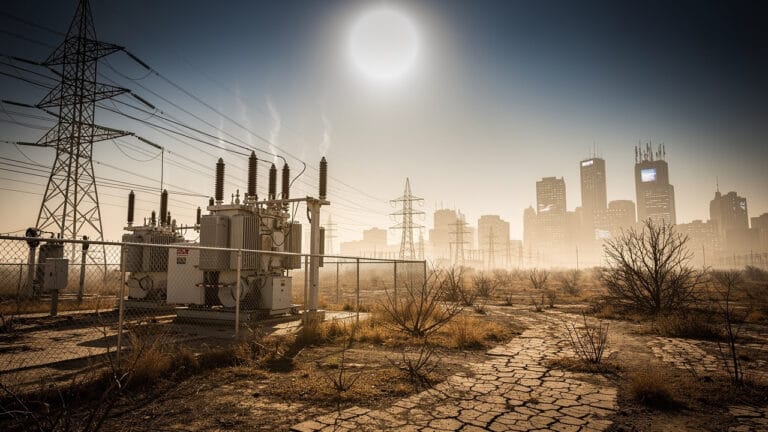

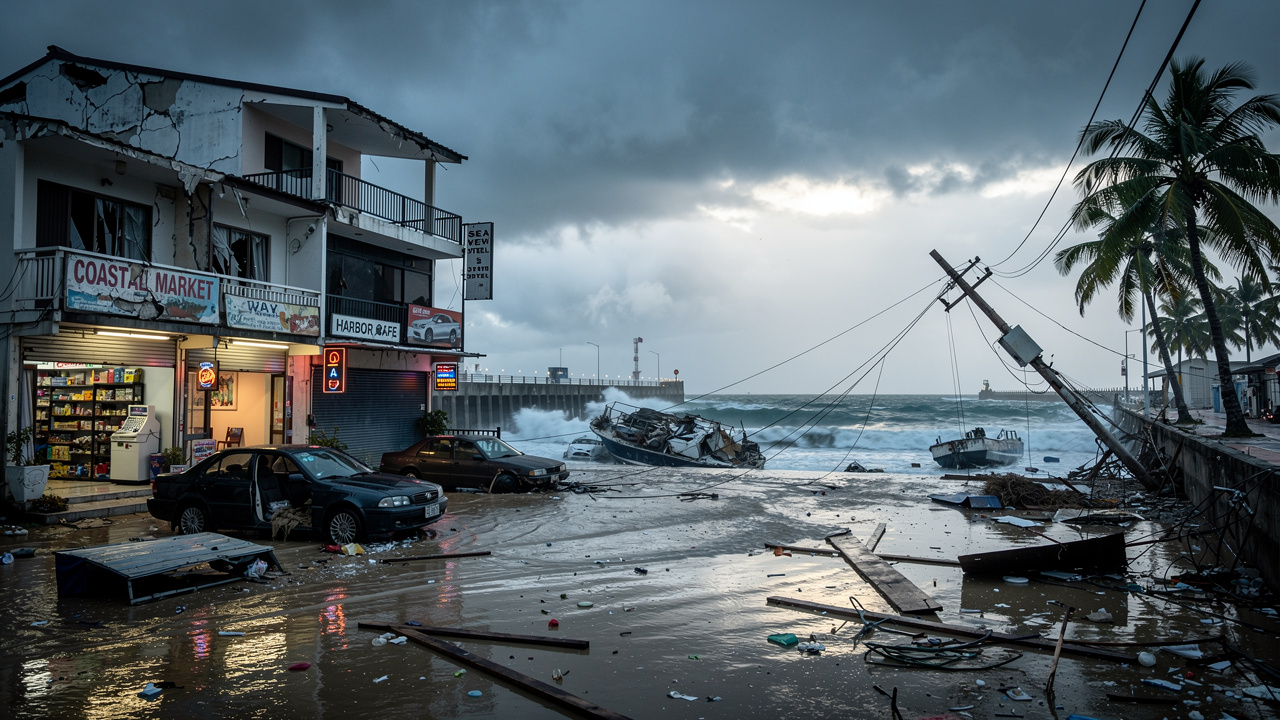
The most unsettling effects of a natural disaster are not always the flooded roads or ripped-off roofs. Sometimes the damage reaches upward, into the atmosphere itself, in ways that expose how vulnerable modern life really is.
Quick Summary
- Super Typhoon Sinlaku was not just a destructive storm, it also triggered massive atmospheric gravity waves that were visible from space.
- Those ripples reached the upper atmosphere, giving scientists a rare view of how the effects of a natural disaster can extend far beyond landfall zones.
- Typhoon Jangmi followed with a different warning sign, a huge visible eye and broad rainbands that raised flood concerns across parts of Japan.
- Satellite tools like VIIRS are becoming essential for tracking both visible storm damage and harder-to-see natural disaster effects in the atmosphere.
- This matters in practical terms, from flood preparation and aviation forecasting to the reliability of communications and satellite operations.
- The bigger story is that natural disaster causes and effects are now being observed as one connected system, from ocean heat to near-space disruptions.
What Happened With the Effects of a Natural Disaster in the Pacific
In April 2026, Super Typhoon Sinlaku intensified with unusual speed in the North Pacific and hit the Mariana Islands with heavy rain and flooding. But the storm’s most remarkable signature was not only at the surface. According to reporting based on observations from NASA Earth Observatory, Sinlaku sent giant atmospheric gravity waves upward, creating ripples detectable high in the atmosphere.
Weeks later, Typhoon Jangmi offered another sharp reminder of the effects of natural disaster events in the western Pacific. As it moved toward southern Japan, nighttime satellite imagery showed a strikingly large eye and broad spiral bands. Those outer rainbands mattered more than the dramatic image, because they increased the risk of prolonged downpours and flooding across a wider area than many people usually associate with a single storm center.
Taken together, the two storms tell a larger story. The effects of a natural disaster are not limited to where wind meets buildings. They can alter atmospheric behavior, widen the footprint of danger, and complicate everything from emergency response to forecasting.
Key Details on Natural Disaster Causes and Effects
Sinlaku stood out because it became a category 5-equivalent storm unusually early in the season. That matters because early extreme storms often signal a system with enough energy to surprise forecasters and overwhelm communities before the public fully registers the threat.
The effects of a natural disaster can reach near-space
The most fascinating detail from Sinlaku is that satellites observed atmospheric gravity waves spreading outward like pond ripples. These were seen through faint airglow in the mesosphere, using NOAA-20 imagery. In plain English, the storm punched energy high enough into the atmosphere that scientists could watch the atmosphere react above the weather itself.
That is not just academic trivia. Upper-atmosphere disturbances can affect weather modeling, radio propagation, and potentially some aspects of satellite-based systems. When people discuss natural disaster effects on environment, they usually mean coastlines, forests, or water quality. Those are real and urgent. But this event shows the environment also includes the layered atmosphere above us, a zone that modern infrastructure quietly depends on.
Jangmi showed the slower, broader natural disaster effects
Jangmi was weaker than Sinlaku at the cited observation point, but still serious. The Joint Typhoon Warning Center reported sustained winds of 120 kilometers, or 75 miles, per hour, roughly comparable to a Category 1 hurricane. That figure is important because public attention often overweights peak wind categories and underweights rainfall duration.
A slow-moving storm with wide rainbands can produce some of the most expensive and disruptive effects of a natural disaster, especially in urbanized or mountainous areas. Flooding, landslides, transport shutdowns, power interruptions, and school or business closures often come less from headline wind speeds and more from how long the rain sticks around.
In both cases, satellites played the starring role. Mid-article is a good place to say it plainly, tools like the VIIRS (Visible Infrared Imaging Radiometer Suite) are no longer just helping scientists make beautiful storm images. They are helping redefine what counts as observable storm impact.
What This Means for You, From Natural Disaster Effects on Economy to Daily Risk
Most people will never see atmospheric gravity waves, and they do not need to. What matters is what those observations improve on the ground.
Why the effects of a natural disaster hit ordinary people harder than the science headline suggests
Better atmospheric observation can mean earlier warnings, sharper flood forecasts, and more accurate storm tracking. For families, that can translate into practical choices, when to evacuate, when to avoid roads, when to stock supplies, and when not to trust a calm patch in the weather.
For businesses, the natural disaster effects on economy are immediate. Shipping delays, damaged infrastructure, crop losses, higher insurance costs, canceled flights, and strained power grids all begin before the storm officially “ends.” A typhoon does not need to make a perfect direct hit to create economic pain. Its outer bands can shut down ports, rail systems, and retail corridors.
There is also a technology angle. If severe storms are shown to affect layers of the atmosphere tied to communications and orbital systems, that adds another layer of exposure for telecom networks, aviation, and satellite services. That does not mean every typhoon will knock technology sideways. It does mean the map of risk is broader than many emergency plans still assume.
Natural disaster effects on environment are bigger than visible destruction
Flooding is the obvious environmental consequence. Less obvious is the cascading impact, contaminated water, eroded soil, damaged coral and coastal ecosystems, and longer recovery times for already stressed habitats. Add increasingly intense storms, and the environmental bill grows even in places that avoid the worst headlines.
This is where the phrase natural disaster causes and effects deserves more honesty. The cause is not just “bad weather.” It is often a chain that includes warm ocean water, vulnerable infrastructure, dense development in risky zones, and sometimes weak preparedness. The effect is not just damage, it is unequal damage. Poorer communities, island regions, and older populations usually absorb more of the shock.
What Others Missed About the Effects of a Natural Disaster
A lot of coverage treats storm imagery as spectacle. That misses the point.
Sinlaku’s atmospheric ripples were visually compelling, yes, but the real value is operational. Scientists are learning that strong cyclones can leave signatures high above the storm itself. If those signatures become more consistently measurable, they could improve forecasting models and perhaps help identify rapid intensification or storm structure changes faster.
Another overlooked angle is timing. An unusually intense storm early in the Pacific season should unsettle policymakers more than it does. Early extremes compress preparation windows. Governments and utilities often plan around averages. Nature does not.
There is also a lesson in the contrast between Sinlaku and Jangmi. One storm made news because it was extraordinary from space. The other underscored a simpler truth, ordinary-looking rainbands can be ruinous. Media attention tends to follow the image that looks historic, not the setup that produces the longest disruption.
A final point, and it is a useful one in a broader science context. While this story is about typhoons on Earth, it arrives at a time when space agencies are also confronting how harsh environments can damage technology, as seen in recent reporting on NASA’s Mars orbiter troubles at Mashable. Different setting, same lesson, complex systems fail when environments behave beyond expected limits.
Real Examples of Effects of a Natural Disaster in Everyday Life
If you live in a coastal city, the effects of a natural disaster often begin with your phone buzzing before dawn. Transit apps show suspensions. Grocery shelves thin out. Deliveries stop. Schools close. Your insurance deductible suddenly matters more than your weather app.
If you run a small business, one slow-moving typhoon can mean spoiled inventory, canceled bookings, employee absences, and a week of reduced foot traffic after skies clear. That is the real face of natural disaster effects on economy.
For airlines and logistics operators, the problem is not just whether a runway stays open. It is also rerouting, fuel planning, crew timing, and communication reliability across a region. For utilities, flooding can be more punishing than wind, because substations and distribution points are expensive, vulnerable, and slow to restore.
For scientists and forecasters, instruments like VIIRS (Visible Infrared Imaging Radiometer Suite) help bridge the gap between dramatic images and operational warning. The better those observations get, the less guesswork communities have to live with.
Pros and Cons of How We Track Natural Disaster Effects
Pros
- Better satellite observation improves warning accuracy.
- Scientists can now study effects of natural disaster events across multiple atmospheric layers.
- Governments and emergency agencies get richer data for evacuation and flood planning.
- Public awareness can improve when storm risks are visualized clearly.
Cons
- Better observation does not automatically mean better preparedness.
- Spectacular imagery can distract from slower, deadlier hazards like flooding.
- High-quality monitoring still does not eliminate infrastructure weakness or social inequality.
- The public may misunderstand atmospheric findings as remote science, even when the consequences are practical.
Conclusion on the Effects of a Natural Disaster
The central lesson from Sinlaku and Jangmi is simple, the effects of a natural disaster are wider, deeper, and more interconnected than the usual storm coverage suggests. When a typhoon can flood islands, threaten cities, and disturb the upper atmosphere at the same time, disaster planning that focuses only on landfall is already outdated.
What Happens Next (2026-2030)
Expect the biggest winners to be satellite monitoring programs, weather agencies, and private firms that turn atmospheric data into faster risk alerts. The losers will be regions still relying on old flood maps, weak grids, and slow evacuation systems. Over the next few years, effects of a natural disaster will be measured more precisely, but that may expose an uncomfortable truth, we are getting better at watching disasters than at preventing their worst human consequences. The countries that invest in resilient infrastructure and real-time forecasting will pull ahead. Everyone else will keep calling these events surprises long after they stop being surprising.
Sources
About the Author