
The newest ai tools for software development are not just helping engineers write code, they are quietly pulling design, prototyping, and product decisions into the same prompt box. That sounds efficient, but it also means one vendor can start shaping how software looks, ships, and even what teams decide to build.
Quick Summary
- Anthropic has introduced a new design-focused AI product that pushes beyond chat and code generation into visual creation and prototyping.
- This matters because ai tools for software development are expanding from coding assistants into end-to-end product workflow tools.
- The launch arrives as the broader AI race is driving up infrastructure demand, and in some cases, hardware prices too.
- Meta just raised Quest headset prices by $50 to $100, or roughly 12 to 20 percent, citing pricier memory and critical components tied to the broader AI boom.
- For developers and product teams, the big shift is not just faster output, it is the merging of design, product, and engineering into one AI-mediated workflow.
- The winners are likely to be teams that can use these tools selectively. The losers may be companies that treat AI as a shortcut and end up standardizing mediocre product decisions.
What Happened With Anthropic and ai tools for software development
Anthropic has launched a design-focused offering that signals where the next wave of ai tools for software development is heading. Instead of limiting AI to code completion or chatbot support, the company is moving into visual creation, where prompts can be turned into interfaces and design concepts much faster than a traditional handoff between product, design, and engineering.
That product expansion matters because software teams have been buying AI in narrow categories, code assistants here, image tools there, documentation bots somewhere else. Anthropic is betting that people increasingly want one system that can think across those steps.
The timing is important. AI companies are racing to become infrastructure providers for work itself, not just add-on assistants. At the same moment, that race is making the underlying tech stack more expensive. As Ars Technica reported, Meta said a global rise in key component costs, especially memory, is forcing Quest headset price increases. AI is not only changing software workflows, it is reshaping the economics of hardware and computing capacity underneath them.
Key Details on ai powered tools for software development
Anthropic’s move is best understood as a land grab around workflow, not just creativity. The company is trying to make AI useful at the point where ideas become products. That is a more valuable position than being a chatbot that answers questions after the hard decisions are already made.
In practical terms, tools like Claude Design aim to reduce the friction between a rough prompt and something visual enough to review, revise, and potentially build. That puts it in the same strategic lane as other ai powered web development tools and interface-generation products that promise to compress early-stage work from days into minutes.
Why this matters beyond designers
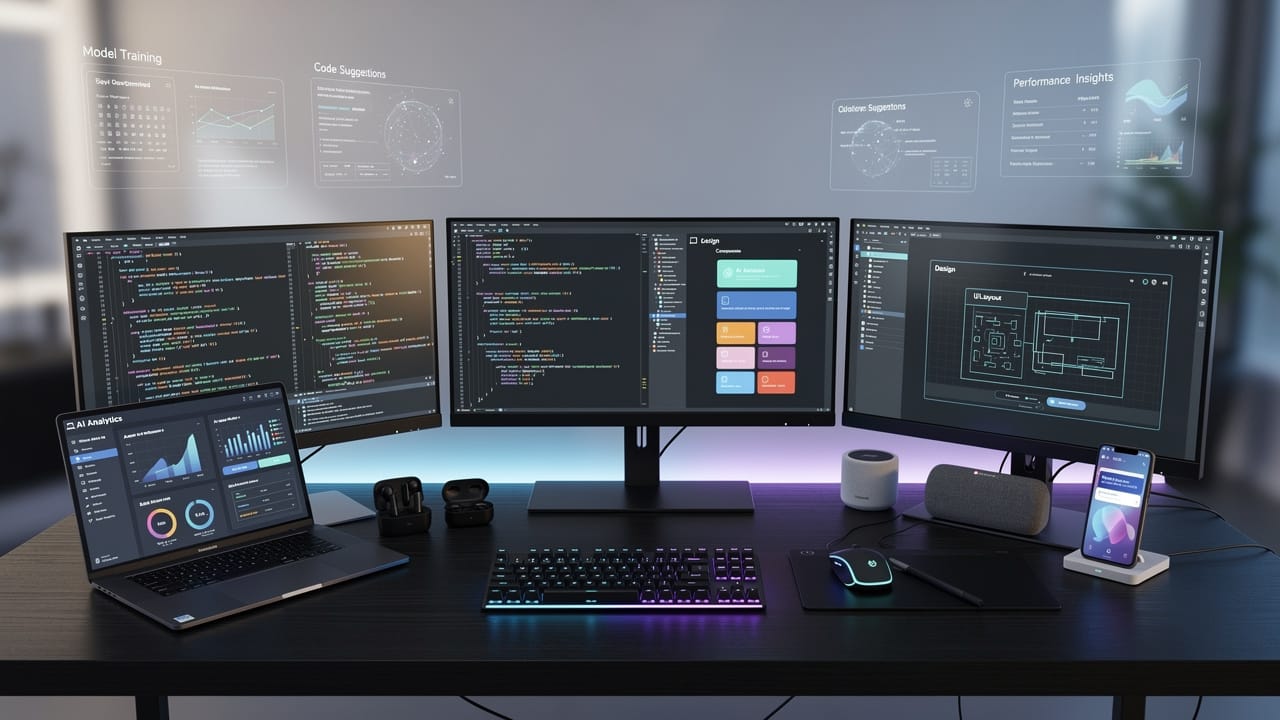
Once AI can generate wireframes, layouts, or front-end concepts, it starts influencing engineering priorities too. A developer working with modern ai powered development tools is no longer starting from a blank file. They may begin with an AI-generated interface, a suggested component structure, and a rough implementation path all at once.
That changes team dynamics. Designers risk being pushed toward review roles instead of creation roles. Engineers may inherit outputs that look polished but hide weak assumptions. Product managers may be tempted to mistake speed for clarity.
The infrastructure cost story is part of the same trend
The second source in this story looks unrelated at first, but it is not. Meta’s headset price increase reflects what happens when the AI race collides with finite hardware supply. The company said Quest prices are going up by $50 to $100, a jump of about 12 to 20 percent, because critical components such as memory have become more expensive.
That matters for software teams because the same demand shock hitting devices also affects the economics of running and scaling AI products. The era of cheap experimentation may not last. Some of today’s most exciting ai powered tools for software development could become pricier, more limited, or more aggressively bundled as model providers chase margin.
What This Means for You if You Use ai tools for software development
If you are a developer, designer, founder, or product lead, the obvious upside is speed. The less obvious issue is control.
Teams will absolutely use ai tools for software development to turn ideas into clickable prototypes faster. That can be great for testing concepts, aligning stakeholders, or reducing repetitive front-end work. Small startups benefit most here, because they often lack dedicated design systems or large product teams.
For developers, the gain is speed, the risk is hidden complexity
Many developers already rely on ai agent development tools for coding tasks, debugging, and automation. Add visual generation into that mix, and you get a workflow where AI proposes both the look and the logic of a product. Useful? Yes. Safe by default? Not remotely.
Generated interfaces can smuggle in bad UX, inaccessible layouts, bloated component trees, and generic patterns that only seem polished. Developers may end up spending less time creating and more time auditing. That is still valuable, but it is a different job than many teams think they are buying.
For companies, AI is becoming a stack decision
This is where things get bigger than one product launch. Choosing among ai tools for software development is starting to resemble choosing a cloud platform. Once your prompts, prototypes, workflows, and internal habits are built around one model vendor, switching gets harder.
That is why this launch deserves attention. The question is not whether AI can make mockups. It can. The real question is who owns the workflow where software gets imagined in the first place.
This also overlaps with broader workplace anxieties. We have already seen how AI reshapes expectations around labor and output in pieces like AI-Driven Job Market Changes: Chaos, Anxiety, and New Opportunity. Design generation tools will intensify that pressure, especially for junior creatives and front-end generalists whose work is easiest to automate at the draft stage.
What Others Missed About Anthropic, Claude Design, and the New AI Workflow
Most coverage of these launches treats them as feature news, another model, another tool, another demo. That misses the strategic point.
The real story is that AI firms no longer want to sit beside professional software tools. They want to become the interface layer through which those tools are used. That is a very different ambition.
The battle is shifting from answers to defaults
The first generation of AI products competed on who could answer questions best. The next generation will compete on who defines the starting point. If AI gives your team the first draft of a landing page, admin panel, app flow, or onboarding sequence, it is not just accelerating work. It is nudging your product toward its own defaults.
That concern connects with a broader pattern in the market, explored in The New Power Grab in system prompt and-models-of ai-tools Is Happening Outside the Chat Window. The companies that control prompts, hidden assumptions, and workflow context can exert influence long before a human clicks “approve.”
Why the hardware story matters to software buyers
Meta’s pricing news is a warning shot. When AI investment spikes hard enough to affect component markets, everybody downstream feels it. Consumer devices get pricier. Data center economics tighten. Tool vendors become more aggressive about pricing, quotas, and enterprise lock-in.
That means buyers evaluating microsoft ai development tools, Anthropic products, or other ai powered web development tools should stop asking only, “What can this do?” They should also ask, “What will this cost to rely on at scale in two years?”
Real Examples of How ai tools for software development Are Changing Work
A startup founder can now sketch a product idea in natural language, generate a rough interface, revise copy, and hand a near-buildable concept to engineering in one sitting. That used to take a chain of meetings, mockups, and back-and-forth messages.
A front-end developer using Claude Design might create a dashboard concept in minutes, then move into implementation with AI-suggested components and layout logic. In that scenario, AI becomes part design assistant, part product translator, part coding helper.
The same pattern is showing up across ai powered development tools more broadly. Some are generating UI structures. Others create app flows, documentation, or test scaffolding. The line between design software and dev software is fading fast.
There is also a hardware side to this story. If Meta is raising Quest prices because memory costs are climbing, then teams building for VR, AR, and immersive apps may face a double squeeze, pricier devices on the user end and more expensive AI-heavy development stacks on the production end. That is a real business constraint, not an abstract market trend.
Pros and Cons of ai tools for software development Expanding Into Design
Pros
- Faster prototyping across design and engineering
- Lower barrier for startups and lean teams
- Better collaboration when one tool can bridge multiple roles
- More experimentation early in the product cycle
Cons
- Generic outputs that flatten product differentiation
- More hidden technical debt inside polished-looking drafts
- Higher long-term dependence on a few model providers
- Rising infrastructure costs that may make today’s cheap tools less cheap tomorrow
Conclusion on ai tools for software development and the New Design Race
The latest wave of ai tools for software development is not just about coding faster. It is about controlling the moment when ideas become interfaces, and interfaces become products. That is why Anthropic’s move matters, and why Meta’s hardware pricing story belongs in the same conversation.
What Happens Next (2026-2030)
Expect the best ai tools for software development to become full workflow platforms, not isolated assistants. Big vendors will push deeper into design, testing, documentation, and deployment, while smaller teams will adopt them fastest because the productivity gains are immediate. Meanwhile, the cost of AI infrastructure will keep rising, which means some “free” or cheap tools will either get worse, get gated, or get folded into premium enterprise bundles. The companies that win will be the ones that use AI to remove drudgery without surrendering judgment. Near the end of this cycle, Claude Design and rival products will matter less for what they generate than for how much decision-making power teams quietly hand over to them.
Sources
About the Author