
The biggest threat to autonomous vehicles right now may not be a dramatic freeway crash, it may be the moment a neighborhood decides the machines simply do not belong. That is why this Austin incident matters: self driving car safety concerns are no longer abstract policy arguments, they are becoming emotional, local, and political.
Quick Summary
- A self-driving vehicle in Austin reportedly ran over and killed a well-known mother duck in the Mueller neighborhood.
- The incident intensified self driving car safety concerns because residents say the vehicle did not slow or stop in a place where people expected more caution.
- The vehicle was reportedly operated by Avride and had a human safety operator inside, which raises uncomfortable questions about both machine judgment and human oversight.
- At the same time, companies are expanding autonomous testing elsewhere, including Volkswagen and Uber’s planned robotaxi push in Los Angeles.
- This is the real tension in 2026: the industry is scaling up while public trust is still fragile.
- For communities, the debate is no longer just about innovation, it is about whether autonomous systems can behave with the kind of judgment people expect on neighborhood streets.
What Happened With Austin’s Self Driving Car Safety Concerns
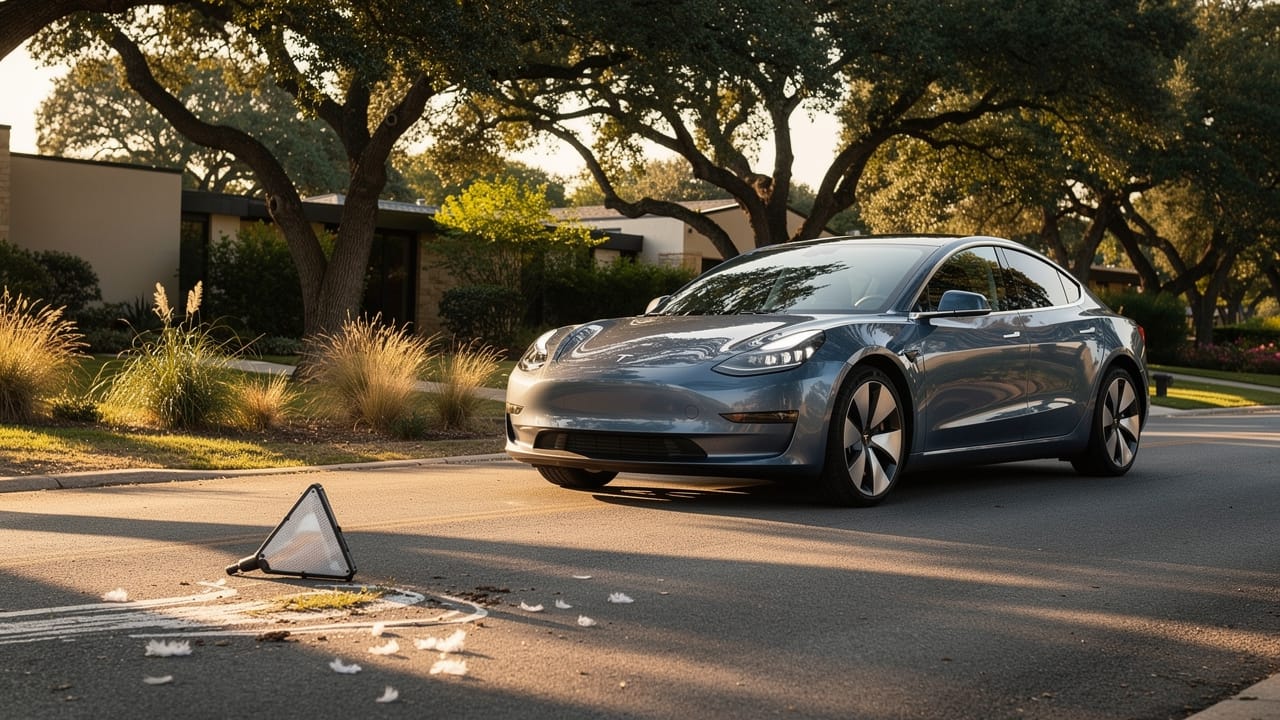
In Austin’s Mueller area, a neighborhood known for its walkability and lakefront paths, a self-driving vehicle reportedly struck and killed a mother duck that locals had come to recognize. That detail matters more than it might sound. When an autonomous vehicle hits an anonymous object, people talk about technology. When it kills a familiar animal in a community space, people talk about values.
According to local reporting cited by TechCrunch, the vehicle belonged to Avride and had a human safety operator behind the wheel. A resident’s account said the car did not appear to hesitate before running over the duck, and then continued on. That image, whether or not later investigation adds nuance, is exactly the kind of event that fuels self driving car concerns far beyond one street corner.
This comes at a moment when the industry is trying to normalize autonomous transport. On the same day, TechCrunch also reported that Volkswagen’s MOIA unit and Uber are beginning testing in Los Angeles with about 10 autonomous ID. Buzz vehicles, aiming toward a commercial launch by late 2026. In other words, public acceptance is being tested at the exact same time deployment is accelerating.
Key Details on Self Driving Car Safety Concerns and AV Expansion
The Austin incident is small in one sense and huge in another. No human was killed. No freeway pileup occurred. But it hit a pressure point that has always shadowed autonomous tech: people do not judge these systems only by collision rates, they judge them by whether the machines appear to have common sense.
Why this single incident cuts deeper
Residents reportedly knew this duck because she had been nesting near a local restaurant. That familiarity transformed the story from a routine traffic accident into a civic grievance. The emotional charge is part of the story, not a distraction from it.
The harder detail for the industry is that the vehicle reportedly had a human safety operator onboard. For companies, that is supposed to reassure the public. Instead, in this case, it may do the opposite. If a person was there and the duck still died, critics can ask two damaging questions at once: Was the software blind to an obvious hazard, and why did the human not intervene?
This is where self driving car safety concerns become more complicated than the usual “humans crash too” defense. Yes, human drivers kill animals all the time. But autonomous companies are not selling “about as attentive as the average distracted driver.” They are selling superior awareness, consistency, and reaction.
The expansion problem
The Austin backlash also lands during a broader scale-up phase. Volkswagen’s autonomous program in Los Angeles is starting with roughly 10 test vehicles, and the production version of its ID. Buzz robotaxi is designed to seat four passengers. That may sound modest, but it represents a familiar rollout pattern in autonomy: start small, collect data, expand fast if regulators and riders allow it.
That growth strategy means every local controversy now carries national consequences. A duck in Austin can shape sentiment in Los Angeles, Phoenix, San Francisco, and anywhere else robotaxis want curb space.
For context, the Uber-Volkswagen timeline matters too. Their commercial service is targeted for late 2026, which means companies are moving from experimentation toward actual consumer service. That is precisely when self driving car safety concerns become less theoretical for ordinary people who never asked to be part of a beta test.
Midway through that debate sits the Avride Autonomous Vehicle, the kind of product meant to make autonomy feel routine. Incidents like this do the opposite. They make every sensor, stop, and edge case feel newly suspect.
What Self Driving Car Safety Concerns Mean for You
If you live in a city where robotaxis are testing, this is no longer a niche transportation story. It affects how your streets are governed, how neighborhoods give or withhold consent, and what level of risk companies are allowed to externalize onto the public.
Neighborhoods are becoming the real battleground
Most autonomous vehicle debates focus on engineers, regulators, and investors. That is backward. The decisive force may be residents who object to fleets operating in school zones, park corridors, bike-heavy districts, and wildlife-adjacent streets. A city can approve a pilot, but if neighborhood anger grows, elected officials tend to get much less enthusiastic.
That is why self driving car safety concerns are especially potent in residential areas. People expect highways to be imperfect. They expect neighborhood streets to show judgment, patience, and caution.
For parents, pet owners, cyclists, and pedestrians, the concern is not just “Can the car avoid a crash?” It is “Will it behave in a way that feels recognizably safe before the crash threshold is reached?” That includes slowing near unusual movement, yielding in ambiguous situations, and acting conservatively around living things.
Trust is now a product feature
Autonomous companies often speak in technical language: disengagement rates, perception stacks, operational design domains. Communities speak a different language: Did it stop? Did it see? Did anyone care?
That gap is becoming expensive. If the public starts to believe these systems are optimized for flow rather than caution, self driving car concerns will harden into policy resistance. That could mean stricter local rules, smaller testing zones, lower speed caps, more mandatory safety operators, and tougher reporting requirements after incidents.
Consumers should expect one practical change from stories like this: more visible “trust theater.” Companies will likely emphasize safety operators, external lighting signals, improved animal detection claims, and more neighborhood outreach. Some of that will be real progress. Some will be branding.
What Others Missed About Avride and Community Backlash
A lot of coverage will frame this as a PR problem. It is more serious than that. It is a legitimacy problem.
The industry keeps treating edge cases as if communities will tolerate them
Tech companies love to call unusual incidents “edge cases.” Communities do not. To residents, the point of advanced autonomy is that it should be better than human reflexes in exactly these sensitive, low-speed environments.
If a machine can navigate lane markings but cannot convincingly navigate moral expectations, then adoption will stall. People do not just want automation. They want automation that behaves with caution in places where human life, pets, and wildlife are woven into the street itself.
There is also an uncomfortable strategic mismatch. Companies are racing to expand because scale creates data, and data improves systems. But each expansion also creates more chances for visible failure. The same month the public sees new autonomous launches, it may also see new viral incidents. That is a brutal loop.
Why this matters beyond one duck
The story resonates because it exposes a hidden truth about autonomy: acceptance depends less on whether the system is statistically safer overall and more on whether its mistakes feel intolerable. A rare machine failure can trigger more backlash than thousands of ordinary human driving errors because people do not emotionally benchmark technology the same way they benchmark each other.
That is why the Avride Autonomous Vehicle now represents something larger than one company’s test vehicle. It symbolizes the social test autonomous driving still has not fully passed: proving it deserves access to shared community space.
Real Examples of How Self Driving Car Safety Concerns Show Up in Daily Life
Consider three everyday situations.
First, a neighborhood street near a pond, school, or park. A human driver may not always react well, but people expect at least the possibility of eye contact, intuition, or sudden empathy. A robotaxi has to replace that with visible caution. If it cannot, residents will push it out.
Second, pickup and drop-off zones. Autonomous vehicles are supposed to make urban transport cleaner and more efficient. But if they hesitate awkwardly, stop unpredictably, or fail to account for pets, scooters, strollers, or birds, the friction becomes obvious fast.
Third, rideshare partnerships. Volkswagen and Uber want autonomous microbuses to become a normalized service in Los Angeles. If that model works, more cities will follow. If local incidents keep feeding self driving car safety concerns, every expansion will face tougher politics before it faces tougher engineering.
You can already see the split forming. Investors and operators see scalable mobility. Residents see moving machines asking for trust they have not fully earned.
Pros and Cons of the Current Autonomous Vehicle Push
Pros
- Autonomous systems may eventually reduce some forms of human error, especially distraction and fatigue.
- Fleet-based services could improve transportation access in dense cities.
- Pilot programs, like the Los Angeles testing effort, let companies gather data before wider deployment.
- In theory, software can be updated faster than human driving habits can be improved.
Cons
- Self driving car safety concerns intensify when vehicles appear unable to handle low-speed, high-sensitivity situations.
- A human safety operator onboard does not automatically reassure the public, especially after an incident.
- Communities often bear the risk of testing while companies capture most of the upside.
- Public trust can collapse over incidents that seem minor to engineers but deeply unacceptable to residents.
Conclusion on Self Driving Car Safety Concerns
The Austin duck incident matters because it exposed the weakest point in the autonomous driving industry: not raw capability, but public permission. Self driving car safety concerns are now being shaped as much by neighborhood values as by software performance.
If robotaxi companies want to scale, they will need to prove they can operate with something close to social intelligence, not just machine vision. Right now, that case is still very much unproven.
What Happens Next (2026-2030)
Between now and 2030, the winners will be the autonomous vehicle companies that design for local trust, not just technical milestones. Firms that can show conservative behavior in dense neighborhoods, transparent incident reporting, and clear accountability will keep expanding. Companies that treat community backlash as irrational will lose permits, partnerships, or both.
Cities will likely become more selective, allowing autonomous services first in geofenced, commercially useful corridors rather than everywhere at once. Riders may embrace robotaxis for airport runs and downtown routes, while neighborhoods resist them on intimate residential streets. The likely future is not universal autonomy, but a patchwork system where only the most disciplined operators earn the right to spread.
Sources
About the Author