
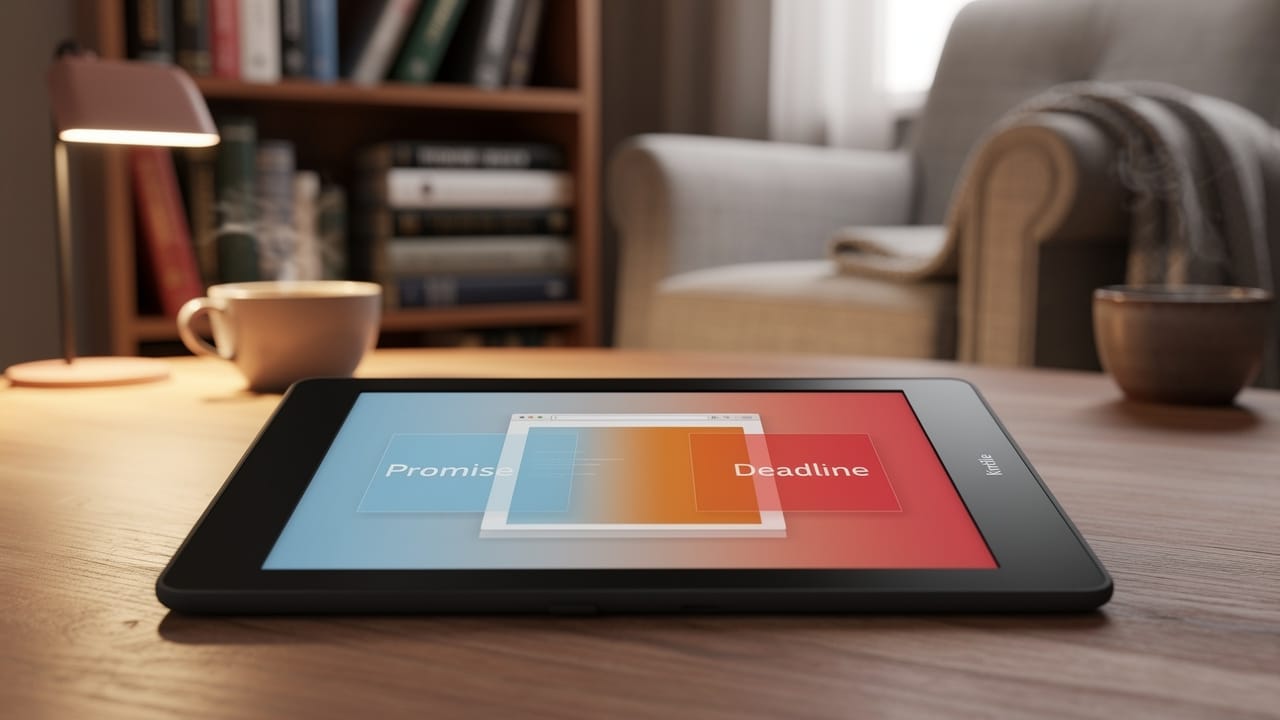
Amazon.com device support kindle sounds like a boring help-page phrase, but for owners of very old Kindles it now means something blunt: your device may still turn on, yet its useful life inside Amazon’s ecosystem is about to end. The uncomfortable part is not that old hardware is aging out, it is that a book device people expected to last a decade-plus is being reduced to a sealed archive on a fixed date.
Quick Summary
- Amazon is ending support for Kindle devices released in 2012 or earlier.
- The cutoff date is May 20, 2026.
- Affected devices will lose access to Kindle Store functions, including buying, borrowing, and downloading new books directly.
- Users can still read books already stored on the device, but a factory reset or deregistration after the deadline creates a bigger problem.
- Once one of these older Kindles is reset after May 20, it cannot be re-registered.
- The change exposes a bigger issue with Amazon.com device support kindle, namely that “owning” an e-reader inside a closed platform is not the same as owning a fully independent library device.
What Happened With Amazon.com device support kindle
Amazon has told customers that older Kindle hardware is losing a core part of what made it valuable in the first place: direct access to the Kindle Store. If your device was released in 2012 or earlier, Amazon says that after May 20, 2026, it will no longer be able to buy, borrow, or download books from the store on the device itself.
This is not the same as a routine software update ending. It is a deeper cutoff. These devices will still open books that are already downloaded, but they become far less useful for anyone who still relies on them as a living reading device rather than a static bookshelf.
The move was first noticed through customer emails and public posts, then confirmed by reporting from TechCrunch and Ars Technica. In practical terms, Amazon device support kindle is no longer indefinite for the earliest generations.
Key Details on Amazon kindle device support
The affected group includes Kindles sold as far back as the original 2007 model, along with the keyboard-era devices and other pre-2013 units. Ars Technica pointed out that this is the first time Amazon has cut these old models off from the Kindle Store entirely. That distinction matters. Many gadgets stop receiving updates, but they often keep their main function. Here, the store connection itself is going away.
The deadline is about more than store access
The most important detail is not just that purchases stop on May 20, 2026. It is that these devices also lose the ability to download new content directly, even content you already bought or borrowed. For many users, that turns an e-reader into a read-only vault.
Amazon’s message also included a sharper warning: if one of these older devices is deregistered or returned to factory settings after the deadline, it cannot be registered again. That means a simple troubleshooting step, or handing the device to a family member, could permanently lock it out of the ecosystem.
Where ZDNet quietly matters
This is where ZDNet’s guide to converting EPUB files becomes more relevant than it first appears. If you have legally obtained EPUB files or a personal document library, alternative loading methods may become the only realistic path for keeping an aging Kindle useful. That does not fully solve the problem, but it shifts the conversation from store access to file management.
The broader kindle device support story is really about dependence. When readers buy into a tightly integrated platform, convenience is excellent right up until the platform owner decides old convenience is no longer worth maintaining.
What Amazon.com device support kindle means for you
If you own one of these devices, the impact depends on how you use it.
A casual reader with dozens of books already downloaded may barely notice at first. The device will still open what is already there. But anyone who regularly shops the Kindle Store on-device, borrows e-books, redownloads past purchases, or resets devices between users is taking a real hit.
If you still use an old Kindle every day
This is the group most affected by Amazon.com device support kindle changes. Plenty of readers stuck with older Kindles because they liked physical buttons, keyboard layouts, or simply the battery life and familiarity of the old hardware. Some of those devices lasted unusually long because e-readers are not smartphones. They do one thing, and many do it well for years.
Now there is a practical checklist:
- Download your purchased books now, while direct device access still works
- Avoid factory resets
- Do not deregister the device unless you are prepared to lose store-linked functionality permanently
- Consider whether sideloading documents or converted EPUB files can keep the device viable
- Decide if staying in Amazon’s ecosystem means buying a newer Kindle e-reader
The hidden cost is not only money
On paper, the replacement path looks simple: buy a new device. In reality, this is where www Amazon.com device support kindle becomes a consumer-rights issue. Readers are being reminded that digital book ecosystems are part bookstore, part licensing system, part hardware gatekeeper.
A pre-2013 Kindle may still have working electronics, a readable screen, and acceptable battery life. Yet its usefulness is shrinking because the service layer is being withdrawn. That is efficient for Amazon. It is less great for customers who thought durability would matter more than platform age.
What Others Missed About Amazon device support kindle
Most coverage frames this as old tech finally reaching the end of the road. That is true, but incomplete.
The more interesting story is that e-readers trained people to think differently about obsolescence. Phones feel disposable because they are replaced every few years. E-readers feel closer to books, lamps, or watches, devices people expect to keep around for a very long time. That expectation is exactly why this cutoff lands differently.
This is a trust problem, not just a hardware problem
The original Kindle launched in 2007, which means some affected devices are approaching nearly two decades of age. By normal consumer electronics standards, that is ancient. By reading-device standards, it does not feel outrageous. A paperback from 2007 still works perfectly if you keep it dry.
That comparison is unfair on a technical level, but emotionally it is the whole story. Amazon kindle device support is being judged against the idea of books, not the idea of gadgets.
There is also a strategic angle. Supporting old authentication methods, store connections, and aging firmware stacks costs money and creates security and compatibility headaches. Amazon likely sees little upside in preserving full store access for a tiny pool of legacy devices. The company is probably right from an operational standpoint. But the decision still underlines how digital reading has a built-in expiration risk that print never had.
Real Examples of kindle device support in everyday life
Here is what this looks like in real households.
Someone has a first-generation or keyboard-era Kindle in a drawer, charged it up recently, and planned to use it for travel reading. If the books are already on the device, fine. If not, the timing suddenly matters.
A parent hands down an older device to a child after doing a reset, expecting to sign in fresh. After May 20, 2026, that may fail completely on affected models.
A longtime reader who preferred old page-turn buttons over touchscreens may find the only easy path forward is replacing the hardware with a newer Kindle e-reader, even though the old one still reads perfectly well.
And for users who built mixed-format personal libraries, ZDNet’s EPUB conversion advice matters because sideloading may outlast official Amazon.com device support kindle pathways on these models. That is not as seamless as store delivery, but it can preserve some usefulness.
Pros and Cons of ending Amazon.com device support kindle
Pros
- Amazon can reduce the cost and complexity of maintaining very old device infrastructure
- Security and account-management risks tied to outdated software may decrease
- The company can focus support resources on newer hardware and current services
Cons
- Perfectly functional e-readers become significantly less useful overnight
- Owners lose convenience they may have assumed was part of the original product experience
- Resetting or deregistering a device becomes much riskier
- The move reinforces the sense that digital ownership is conditional, not durable
- Users who want to stay in the ecosystem may feel pushed into upgrading
Conclusion on Amazon.com device support kindle
The immediate story is simple: old Kindles are losing store access. The more important story is that Amazon has drawn a bright line between hardware that still works and hardware it still chooses to support. That gap is where customer frustration lives.
What Happens Next (2026-2030)
Over the next few years, Amazon will probably keep newer Kindle models stable for a long time, but with clearer limits than many readers assumed. Users who want frictionless buying and syncing will move toward newer devices, while hobbyists and power users will put more effort into sideloading and backup workflows. Competitors and open-format reading apps benefit whenever Amazon.com device support kindle becomes a cautionary phrase rather than a reassurance. The bigger change is cultural: readers will increasingly treat e-readers like managed services, not permanent objects.
Sources
About the Author