
The race to own your voice notes, meeting transcripts, and messy spoken ideas just got more serious. The otter.ai dictation app has long been one of the most recognizable names in this category, but Google’s quiet new move shows the next battle will be about something bigger than transcription, speed, privacy, and what happens when AI works even without the cloud.
Quick Summary
- Google has launched an offline-first ai dictation app on iOS, signaling that on-device speech AI is becoming mainstream.
- The otter.ai dictation app now faces pressure from tools that promise local processing, faster response times, and fewer privacy worries.
- AI dictation is no longer just for meetings, it is becoming a broader productivity layer for notes, emails, summaries, and polished writing.
- Small businesses are also using AI to compress research, sourcing, and decision-making, which shows how voice and automation tools are fitting into a bigger workflow shift.
- The winners will be users who want convenience without handing every spoken word to the cloud.
- The losers may be older software models that rely on constant connectivity, clunky editing, or expensive subscription tiers.
What Happened
Google quietly released a new iPhone dictation product called Google AI Edge Eloquent, a free tool built to transcribe speech with an offline-first design. That matters because most people still associate advanced voice transcription with cloud services, not local processing on a phone.
This puts new pressure on incumbents like the otter.ai dictation app, along with a wider field of transcription tools chasing journalists, students, founders, remote workers, and anyone who thinks faster than they type. At the same time, a separate trend is unfolding in commerce, where AI tools are helping small sellers research products and suppliers faster. Different use case, same pattern: AI is shifting from novelty to operating layer.
Key Details
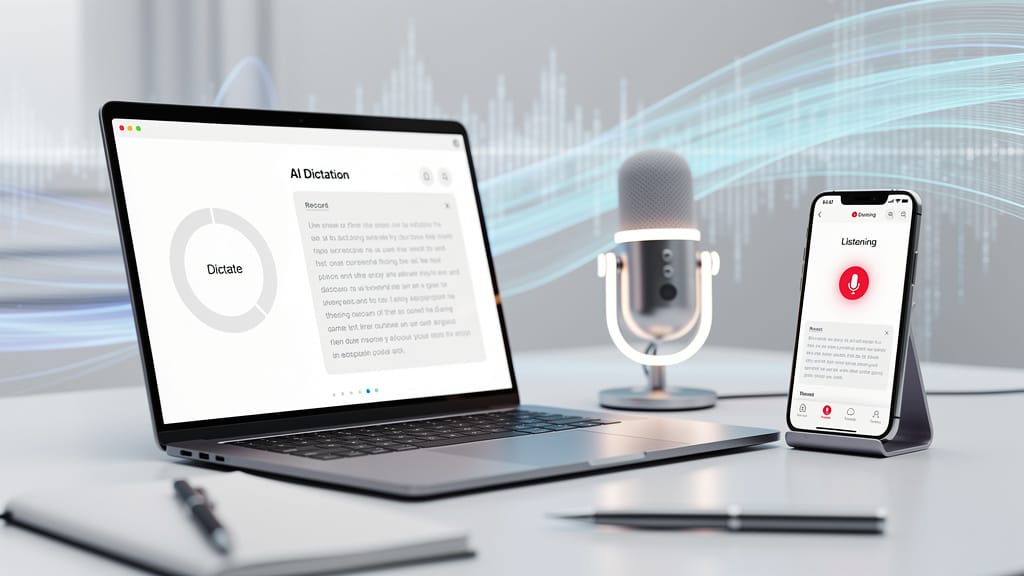
Google’s new app works after downloading its speech recognition models directly onto the device. In practical terms, that means users can dictate even when connectivity is weak or unavailable. The app shows live transcription, then cleans up spoken text when you pause. It also removes filler words and offers different rewrite modes, including shorter, longer, more formal, and key-point versions.
That combination is important. A modern ai voice dictation app is no longer just a speech-to-text engine. It is increasingly a speech-to-draft system. You talk, the software transcribes, then it reshapes raw speech into something you can send.
Google also allows a local-only mode, which limits reliance on cloud processing. If users enable cloud features, text cleanup can tap stronger remote AI models. The product can even pull in names, jargon, and keywords from Gmail, which is helpful but also a reminder that convenience and data access usually travel together.
Meanwhile, MIT Technology Review highlighted another side of the same AI wave: small online sellers are using conversational AI tools to speed up product research and supplier discovery. That has less to do with dictation directly, but it shows how AI is steadily reducing the friction between idea and action. Talk, search, compare, generate, decide. Fewer steps, less manual work.
If you have used the otter.ai dictation app for meetings or voice notes, this is the larger context. Dictation is becoming one piece of an AI workflow stack, not a standalone feature.
What This Means for You
If you are a regular user, the big shift is simple: the best ai dictation app may soon be the one that feels invisible. Not the one with the longest feature list, but the one that lets you speak naturally, works offline, cleans up your rambling, and protects enough privacy that you do not hesitate before pressing record.
That raises the stakes for the otter.ai dictation app. Otter built its reputation around meeting capture and searchable transcripts, especially for work and education. But if Google and others can offer offline speech recognition, smart rewriting, and zero-friction mobile use, users may start asking tougher questions. Why am I sending everything to the cloud? Why is cleanup still manual? Why does this feel built for meetings rather than everyday thinking?
For iPhone users, this gets especially interesting. People searching for an otter.ai dictation app for iphone are often really looking for something broader: a fast mobile tool for notes, reminders, emails, content drafts, interviews, or class summaries. That market is much larger than the meeting-transcription niche.
There is also a pricing issue. Google’s app is free to download, which adds pressure across the category. A free ai dictation app with decent offline performance is not just a nice option, it can reset customer expectations overnight. Premium tools will have to justify why they charge, whether through better collaboration, accuracy, integrations, or enterprise features.
For professionals, the privacy angle is huge. Doctors, lawyers, executives, researchers, and journalists often want dictation help but are uneasy about shipping sensitive voice data to remote servers. Offline-first design does not solve every compliance issue, but it removes one of the biggest psychological barriers. As we noted in AI and Automation: Powerful, Ubiquitous Results, the real AI winners are often the products that disappear into routine work, not the loudest demos.
What Others Missed
The obvious story is that Google launched another AI app. The more important story is that AI dictation is moving from “assistant feature” to “interface layer.”
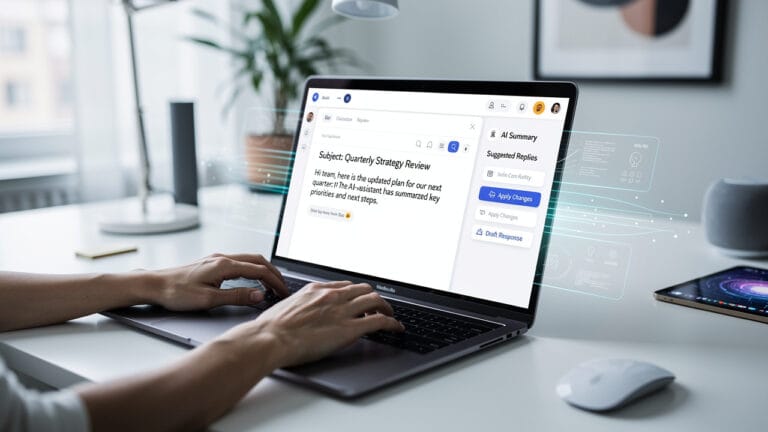
That sounds abstract, but it changes everything. Once an ai dictation app can transcribe, clean up, summarize, and format your thoughts in one pass, speaking becomes a faster version of drafting. That threatens not just competitors like the otter.ai dictation app, but older assumptions about keyboards, note-taking apps, and even search.
There is also a strategic reason Google would push offline AI here. On-device models are cheaper to run at scale, easier to position as privacy-aware, and more resilient when users are in poor-network environments. If the experience is good enough, local AI can turn into a habit-forming utility instead of an occasional cloud-powered trick.
The commerce angle from Alibaba’s Accio points to the same deeper shift. AI is eating the “pre-work” in many industries. It is reducing the grind before the real task begins. For a seller, that means less supplier hunting. For a writer or manager, it means less typing and editing. For an employee, it means more tasks start as a conversation with software. That is why this trend connects naturally with our earlier reporting on AI-Driven Job Market Changes: Chaos, Anxiety, and New Opportunity. When AI cuts friction, it does not just save time, it changes which skills feel valuable.
Real Examples
A startup founder walking through an airport can dictate investor follow-ups without needing stable Wi-Fi.
A student can record study notes on a subway, then turn them into cleaner bullet points later.
A reporter can capture interview impressions right after a conversation, before details fade.
A parent can speak a grocery list, weekend plan, and reminder draft while juggling kids and bags.
A small e-commerce seller can use voice notes to brainstorm product ideas, then hand those ideas into research tools that compare suppliers and market demand. That is where the line between a ai voice dictation app and a broader automation system starts to blur.
In those scenarios, the otter.ai dictation app still has clear strengths, especially around meetings and searchable archives. But users increasingly want one tool that handles casual dictation, structured output, and mobile convenience. If another app does that faster, Otter’s brand advantage may not be enough.
Pros and Cons
Pros
- Offline use improves reliability and privacy
- Free access can expand adoption quickly
- Text cleanup and rewrite modes save editing time
- More useful for everyday mobile tasks, not just meetings
Cons
- On-device models may lag cloud systems in some edge cases
- Privacy claims depend on how optional cloud features are actually used
- Free tools can change pricing pressure without improving collaboration features
- The otter.ai dictation app and similar rivals still lead in some team workflows and archive management
Conclusion
The otter.ai dictation app is still a major player, but Google’s move shows the market is changing fast. The next generation of dictation tools will not win by transcribing alone, they will win by turning speech into usable work instantly, privately, and everywhere.
My bet is that within a year, users will stop thinking in terms of “dictation apps” at all. They will just expect every serious productivity tool to listen, clean up, and help finish the thought.
Sources
About the Author