

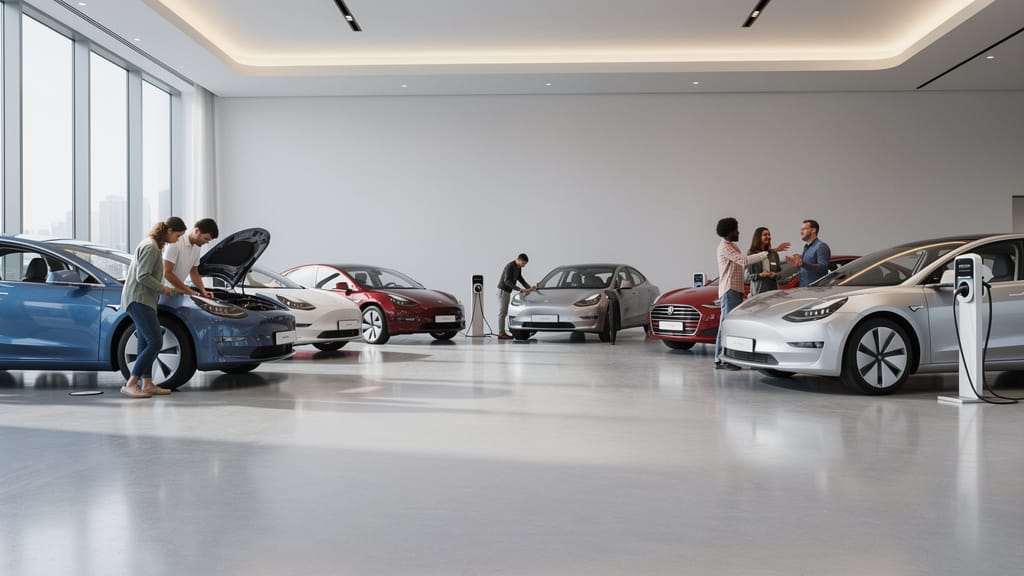
Americans are doing the math again, and this time the answer is pushing them toward the used EV lot. Used ev car sales are climbing fast as gasoline gets pricier, but the bigger story is that the market is finally flooded with electric cars ordinary buyers can actually afford.
Quick Summary
- Used ev car sales are rising even as the market for new EVs weakens.
- Higher gas prices are helping, with U.S. averages above $4 per gallon.
- A wave of off-lease electric vehicles is hitting the market, expanding supply and lowering prices.
- New EV demand has been hurt by the loss of the $7,500 federal consumer tax credit.
- The result is a market split: new EVs are under pressure, while used ev sales are getting stronger.
- For buyers, this may be the best short-term window yet to find a relatively modern EV at a realistic price.
What Happened
The U.S. auto market is splitting into two very different stories. On one side, new electric vehicles have lost momentum. On the other, used ev car sales are picking up speed.
The immediate trigger is easy to understand. Fuel prices have jumped as global oil markets tightened, with the broader economic fallout touching everything from gasoline to petrochemical products, as MIT Technology Review notes. When gas gets expensive, shoppers start looking harder at alternatives with lower running costs.
But pump prices are only part of it. The more important shift is supply. A large batch of EVs that were leased during the early-2020s buying boom is now coming back onto dealer lots. That is creating the kind of inventory the used market has been missing for years, and it is giving buyers more choice, more negotiating power, and in some cases much better pricing.
Key Details
According to reporting from TechCrunch and Ars Technica, used ev sales in the first quarter rose 12% year over year. On a quarter-to-quarter basis, they climbed 17% from Q4 to Q1. Those numbers make the latest used ev sales trends hard to dismiss as a one-week reaction to gas prices.
Meanwhile, new EVs moved in the opposite direction. First-quarter sales of new electric vehicles fell 28% year over year, a drop tied in part to the removal of the federal $7,500 consumer tax credit. That policy change made many new EVs instantly less compelling, especially for buyers who were already sensitive to monthly payments.
The supply story matters just as much as the policy story. During the pandemic-era EV surge, many consumers leased electric cars rather than buying them outright. Those leases are now expiring. Credit data cited in the source reporting shows EVs making up a much larger share of off-lease vehicles than they did only a few years ago. That means more inventory, and inventory changes everything.
This is also why terms like hertz used ev sales keep surfacing in the broader conversation. Fleet operators and rental companies helped put a lot of EVs into circulation, and as those vehicles rotate out, they can swell the used market further. Not every fleet car is a bargain worth grabbing, but the added volume can push prices lower across the category.
If you are tracking used ev sales q2 2025 versus today’s market, the contrast is striking. Back then, buyers still faced a thinner pool of desirable used models and more uncertainty around battery health and resale values. Now, ev used car sales are benefiting from a more mature secondhand ecosystem, with more vehicle history, more service familiarity, and more mainstream consumer awareness.
What This Means for You
If you are shopping for a car, this could be one of the best moments yet to look at used ev car sales instead of chasing a new model. The reason is simple: depreciation, which hurt first owners, can help second buyers.
A two- or three-year-old EV may now offer modern safety tech, decent range, and lower running costs for far less than its original sticker price. If you charge at home and drive a predictable daily route, the economics can be compelling. Expensive gasoline makes that savings more obvious, but maintenance matters too. EVs generally avoid oil changes, have fewer moving parts, and often cost less to keep on the road.
That said, this is not a universal win. The buyers who benefit most are people with home charging, stable commutes, and access to lower residential electricity rates. Apartment dwellers, road-trip-heavy drivers, and shoppers in regions with thin charging infrastructure still face tradeoffs.
There are also losers in this shift. New-car dealers have a tougher pitch when a used EV with similar tech is sitting nearby for much less. Automakers also face a pricing problem: if secondhand inventory gets attractive enough, it can undercut demand for new EVs just when many manufacturers need stronger volumes.
The practical checklist matters more than the headline. Before jumping into used ev car sales, buyers should check battery warranty coverage, DC fast-charging speed, cold-weather range impact, tire wear, and insurance quotes. A cheap EV can still be a bad deal if it charges slowly, has poor winter performance, or comes with expensive replacement tires.
What Others Missed
The obvious narrative is that gas prices rose and shoppers responded. True, but incomplete. The deeper reason used ev car sales are accelerating is that the market is finally behaving like a normal used-car market.
For years, the used EV space felt awkward. Inventory was limited, battery fears were high, and pricing was weirdly disconnected from what mainstream buyers would pay. Now a few things are happening at once: more leases are ending, more data exists on battery longevity, and more shoppers have at least some familiarity with EV ownership. That combination reduces perceived risk.
There is also a political and pricing angle here. Removing incentives for new EVs did not kill demand for electric driving. It rerouted some of that demand into used vehicles. In other words, policy may have weakened the new market while accidentally strengthening used ev sales.
Another overlooked point is that higher oil prices do not just affect drivers at the pump. They ripple through the broader economy, from transport costs to plastics and manufacturing inputs. That wider pressure can make consumers more payment-conscious overall. When households get defensive, they do not necessarily reject EVs. They reject expensive new cars. That distinction explains a lot about current used ev sales trends.
And yes, watch fleet supply closely. The discussion around hertz used ev sales is really shorthand for a bigger market force: rental companies and large fleets can reshape used pricing when they unload vehicles in bulk. If more of that inventory arrives this year, buyers may get even more leverage.
Real Examples
A shopper comparing a used Tesla Model 3, Chevy Bolt EUV, or Ford Mustang Mach-E today is often looking at a very different value equation than a year ago. These are recognizable models with proven real-world usage, and many now sit in price territory that makes them direct alternatives to mainstream gas sedans and compact SUVs.
Consider a commuter driving 40 miles a day. At gasoline prices above $4, that person will notice fuel costs quickly in a conventional SUV. A used EV with home charging can cut that running cost sharply, even if electricity rates vary by state.
Or take a family buying a second car. They may not need a brand-new EV with 350 miles of range. They may need a reliable local-run vehicle for school drop-offs, errands, and commuting. That is exactly where ev used car sales become more practical than flashy. The lower upfront cost matters more than bragging rights.
This trend also affects people who are not buying right now. If more consumers shift toward used EVs, automakers may have to offer better financing, lower lease prices, or more aggressive incentives on new models to stay competitive. That means today’s surge in used ev car sales could reshape pricing across the broader EV market.
Pros and Cons
Pros
- Lower purchase prices than new EVs
- Lower operating costs when gas prices are high
- Growing inventory gives buyers more choice
- Many used models still include battery warranty coverage
- Better value for commuters and households with home charging
Cons
- Charging access remains a major limitation for some buyers
- Battery condition varies and needs verification
- Older EVs may have slower fast-charging and shorter range
- Insurance and tire costs can still be surprisingly high
- Heavy fleet sell-offs can make resale values less predictable
Conclusion
The rise in used ev car sales is not a blip. It is the result of expensive gasoline, weaker new-EV incentives, and a long-awaited surge of off-lease inventory finally reaching everyday buyers.
Expect this market to stay active through the year. If gas prices remain elevated and more lease returns arrive, used ev car sales could become one of the most important bright spots in the entire U.S. auto market.
Sources
About the Author