
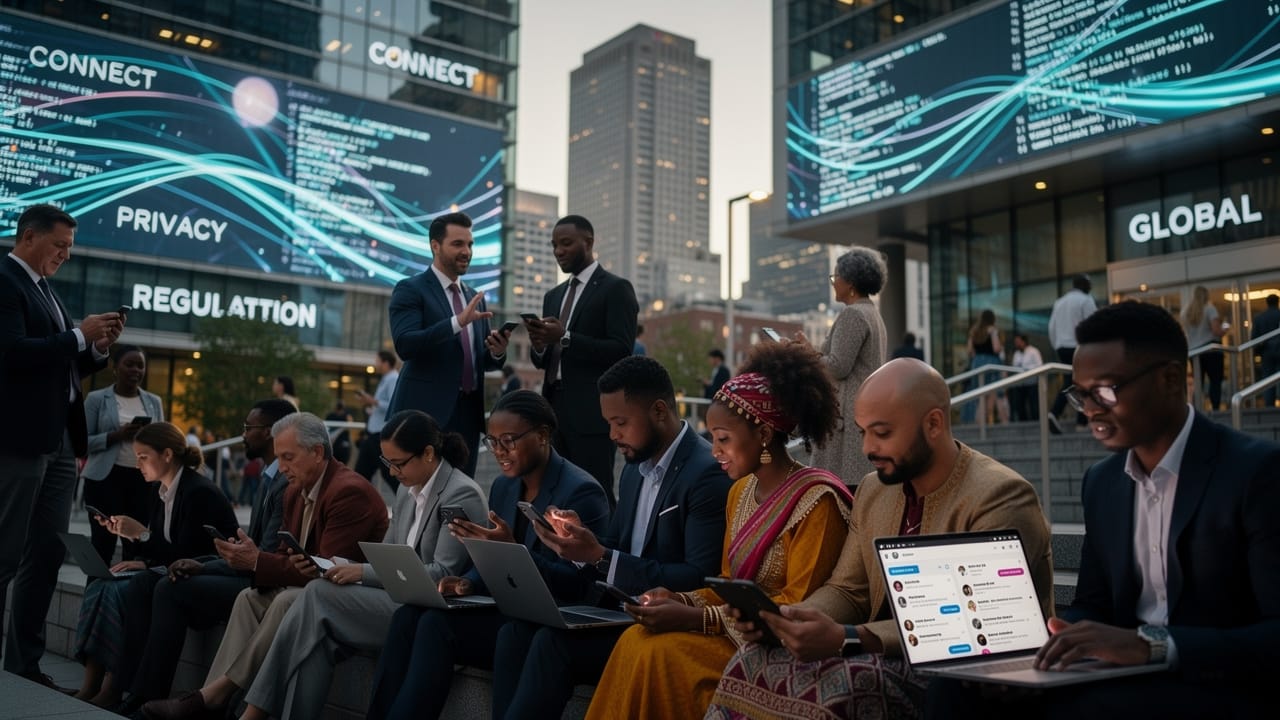
Social media regulation is no longer about vague hearings and political speeches. It is becoming a direct fight over who gets to speak online, who gets protected, and how much power governments can exert over the platforms that now shape childhood, commerce, and public life.
Quick Summary
- Courts in the US are weighing major cases that could reshape how platforms are held responsible for harm, especially harm to children.
- The UK is reportedly preparing a ban on social media use for children under 16, pushing social media regulation into a far more aggressive phase.
- Australia has already moved first on age-based restrictions, and other countries are increasingly treating platform access like a public health issue.
- The biggest legal shift is not just about speech, it is about product design, addictive features, and whether platforms knowingly built systems that trap young users.
- The broader trend is clear: government regulation on social media is moving from content moderation debates to hard rules about age, access, safety, and platform architecture.
- Even outside social apps, the Anthropic shutdown story shows a larger political reality: once tech becomes a risk issue, governments step in fast and companies comply even faster.
What Happened With Social Media Regulation in 2026
The internet’s long immunity era is ending. In the US, major social platforms are facing thousands of lawsuits over claims that their products harmed users, especially children and teens. The most important cases are not fringe complaints, they are becoming a legal test of whether platforms can still argue that they merely host content instead of engineering behaviors.
At the same time, the UK may soon bar under-16s from using social platforms at all, according to TechCrunch. That would put Britain much closer to Australia’s tougher model, where platforms including TikTok, YouTube, Instagram, Reddit, Facebook, X, Threads, Snapchat, Twitch, and Kick are restricted for users under 16.
This is why social media regulation news suddenly feels more urgent than the usual policy chatter. The question is no longer whether lawmakers want more control. It is whether courts and legislatures are finally willing to treat social media companies like product makers with duties, not just neutral pipelines.
Key Details on the Regulation of Social Media
The most consequential legal battles in the US, highlighted by BBC Technology, revolve around platform liability and child safety. Companies tied to these legal fights include Meta, Google, Snapchat, TikTok, Discord, and Roblox.
The lawsuits are targeting design, not just posts
That distinction matters. For years, platforms have defended themselves by arguing that users create the harmful content. But the newer wave of cases focuses on recommendation systems, endless scroll, alerts, social pressure loops, and other built-in mechanics. In plain English, plaintiffs are saying the product itself may be dangerous.
That is a much bigger threat to the industry than ordinary moderation disputes. If courts accept that logic, the future regulation of social media could look more like tobacco, gambling, or consumer product safety law than free speech law.
The UK’s proposed ban is broader than it first sounds
The reported UK plan does not just target classic social apps. According to TechCrunch, products used by younger audiences but not banned outright may still need to remove features like chatting with strangers. There is also talk of blocking under-18s from romantic and sexual chatbots and curbing late-night scrolling.
That signals a new kind of regulation for social media. Instead of only asking, “Should this child be on the platform?” governments are asking, “Which features should exist for minors at all?”
The Anthropic case matters, even though it is not social media
At first glance, Ars Technica seems unrelated. But it reveals something important about the modern regulatory mood. Anthropic abruptly disabled two newly launched AI models, Fable 5 and Mythos 5, after a US Commerce Department directive imposed export controls. The move came just days after launch.
That speed tells you a lot. When government decides a digital product is a national security or public safety problem, it does not wait for the market to self-correct. Social platforms should notice that.
What Social Media Regulation Means for You
If you are a parent, this trend means age checks, account restrictions, and feature limits are likely to become normal. If you are a teenager, the online experience could soon be carved into age-based tiers, with fewer messaging tools, less discoverability, and stricter overnight limits.
For parents, friction is becoming policy
For years, the burden fell on families to monitor apps that were clearly designed to defeat self-control. That is part of why the politics changed. The coming wave of social media regulation aims to shift some of that burden back onto companies.
That does not mean a cleaner experience overnight. Age verification creates its own mess, from privacy concerns to false positives that lock out legitimate users. But politically, lawmakers have decided that inconvenience is preferable to doing nothing.
This lines up with a broader shift we have already seen in Social Media Restrictions for Children Are No Longer a Debate, They’re Becoming the Default. The argument is no longer whether restrictions are too extreme. In many countries, restrictions are becoming the starting point.
For regular users, platforms may feel less open
Adults will notice changes too. If governments force platforms to redesign systems for minors, companies often roll out simplified rules for everyone because segmented products are expensive and messy to maintain.
That could mean less direct messaging from unknown users, tighter recommendation settings, stronger identity checks, and more guardrails around what can be promoted. Some of those changes will improve safety. Some will make platforms feel slower, less spontaneous, and more locked down.
For creators and businesses, discovery may get harder
Many small creators built audiences on algorithmic reach, teen engagement, and frictionless sharing. If those systems are restricted, growth gets tougher. Brands and influencers that depend on young audiences may face new compliance demands, age-gating rules, or reduced visibility.
There is also a fraud angle. The case for tougher government regulation on social media is not only about mental health. It is also about consumer protection. As we noted in Social Media Scams Are Now a $2.1 Billion Industry, and the Platforms Still Feel One Step Behind, criminal abuse on these platforms is no longer a side issue. It is part of the product risk story.
What Others Missed About Social Media Regulation
A lot of coverage still treats this as a content moderation debate. That is outdated.
The real battleground is design liability. Lawmakers are increasingly less interested in litigating every offensive post and more interested in whether platforms built systems that predictably amplify compulsion, harassment, exploitation, or contact with strangers.
The state is learning to regulate behavior through features
This is the quiet revolution inside social media regulation. Instead of arguing over speech line by line, governments can target architecture, messaging defaults, recommendation engines, alerts, and age access.
That strategy is politically smart. It lets governments say they are protecting kids without directly criminalizing broad categories of speech. It also puts platforms in a weaker legal position, because product design is harder to defend as pure expression.
The Utah Social Media Regulation Act helped preview this approach. Even where those laws face legal challenges, they have already changed the policy vocabulary. The focus is shifting from “bad content” to “risky platform mechanics.”
The next wave will hit gaming and AI-adjacent products
The UK discussion already hints at this. If gaming apps for younger users must strip out chat-with-strangers features, the wall between social media and everything else starts to collapse. Social features now exist in games, livestreaming apps, creator tools, and AI companions.
That means the future regulation of social media may not stay confined to apps people traditionally think of as social networks. It could spread to any digital service that mimics social engagement loops.
Real Examples of How Regulation for Social Media Could Show Up
A 15-year-old trying to open TikTok or Instagram in the UK might hit mandatory age verification instead of a sign-up page.
A teen gaming app may still work, but direct messaging with unknown users could disappear.
Late-night scrolling protections might trigger app lockouts or reduced notifications after certain hours.
An adult user could be asked for more identity proof because platforms often apply one compliance system across age groups.
A creator selling products through social platforms may have to separate teen-visible content from adult-visible content, adding cost and reducing reach.
And if US courts decide product design claims can proceed, companies such as Meta, YouTube, or Snapchat may start removing or downgrading the very engagement mechanics that made them so profitable.
Pros and Cons of Government Regulation on Social Media
Pros
- Better protection for minors, especially around stranger contact and compulsive use
- More accountability for platforms that have long outsourced risk to users and families
- Potential reduction in scams, harmful recommendation loops, and exploitative features
- Clearer legal standards for what companies can and cannot build
Cons
- Age verification can become a privacy nightmare
- Overbroad rules may block harmless communities and useful online spaces
- Smaller platforms may struggle with compliance costs
- Governments may use child safety as a doorway to broader control over online speech and access
Conclusion on Social Media Regulation
Social media regulation is no longer a speculative policy trend. It is becoming a structural rewrite of the internet, driven less by ideology than by a growing consensus that platforms cannot keep claiming neutrality while engineering dependence.
The winners will be governments that move early and large platforms that can afford compliance. The losers may be smaller services, creators who rely on frictionless reach, and users who still believe the open internet is coming back in its old form.
What Happens Next (2026-2030)
Expect more countries to copy parts of Australia and the UK, especially around age gating, messaging restrictions, and default safety settings. The US will move more slowly at the federal level, but state laws and court rulings will keep pushing social media regulation forward in practice. Big platforms will not fight every rule, they will quietly redesign products and call it safety innovation. By 2030, the most successful apps may look less like open social networks and more like heavily managed digital utilities for different age groups.
Sources
About the Author