

This is not just another tech listing. If Anthropic reaches public markets anywhere near the eye-watering valuation now being discussed, the ai startup ipo story stops being about optimism and starts being about who gets to finance the future, and who gets priced out of it.
Quick Summary
- Anthropic has confidentially filed for an IPO, setting up what could become the biggest ai startup ipo yet.
- The company was recently reported at a staggering $965 billion valuation, only days after unveiling a $65 billion fundraising round.
- The move lands in the middle of an escalating race with OpenAI, SpaceX, and xAI to turn AI hype into public-market capital.
- This is not just about investor enthusiasm, it is about paying for extremely expensive model training, chips, cloud contracts, and enterprise distribution.
- For users and businesses, a public ai startup ipo wave could mean faster product rollouts, tougher monetization, and more pressure to prove AI tools generate real revenue.
- The biggest overlooked angle is simple: Wall Street may reshape AI labs faster than regulators do.
What Happened With Anthropic’s ai startup ipo Filing
Anthropic said it has confidentially submitted paperwork to US regulators for an initial public offering. That does not lock in a date, a target raise, or a final valuation, but it starts the formal process for going public.
The timing matters. The company disclosed the filing just after announcing a $65 billion fundraising round, and amid chatter that OpenAI could also pursue a public listing soon. Add SpaceX, which reportedly filed confidential IPO paperwork in April and owns Elon Musk-linked xAI, and the AI capital race is suddenly not theoretical. It is moving toward Wall Street.
If this ai startup ipo reaches market at anything close to recent private valuations, it would not merely be large for software. It would be historically abnormal, a sign that investors now see frontier AI labs less like startups and more like national-scale infrastructure bets.
Key Details on the ai startup ipo Race
The headline number is the one nobody can ignore: $965 billion. That valuation, cited in the source material, is so large that it changes how this company should be understood. A lab at that level is no longer just competing on model quality. It is competing on financing capacity, political influence, and the ability to absorb losses while chasing dominance.
Why this ai startup ipo is different
Most IPOs are about giving early investors liquidity and raising expansion capital. This ai startup ipo is about something more brutal, funding an industry with enormous fixed costs.
Training top-end AI systems requires advanced chips, giant data-center commitments, elite researchers, and years of product subsidization. That helps explain why a company would both raise $65 billion privately and still position itself for public markets. Private money can get you scale. Public money can help normalize a spending machine.
There is also a strategic reason for filing confidentially. It lets a company test the waters, refine disclosures, and avoid exposing every sensitive detail before it is ready. In a market this competitive, that matters. Rivals do not just study product launches now. They study cap tables, risk disclosures, and revenue quality.
The competitive field is getting crowded fast
This filing does not happen in isolation. OpenAI is widely expected to move toward an IPO window of its own, while Amazon remains a critical force in the AI ecosystem through cloud infrastructure, model partnerships, and enterprise distribution. Investors are no longer asking whether there will be an AI public-market cycle. They are asking which company arrives first with a story public shareholders can actually believe.
And belief is the operative word. AI revenue is real, but so are AI costs. Public investors are usually less patient than private ones, especially when gross margins depend on expensive compute and customer adoption can swing with each model release.
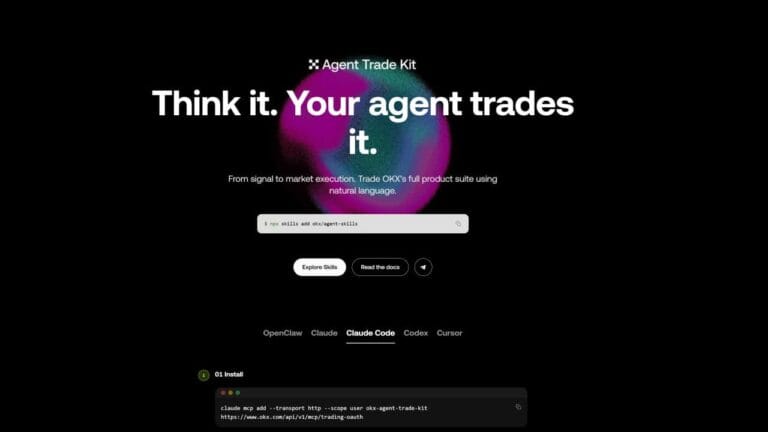
One clue to where this is all heading is the product layer. Anthropic is not just selling abstract intelligence. It is building tools people can use, including Claude Code, which turns its models into workflow infrastructure for developers. That is a far more persuasive IPO story than “we have a smart chatbot.”
What This Means for You Beyond the ai startup ipo Headlines
For ordinary users, the most immediate effect is not stock access. It is product pressure. Once an AI company moves toward public markets, every feature starts carrying an extra burden: prove retention, prove pricing power, prove enterprise demand.
If you use AI at work, expect more monetization
A public-market mentality usually hardens product strategy. Free tiers get tighter. Premium plans become more segmented. Enterprise controls, compliance tools, and workflow features get prioritized over consumer experimentation.
That is why this story matters even if you never buy a share. The push toward an ai startup ipo means AI assistants will increasingly be judged not by whether they are impressive, but by whether they can justify recurring revenue. Businesses may benefit from more reliable service and clearer product roadmaps. Individual users may face more paywalls.
This is especially relevant in coding, customer support, document processing, and internal knowledge work, where products like Claude Code are trying to become budget-line items instead of novelty tools.
If you are an investor or founder, the bar just moved
For startups building on top of large AI models, a giant ai startup ipo cuts both ways. It validates the category, but it also concentrates power. When a frontier lab gains public-market scale, smaller companies become more dependent on its APIs, pricing, partnerships, and platform rules.
That dynamic already shows up in adjacent coverage. In our look at how AI investments just got a lot more expensive, the core theme was simple: capital is flowing to the few companies that can afford the infrastructure race. An Anthropic listing would reinforce that divide.
For workers, the implications are more uncomfortable. Wall Street rewards automation when it looks like margin expansion. If AI products can replace parts of writing, coding, support, or analysis work, public shareholders will not ask companies to slow down out of kindness.
What Others Missed About Anthropic’s Filing
Most coverage will treat this as a valuation spectacle. That is the least interesting part of the story.
Wall Street may shape AI behavior faster than Washington
The deeper issue is governance through markets. Once a company is public, its incentives become more legible and less flexible. Quarterly expectations, analyst scrutiny, and institutional ownership can discipline spending, but they can also reward aggressive deployment.
That intersects with broader policy fights around safety and oversight. We have already seen how Anthropic sits near the center of bigger debates over ai governance issues. Going public would not remove those tensions. It would intensify them by forcing a more direct confrontation between caution and growth.
The real product is not the chatbot, it is access to compute and trust
A lot of readers still think these companies are selling chat windows. They are not. They are selling layers of infrastructure: model access, workflow integration, compliance, developer tooling, and reliability at scale.
That is why the market race matters so much. If Anthropic, OpenAI, and xAI all march toward public scrutiny, the winners may not be the companies with the funniest demos or most viral screenshots. The winners may be the ones that can secure chips, lock in cloud capacity, and persuade big companies their systems are safe enough to embed everywhere.
In that sense, the ai startup ipo boom is not really about startups anymore. It is about who becomes an operating system for knowledge work.
Real Examples of How the ai startup ipo Wave Changes Actual Products
Look at developer tools first. If Anthropic brings in public-market capital, it can spend more aggressively on coding agents, enterprise integrations, and reliability. That means products such as Claude Code could move from helpful assistant to default software layer inside engineering teams.
Consider cloud contracts next. Amazon and other infrastructure providers stand to benefit when AI labs spend billions on training and inference. Every new model launch is not just a software event. It is a demand shock for data centers.
Then there is the marketplace angle. Anthropic has already been testing ideas that point beyond chat, including systems where bots transact with other bots. Our coverage of Anthropic’s AI marketplace explored how strange that economy could become. An IPO would give experiments like that more fuel, and more pressure to commercialize quickly.
Finally, enterprise procurement changes. CIOs and CTOs often prefer vendors that look durable. A company headed for public markets can appear less risky than a private rival, even when the technology gap is narrow. That perception alone can swing contracts worth millions.
Pros and Cons of a Giant ai startup ipo
Pros
- More capital for model research, infrastructure, and product stability
- Greater transparency than private fundraising usually provides
- Broader investor access to one of the most important AI companies
- Stronger enterprise confidence in long-term vendor viability
Cons
- More pressure to monetize users and automate work aggressively
- Higher expectations for nonstop growth, which can distort safety decisions
- Greater concentration of power among a few capital-rich AI firms
- Public-market hype could outrun actual business fundamentals
Conclusion, The Bottom Line on Anthropic and the Market
Anthropic’s filing matters because it signals a new phase of AI, one where labs stop acting like experimental research outfits and start behaving like permanent financial institutions. This ai startup ipo is not just a bet on one company. It is a test of whether public markets are willing to bankroll the staggering cost of machine intelligence at industrial scale.
What Happens Next (2026-2030)
Between now and 2030, the likely winners are the AI firms that can combine model quality with distribution, cloud access, and enterprise trust. The losers will be smaller labs and app makers that depend too heavily on someone else’s infrastructure and pricing. Expect more consolidation, more expensive premium AI products, and sharper fights over regulation as public shareholders demand growth. The biggest change will not be that AI becomes mainstream, it already is. The biggest change will be that a handful of companies will gain the money and legitimacy to make themselves very hard to dislodge.
Sources
About the Author