
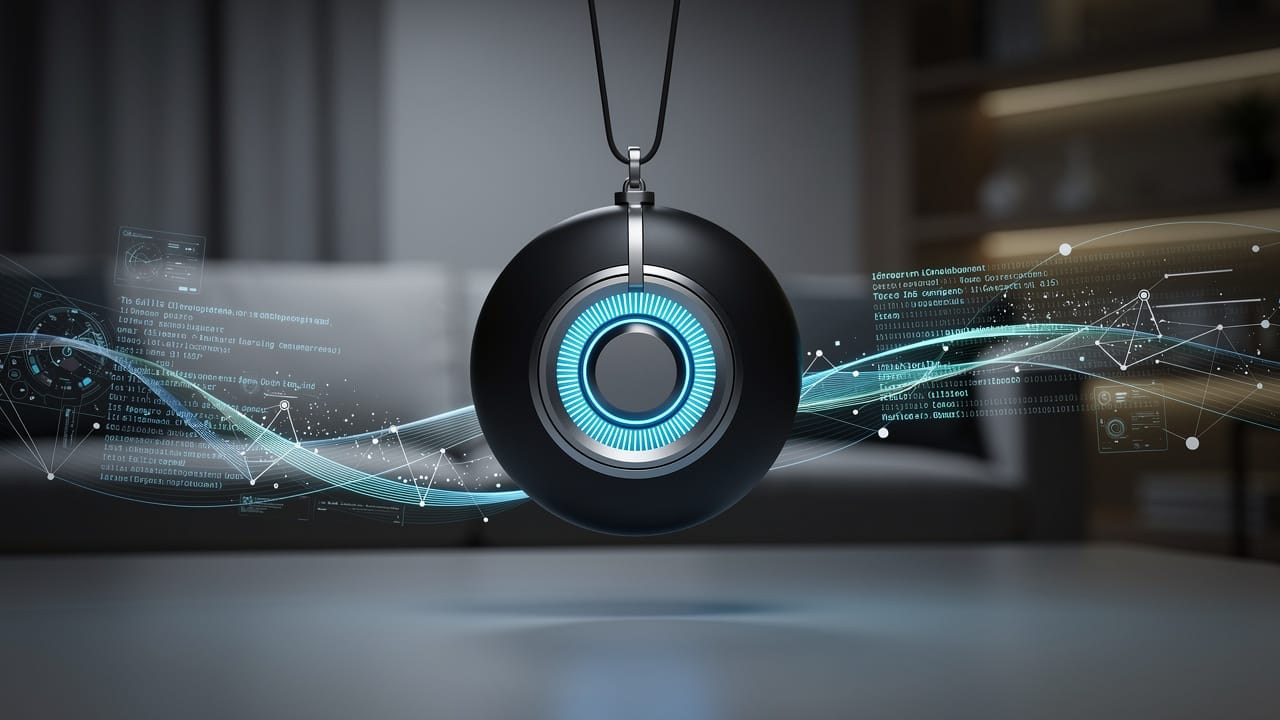
The next phase of AI development trends is not another chatbot tab in your browser. It is a microphone you wear on your chest, and that should make far more people uneasy than impressed.
Quick Summary
- Meta is reportedly building an AI-powered pendant and may begin testing it within the next year.
- The move appears tied to its 2025 acquisition of Limitless, a startup known for wearable AI recorders.
- This is bigger than one gadget, it reflects a broader shift in AI development trends toward always-on, body-adjacent computing.
- The real battle is not just hardware design, it is whether consumers and workplaces will accept constant ambient listening.
- MIT Technology Review’s broader argument that technology is never neutral fits this moment perfectly, wearable AI will shape behavior, labor, and power, not just convenience.
- If this category succeeds, ai trends in software development will increasingly revolve around permissions, memory, transcription, and enterprise controls, not just model quality.
What Happened With Meta’s Wearable Push
According to TechCrunch, Meta is reportedly working on an AI pendant that could enter testing within the next year. The report points to an internal memo and suggests the company is also expanding its AI glasses lineup while preparing a business offering called Wearables for Work.
That matters because this is not a random experiment. It looks like a continuation of Meta’s late-2025 acquisition of Limitless, the startup behind the Limitless AI Pendant, a wearable device designed to capture conversations and turn them into usable memory, summaries, and prompts. In plain English, Meta appears to be betting that the future of AI is not just screen-based, it is something you wear, something that listens, and something that follows you through the day.
Key Details on AI Development Trends and the Pendant Bet
The obvious reading is that Meta wants another shot at the AI hardware market. The more important reading is that this fits several AI development trends happening at once.
First, companies are moving from reactive AI to ambient AI. Chatbots wait for commands. Pendants, glasses, and assistant devices aim to stay present in the background, collecting context continuously. That changes the product itself. A useful wearable AI assistant needs speech recognition, summarization, retrieval, permissions management, battery efficiency, and clear user controls. In other words, ai trends in software development are now colliding directly with hardware design.
Second, the category has a credibility problem. Earlier AI wearables struggled, and not only because the tech was immature. Some products felt invasive, some were marketed badly, and many never answered the basic question: why wear this at all? That skepticism is rational. A device that records conversations has to clear a much higher trust bar than a phone app.
Third, Meta seems to be thinking beyond consumers. The reported “Wearables for Work” subscription is the tell. Enterprise buyers are often more forgiving than consumers if the tool can clearly save time, improve documentation, or reduce missed information. This is where the pendant concept gets more plausible. In meetings, field work, sales calls, healthcare administration, and logistics, captured context can be worth real money.
The bigger shift inside ai trends in software development
One of the most useful outside signals comes from VentureBeat, which argues that the next major bottleneck for AI agents is not model intelligence but permissions. That insight applies perfectly here. A wearable AI system is only as good as its ability to access, store, summarize, and securely route information without crossing legal or ethical lines.
This is why AI development trends are starting to look less like a race for the smartest model and more like a race for the safest memory layer. The software stack under these devices may matter more than the necklace itself.
What AI Development Trends Mean for You, Not Just Meta
If you are a consumer, the short version is simple: convenience will come bundled with surveillance anxiety. A good pendant could remember names, summarize discussions, create reminders from casual speech, and act like an external memory. That sounds useful right up until someone at lunch, in a meeting, or on public transit wonders whether they are being recorded.
If you are a worker, the implications are sharper. In the best case, wearable AI reduces admin work. It can turn scattered conversations into notes, extract action items, and help people who spend their days moving rather than typing. That is especially attractive in roles where computer time is limited. In the worst case, the same tool becomes a productivity monitor dressed up as an assistant.
Who wins if these ai development trends stick
Employers stand to gain first, especially in environments where documentation is expensive and errors are costly. Sales teams, consultants, managers, recruiters, and service workers could all be pushed toward wearable capture tools if companies believe they improve recall or reduce reporting time.
Some users also benefit directly. People with overloaded schedules, attention challenges, or memory issues may find real value in an assistant that remembers what they forget. That is the strongest argument for the category.
Who loses, or at least pays the price
Everyone around the user takes on the privacy burden. They did not choose the device, but they still become part of its data stream. That is the underappreciated social cost of these AI development trends. The user gets super-memory. Everyone else gets uncertainty.
This is why the ethical warning from MIT Technology Review’s discussion of Magnifica Humanitas lands so well here. Its core point is that technology is never neutral. A pendant is not just a tool. It changes what people say, what they withhold, and who controls the resulting record.
For a broader look at why the pace itself should worry people, our piece on AI development trends not slowing down connects this acceleration to a deeper accountability gap.
What Others Missed About Meta, Memory, and Power
A lot of coverage will frame this as a gadget story. That is too small.
The real question is whether AI companies can turn memory into a platform. Search engines organized the web. Smartphones organized apps. Wearable AI wants to organize your lived experience, your conversations, routines, tasks, and relationships, into a machine-readable layer. If that works, the winning company does not just sell hardware. It mediates daily reality.
That is why this move matters inside larger AI development trends. The product is not really the pendant. The product is persistent context.
The hidden enterprise angle
Meta’s reported interest in work subscriptions suggests the company knows consumer adoption may be slow. Offices are where awkward technology often gets normalized first, especially when management can justify the cost. Once a device proves it can reduce note-taking and automate follow-up, resistance weakens.
This also fits broader ai trends in software development. Enterprises want systems that integrate with calendars, CRM platforms, identity controls, compliance workflows, and internal search. A wearable without that connective tissue is a novelty. A wearable with it becomes infrastructure.
Why the moral argument suddenly matters
MIT Technology Review’s piece invokes a choice between fragmentation and shared responsibility. You do not need to share its religious frame to see the relevance. Wearable AI forces a social decision: do we normalize constant capture because it helps a subset of users and companies, or do we draw limits because some forms of friction are worth preserving?
That debate is not abstract anymore. It is arriving as hardware.
Real Examples of How AI Trends in Software Development Become Physical
Imagine a consultant leaving a client meeting with an automatic summary, follow-up email draft, and task list generated from conversation. That is the optimistic pitch.
Now imagine the same setup in a workplace where every verbal exchange can be archived, searched, and used in performance reviews. Same technology, very different power dynamic.
A nurse administrator might use a wearable assistant to remember medication-related discussions and scheduling changes. A field technician could dictate observations hands-free while repairing equipment. A manager could use a Limitless AI Pendant style device to keep track of rapid-fire meetings across a packed day.
Those are real productivity scenarios. They also explain why this market keeps coming back after earlier failures.
We are already seeing adjacent pressure elsewhere in the ecosystem. As explored in our article on AI impact on industries, the selling point is rarely “cooler tech.” It is cheaper coordination, faster documentation, and tighter managerial oversight. Wearables fit that pattern almost too perfectly.
Pros and Cons of Meta’s Reported AI Pendant
Pros
- Reduces note-taking and memory overload
- Could improve accessibility for users who struggle with recall
- Makes AI more useful in mobile, hands-busy environments
- Has clearer enterprise value than many earlier AI gadgets
Cons
- Raises obvious privacy and consent problems
- Risks normalizing constant ambient recording
- Could become a workplace monitoring tool
- Still faces the basic challenge of consumer usefulness versus social discomfort
Conclusion on AI Development Trends and Wearable AI
Meta’s reported pendant is not interesting because it is stylish or futuristic. It is interesting because it exposes where AI development trends are really headed, toward systems that do not wait to be asked, but stay with you, listen, remember, and quietly reshape behavior.
The companies that win this wave will not just build smarter models. They will convince people to accept always-on AI in places where trust is fragile and the social rules are still unsettled. Near the end of this cycle, devices like the Limitless AI Pendant may matter less as products than as proof that AI has moved off the screen and into ordinary human interaction.
What Happens Next (2026-2030)
Between now and 2030, the winners will be companies that solve consent, enterprise controls, and useful memory better than they solve raw intelligence. Employers and platform owners will gain the most if wearable AI becomes standard, because they will control both workflows and the data exhaust around them.
Consumers will adopt these devices more slowly than tech executives expect. The losers will be companies that treat privacy as a branding obstacle instead of a product requirement. What will actually change is this: ai trends in software development will increasingly center on identity, permissions, retrieval, and governance, because that is what ambient AI needs to function without becoming socially toxic.
Sources
About the Author